

Unlocking perfect espresso: Gaggia Classic troubleshooting with a bottomless portafilter
The Gaggia Classic is a legendary machine in the world of home espresso, celebrated for its robust build and capability to produce cafe-quality shots. However, like any semi-automatic machine, it demands a learning curve. Many new owners struggle to “dial in” their shots, facing frustrating issues like sourness, bitterness, or inconsistent results. This is where a simple yet powerful tool comes into play: the bottomless portafilter. More than just an aesthetic upgrade for beautiful extraction videos, it is an indispensable diagnostic instrument. This article will explore the key benefits of using a bottomless portafilter specifically for troubleshooting your Gaggia Classic, turning frustrating guesswork into a clear, visually-guided process for achieving the perfect espresso.
What is a bottomless portafilter?
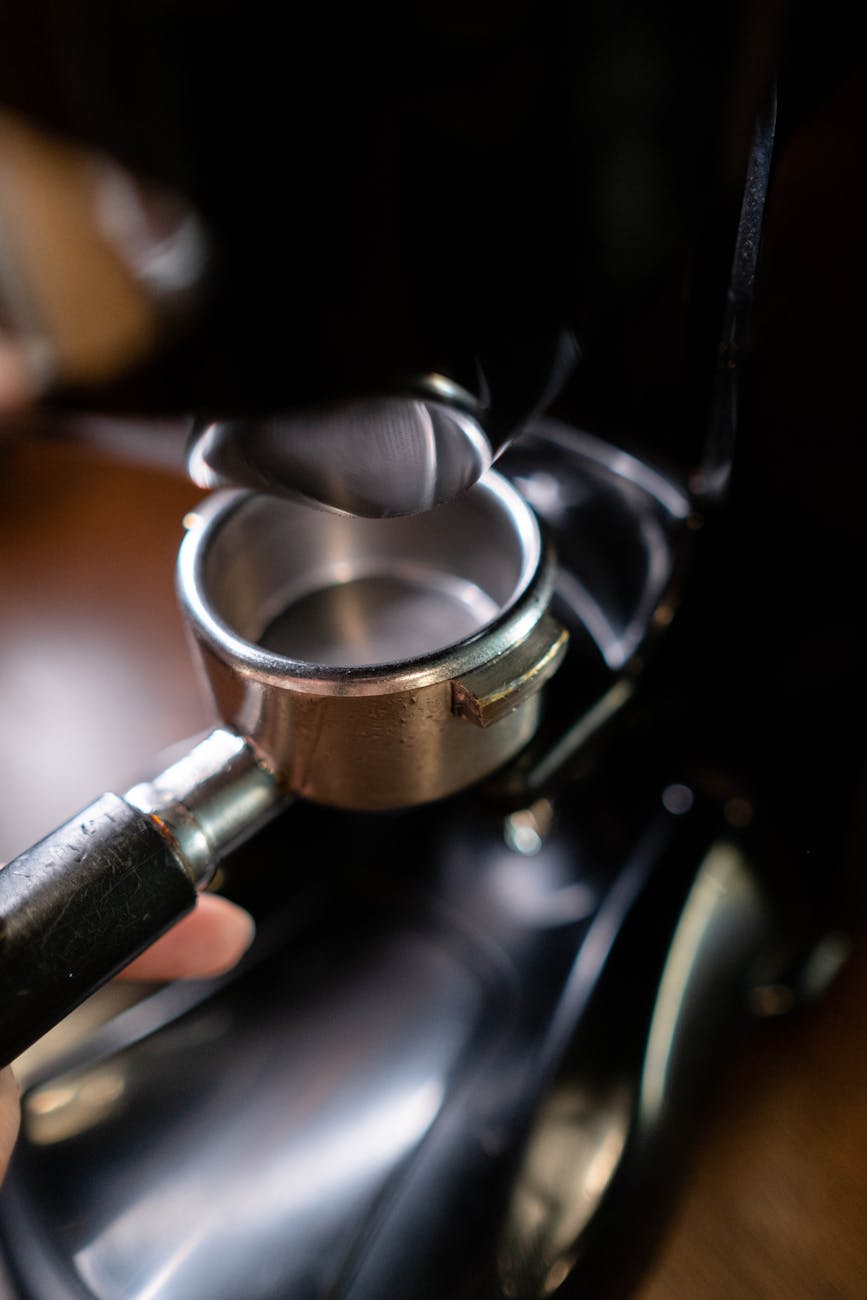
Before diving into troubleshooting, it’s essential to understand what a bottomless portafilter is and how it differs from the standard one that comes with your Gaggia Classic. A standard portafilter has a solid metal base with one or two spouts that guide the espresso into your cup. This design hides the entire extraction process. A bottomless portafilter, often called a naked portafilter, has this bottom section completely removed. The filter basket is exposed, allowing you to see the espresso as it extracts directly from the basket’s tiny holes.
Its primary purpose is to provide an unfiltered, real-time view of the extraction’s evenness and flow. While a standard spouted portafilter will combine streams of espresso and mask imperfections, a bottomless one reveals everything, good and bad. This direct feedback is the key to understanding what’s happening inside your coffee puck and is the first step toward diagnosing and fixing your espresso-making technique.
Diagnosing channeling and poor distribution
The most common and frustrating issue for any Gaggia Classic user is channeling. This occurs when water finds paths of least resistance through the coffee puck instead of flowing through it evenly. The result is an uneven extraction—some parts of the coffee are over-extracted (bitter), while others are under-extracted (sour). With a standard portafilter, you might only notice a fast shot time and a sour taste.
A bottomless portafilter makes channeling immediately obvious. You will see:
- Spurting jets: Tiny, aggressive streams of water spraying out from the basket.
- Bald spots: Areas on the basket where no coffee is flowing out.
- Early blonding: Some streams will turn a pale, watery blonde color much faster than others.
Seeing this tells you that your puck preparation needs work. The Gaggia Classic’s powerful pump is particularly unforgiving of poor distribution. To fix this, you need to focus on creating a homogenous bed of coffee. Techniques like the Weiss Distribution Technique (WDT), which uses a fine needle tool to break up clumps, become crucial. This visual feedback loop—seeing channeling, improving your distribution, and seeing a better extraction—is the fastest way to improve your consistency.
Perfecting your tamp and dose
Building on the foundation of good distribution, tamping and dosing are the next critical variables a bottomless portafilter helps you master. An uneven tamp is a primary cause of channeling. If you press down harder on one side of the puck, water will naturally flow more easily through the less-compacted side. With a bottomless portafilter, you’ll see this as the extraction beginning on one side of the basket before the other. The goal is to see the espresso droplets form evenly across the entire surface of the basket at the same time, eventually coalescing into a single, beautiful stream in the center.
Dosing—the amount of coffee you put in the basket—is equally important.
- Under-dosing: Too little coffee leaves excess headspace between the puck and the shower screen. When the Gaggia’s pump engages, the high-pressure water can hit the puck too aggressively, causing it to fracture and leading to severe channeling.
- Over-dosing: Too much coffee can press against the shower screen, preventing water from dispersing evenly and often choking the machine, resulting in a very slow, over-extracted drip.
A bottomless portafilter shows you the results of these dosing errors in real time, helping you find the perfect dose for your specific beans and basket.
Identifying grinder and coffee freshness issues
Your troubleshooting shouldn’t stop at puck prep. The quality of your grind and the freshness of your coffee are fundamental to a good shot, and a bottomless portafilter acts as a final checkpoint. If your puck prep is perfect but the shot still isn’t right, the visual cues can point you toward your grinder or your beans.
If the extraction begins evenly but then gushes out in under 15 seconds, your grind is too coarse. Conversely, if the machine chokes and only a few dark drops emerge after 30 seconds, your grind is too fine. The bottomless portafilter gives you a much clearer picture of this flow rate than watching the spouts on a standard portafilter.
Furthermore, it’s a fantastic indicator of coffee freshness. Freshly roasted coffee contains CO2, which contributes to a rich, stable crema. An extraction with fresh beans will appear syrupy, viscous, and often feature beautiful “tiger striping.” Stale coffee, on the other hand, will produce a fast, pale, and watery-looking shot with little to no crema. This visual confirmation can save you hours of frustration wondering why your shots taste lifeless.
Troubleshooting summary table
| Visual cue (with bottomless PF) | Likely problem | Solution |
|---|---|---|
| Jets spraying from the basket | Channeling | Improve puck prep (WDT, level tamp) |
| Extraction starts on one side | Uneven tamp or distribution | Tamp levelly, use a distribution tool |
| Gushing, fast-flowing shot | Grind too coarse / Under-dosing | Grind finer, check your dose |
| Slow, dripping shot (choking) | Grind too fine / Over-dosing | Grind coarser, check your dose |
| Pale, thin extraction, no crema | Stale coffee beans | Use freshly roasted coffee |
In conclusion, the bottomless portafilter is far more than a novelty item for coffee enthusiasts. For the Gaggia Classic owner, it is the single most effective tool for learning and improvement. It demystifies the extraction process by providing instant, clear visual feedback on every critical variable, from coffee distribution and tamping to grind size and bean freshness. By allowing you to see exactly where your technique is failing, it removes the guesswork and drastically shortens the learning curve. Investing in a bottomless portafilter transforms your espresso-making journey from one of blind trial and error into a precise, repeatable craft, empowering you to consistently pull delicious, cafe-quality shots from your Gaggia Classic.

 No products in the cart.