

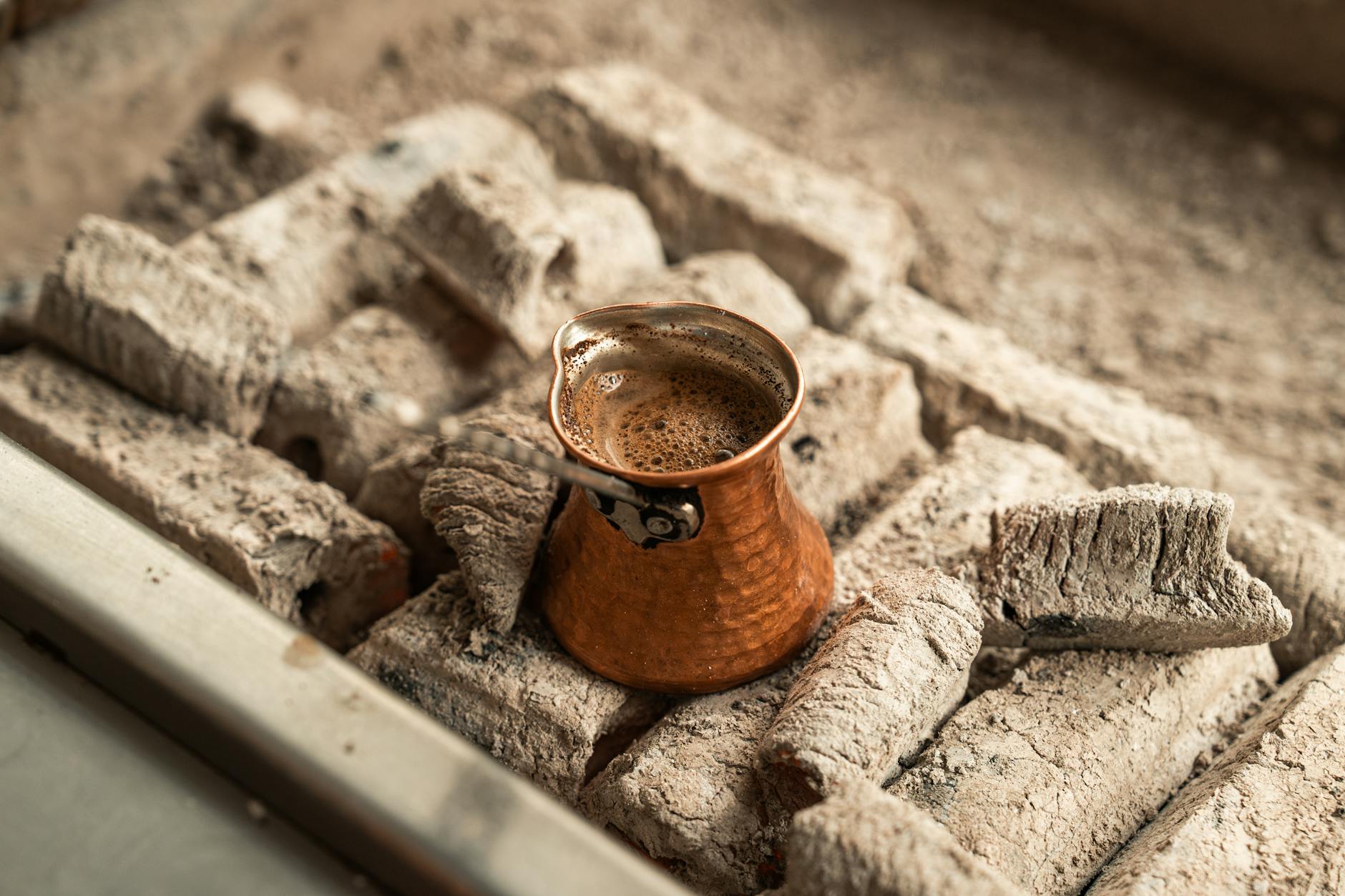
A guide to Turkish coffee particle size and its effect on mouthfeel
Turkish coffee is more than just a beverage; it is a cultural ritual recognized by UNESCO for its unique preparation and social importance. At the heart of this tradition lies a crucial element that defines its character: the grind. Unlike any other brewing method, Turkish coffee demands an incredibly fine, powder-like particle size. This guide will explore the profound relationship between this microscopic detail and the final sensory experience in the cup. We will examine why this specific grind is essential, how it influences the extraction process, and most importantly, how it single-handedly crafts the rich, velvety mouthfeel that makes Turkish coffee an unforgettable experience for connoisseurs and newcomers alike.
What makes a Turkish coffee grind unique?
To understand Turkish coffee, you must first understand its foundation. The grind is not just fine; it is the finest of all coffee preparation methods, often described as having the consistency of flour or cocoa powder. When you rub it between your fingers, you should barely feel any individual grains. This stands in stark contrast to other methods. For instance, a French press uses a very coarse grind to prevent sediment from passing through its metal filter, while drip coffee uses a medium grind for balanced extraction over several minutes. Even espresso, known for its fine grind, appears sandy and coarse when compared to the impalpable powder required for Turkish coffee.
The reason for this extreme fineness is rooted in the brewing method itself. Turkish coffee is an unfiltered immersion brew. The coffee grounds are boiled with water (and often sugar) in a special pot called a cezve or ibrik. The final brew is then poured directly into a small cup, grounds and all. Because the grounds remain in the cup, they must be fine enough to create a stable suspension during drinking and then settle neatly at the bottom, forming the thick sediment known as telve. A coarser grind would result in a gritty, unpleasant texture throughout the cup and would fail to extract properly in the short brewing time.
The science of extraction and suspension
The particle size of coffee has a direct and dramatic impact on extraction. Grinding coffee beans shatters them into smaller pieces, drastically increasing the total surface area exposed to water. A Turkish grind creates the maximum possible surface area, which allows for an incredibly rapid and efficient extraction of soluble compounds like oils, acids, and sugars. While this level of fineness would lead to a bitter, over-extracted brew in a drip machine or French press, it is perfectly suited for the quick, intense boil of Turkish coffee preparation.
The brewing process, which takes only two to three minutes, is just long enough to pull the desirable flavors from the powdered coffee. Beyond flavor, the physics of the fine particles is critical. These microscopic grounds become suspended in the water, forming what is known as a colloidal suspension. This is similar to how cocoa powder mixes into hot milk. This suspension is what gives the coffee its signature heavy body and thickness. It’s not just about dissolved solids; it’s about the physical presence of the coffee particles themselves contributing to the liquid’s viscosity and overall mouthfeel, a characteristic that cannot be replicated with filtered coffee.
How particle size defines mouthfeel
Mouthfeel is the tactile sensation of a beverage in your mouth, encompassing its body, texture, and finish. For Turkish coffee, particle size is the primary variable controlling this experience. Getting the grind wrong, even by a small margin, can turn a luxurious, velvety drink into a thin or gritty disappointment.
Let’s break down the specific effects:
- Body: This refers to the perceived weight and richness of the coffee on your tongue. A correct, powdery grind creates a full, syrupy, and heavy body because the fine particles create a dense suspension. If the grind is too coarse, the coffee will feel thin and watery, lacking its characteristic intensity.
- Texture: The ideal texture is smooth and velvety. The particles should be so fine that they are barely perceptible, contributing to a pleasant thickness rather than a sandy or gritty sensation. Grit is the most common sign of a poor Turkish coffee grind; it means the particles are too large and inconsistent, disrupting the smooth texture.
- Sediment (Telve): The quality of the telve at the bottom of the cup is a hallmark of a well-made Turkish coffee. A proper grind allows the grounds to settle quickly and compactly after pouring, leaving the upper portion of the drink relatively clear of large floating particles. An inconsistent or coarse grind will result in a muddy cup where particles remain suspended for too long and the sediment never fully separates.
The table below summarizes the direct impact of grind size variations on the final cup.
| Grind Size | Body | Texture | Sediment (Telve) |
|---|---|---|---|
| Correct (Powder-like) | Heavy, rich, syrupy | Smooth and velvety | Settles quickly and compactly |
| Slightly Coarse (like fine sand) | Medium, less intense | Slightly gritty, sandy | Settles slowly, some “floaters” |
| Too Coarse (like espresso grind) | Thin and watery | Very gritty and unpleasant | Does not settle properly, muddy cup |
Achieving the perfect grind at home
Given its importance, achieving the right particle size is non-negotiable. Standard electric burr grinders, even on their finest setting, often cannot produce a true Turkish grind. Blade grinders are entirely unsuitable as they produce a highly inconsistent mix of powder and large chunks, which is the worst of both worlds.
The best tools for the job are grinders specifically designed for the task. Traditional manual brass mills, often called a değirmen, are the gold standard. They are designed to crush the beans into a uniform, ultra-fine powder and are often adjustable. For those seeking an electric option, some high-end manufacturers offer grinders with burrs capable of reaching the necessary fineness. When purchasing, always check if the grinder is explicitly rated for Turkish coffee.
Whether you buy pre-ground coffee from a trusted supplier or grind it yourself, the ultimate test is touch. The coffee should feel like powdered sugar between your fingertips. Grinding fresh is always recommended, as the massive surface area of Turkish-ground coffee means it goes stale very quickly due to oxidation. The aromatic experience of brewing with freshly ground beans is an essential part of the ritual.
Conclusion
The art of Turkish coffee is a testament to how a single variable, particle size, can define an entire brewing style. The requisite flour-like grind is not an arbitrary tradition; it is a functional necessity that enables rapid extraction and creates the beverage’s defining characteristics. It is the direct source of the heavy, syrupy body and smooth, velvety texture that sets Turkish coffee apart from all other methods. An incorrect grind results in a cup that is not just subpar, but fundamentally fails to be Turkish coffee. Understanding and controlling this element is the first and most important step for anyone wishing to master this ancient and beloved brewing ritual, ensuring every cup is a rich and authentic sensory experience.


 No products in the cart.