

Why your espresso extracts unevenly despite proper puck prep
For the dedicated home barista, few things are more frustrating than a sputtering, uneven espresso extraction. You have invested in a quality grinder, meticulously distributed with a WDT tool, and perfected a level tamp, yet the shot still channels. One side of the basket blondes while the other remains under-extracted, resulting in a cup that is simultaneously sour and bitter. This experience is common even among advanced users, and it often points to issues that lie beyond the puck itself.
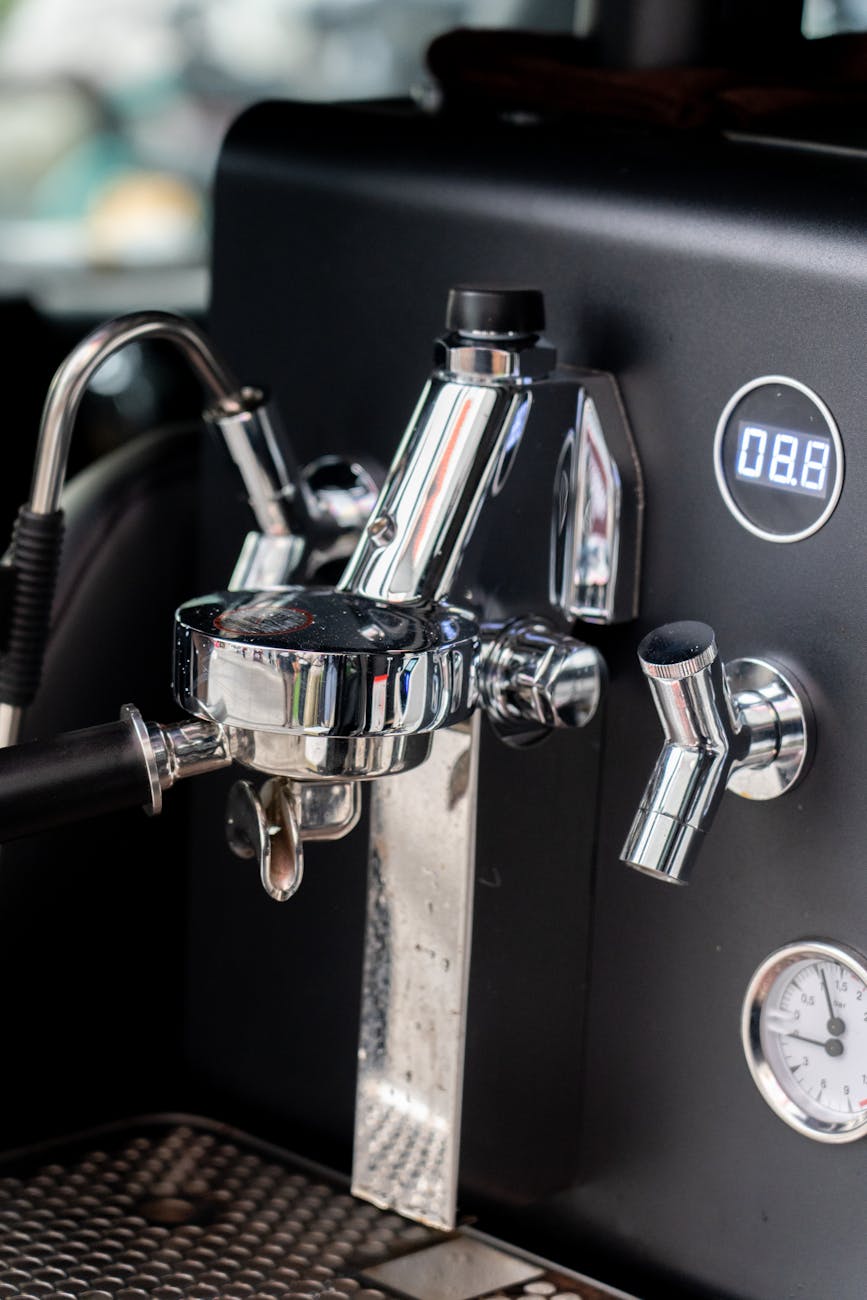
Understanding the deeper mechanics of espresso extraction requires looking at the entire system. The problem is frequently not your technique, but the subtle, often invisible, interactions between your machine, its components, and the coffee grounds. This article explores the less-obvious reasons for uneven flow, focusing on the hardware and physics that influence what happens after you lock in the portafilter.
The hidden geometry of your filter basket
While often viewed as a simple container, the filter basket is a critical piece of precision hardware. Its design directly dictates the path water must take through the coffee bed. Commercially-included baskets can have significant manufacturing variances, including inconsistent hole sizes and distribution. This lack of uniformity can create areas of lower resistance, encouraging water to flow faster through certain sections of the puck, leading to localized channeling.
The overall shape also plays a crucial role. Baskets with tapered walls tend to have a lower density of holes near the edges compared to the center. This can lead to less extraction at the perimeter of the puck. In contrast, straight-sided baskets promote more uniform density and water flow from top to bottom. Even with a perfectly prepared puck, a poorly designed or manufactured basket can make an even extraction impossible, as it predetermines a path of least resistance for the water before the shot even begins.
Water debit and its role in puck saturation
Puck preparation is focused on creating a bed of coffee with uniform resistance. However, the way water is introduced to that bed can undo all your careful work. Water debit, defined as the flow rate of water from the group head without the portafilter locked in, is a key factor. A machine with a very high water debit can hit the puck with excessive force, disrupting the top layer of coffee grounds upon contact. This disturbance can create small fissures and areas of lower density before the chamber even reaches full pressure.
This is especially critical during pre-infusion. A gentle, low-flow pre-infusion allows the puck to saturate evenly and swell, creating a more homogenous barrier for the high-pressure water to come. Conversely, a high-velocity stream can blast through the surface, creating micro-channels that will only worsen as the shot progresses. You can measure your machine’s debit by running the group head for 10 seconds into a cup on a scale; a flow rate above 8-10 grams per second can often indicate a less gentle application of water.
The unseen influence of the shower screen
The shower screen is the final component that touches the water before it contacts the coffee. Its primary function is to disperse the single stream of water from the machine into a gentle, even shower over the entire surface of the puck. If the screen is clogged with coffee oils and fines, water will exit only through the clean holes, creating high-velocity jets. These jets will drill into the puck, causing immediate and severe channeling in those spots.
Beyond cleanliness, the design of the screen itself matters. Some screens provide better dispersion patterns than others. A poorly designed screen might naturally create a doughnut effect, where more water is sent to the edges than the center, or vice versa. Regular maintenance, including not just chemical backflushing but periodic removal and manual scrubbing of the screen and the dispersion block behind it, is essential for ensuring that water begins its journey through your puck as evenly as possible.
Machine stability and environmental factors
Finally, the overall stability of your machine contributes to extraction quality. Temperature and pressure are the two core variables in espresso, and if they are inconsistent, so will be your shots. A machine with poor temperature stability can cause fluctuations in water viscosity, altering how it flows through the coffee bed from one moment to the next. Similarly, a faulty pump or a poorly calibrated over-pressure valve (OPV) can cause pressure to spike or drop, disrupting the puck’s integrity mid-shot.
A more mundane but surprisingly impactful factor is ensuring your machine is perfectly level. If the machine is tilted, even slightly, water will naturally pool on the lower side of the puck during the slow saturation of pre-infusion. This means one side of the coffee bed will be fully saturated and offer more resistance while the other is still dry, all but guaranteeing an uneven flow once pressure is applied.
Achieving a truly even extraction requires looking at the espresso-making process as a complete system. While meticulous puck preparation is the foundation, it cannot overcome limitations in your hardware. By understanding the role of your basket’s geometry, your machine’s water debit, and the condition of your shower screen, you can begin to diagnose the root causes of channeling. This systematic approach—moving from the puck outward to the machine itself—empowers you to solve persistent issues and gain greater control over the final quality in your cup. For those seeking to optimize their setup, a range of precision tools and components are available from papelespresso.com.

 No products in the cart.