

How pre-infusion changes the required grind size for espresso
Pre-infusion is a foundational technique in modern espresso preparation, yet its direct impact on grind size is often misunderstood. For the manual espresso user, mastering this relationship is not merely academic; it is essential for unlocking the full potential of a coffee and achieving consistent, high-quality extractions. When you introduce a low-pressure pre-infusion stage, you fundamentally alter the dynamics within the coffee puck. This change necessitates a corresponding adjustment in grind size to maintain a balanced extraction. Understanding this interplay allows for greater control over shot variables, enabling the barista to fine-tune flavor profiles with precision. This article explores the mechanics of pre-infusion and explains why it requires a specific approach to dialing in your grinder.
The role of pre-infusion in puck saturation
At its core, pre-infusion is the process of gently wetting the coffee grounds at a lower pressure before applying the full extraction pressure. This initial, gentle saturation serves a critical purpose: it allows the dry coffee grounds to expand and settle uniformly, reducing the risk of channeling. When high-pressure water hits a dry, compacted puck, it can fracture the puck and carve channels, leading to uneven extraction. Some parts of the coffee will be over-extracted, contributing bitterness, while other parts will be under-extracted, adding sourness.
By slowly introducing water, pre-infusion helps to establish a more homogenous and stable puck structure. This controlled saturation ensures that water will flow more evenly through the entire coffee bed once full pressure is engaged. The result is a more uniform extraction, which is key to achieving clarity and balance in the final cup.
How pre-infusion alters flow resistance
When coffee grounds absorb water during pre-infusion, they swell. This swelling, combined with the migration of very fine coffee particles (fines), significantly increases the puck’s resistance to water flow. The fines, which are an inevitable byproduct of grinding, are redistributed during the slow saturation phase and tend to settle in the small spaces between larger coffee grounds. This process effectively reduces the porosity of the puck, making it more compact and less permeable.
Consequently, a puck that has undergone pre-infusion will inherently resist water flow more than a puck that is immediately subjected to high pressure. If you were to use the same grind size for both a pre-infused shot and a standard shot, the pre-infused shot would likely run much slower, potentially choking the machine or leading to a long, over-extracted shot. This increased resistance is the primary reason why a change in grind setting is necessary.
Adjusting grind size to compensate for pre-infusion
To counteract the increased flow resistance caused by pre-infusion, the barista must adjust the grind size. Since pre-infusion makes the puck less permeable, a coarser grind is typically required to achieve the desired shot time and flow rate. Grinding coarser increases the size of the particles and the voids between them, creating a more porous coffee bed. This adjustment allows water to flow through the saturated puck at an appropriate rate, preventing the shot from running too slowly.
The extent of the grind adjustment depends on the length and pressure of the pre-infusion itself. A long, low-pressure pre-infusion will cause more swelling and fines migration, necessitating a more significant coarse adjustment. Conversely, a shorter pre-infusion might only require a small tweak to the grind setting. The goal is to find a new balance where the coarser grind compensates for the hydraulic resistance introduced by the pre-infusion stage, resulting in a balanced extraction within your target parameters (e.g., a 1:2 ratio in 25–30 seconds).
Practical dialing-in workflow with pre-infusion
When incorporating pre-infusion into your workflow, it is best to treat it as a fixed variable while you dial in the grind. Start by choosing a pre-infusion time and pressure that you intend to use consistently. For example, you might decide on a 10-second pre-infusion at 2 bars of pressure.
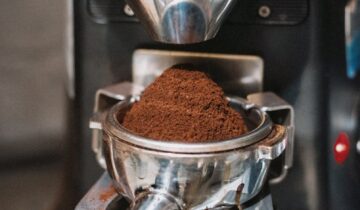
With this parameter set, begin dialing in your grind. It is helpful to start with a setting that is noticeably coarser than what you would use for a shot without pre-infusion. Pull a test shot and observe the total extraction time and yield.
- If the shot runs too fast (e.g., under 20 seconds for a 1:2 ratio), your grind is too coarse. Adjust it finer.
- If the shot runs too slow or chokes the machine, your grind is too fine. Adjust it coarser.
Repeat this process, making small, incremental adjustments until you reach your desired shot time and yield. Keeping detailed notes on your parameters—dose, pre-infusion time, grind setting, yield, and time—is invaluable for consistency. This methodical approach removes guesswork and allows you to systematically find the optimal grind size for your chosen pre-infusion profile.
Conclusion
The relationship between pre-infusion and grind size is a direct consequence of coffee puck physics. By saturating the grounds at low pressure, pre-infusion increases the puck’s resistance to flow, a change that must be balanced with a coarser grind setting. For the dedicated home barista, understanding this principle is a significant step toward mastering espresso extraction. It transforms pre-infusion from a feature into a controllable variable that can be used to enhance consistency and unlock nuanced flavors. Rather than following arbitrary rules, a methodical approach to dialing in your grind with pre-infusion in mind will lead to more delicious and repeatable results. For those looking to refine their technique, a range of precision tools is available at papelespresso.com to support a consistent workflow.
 No products in the cart.