

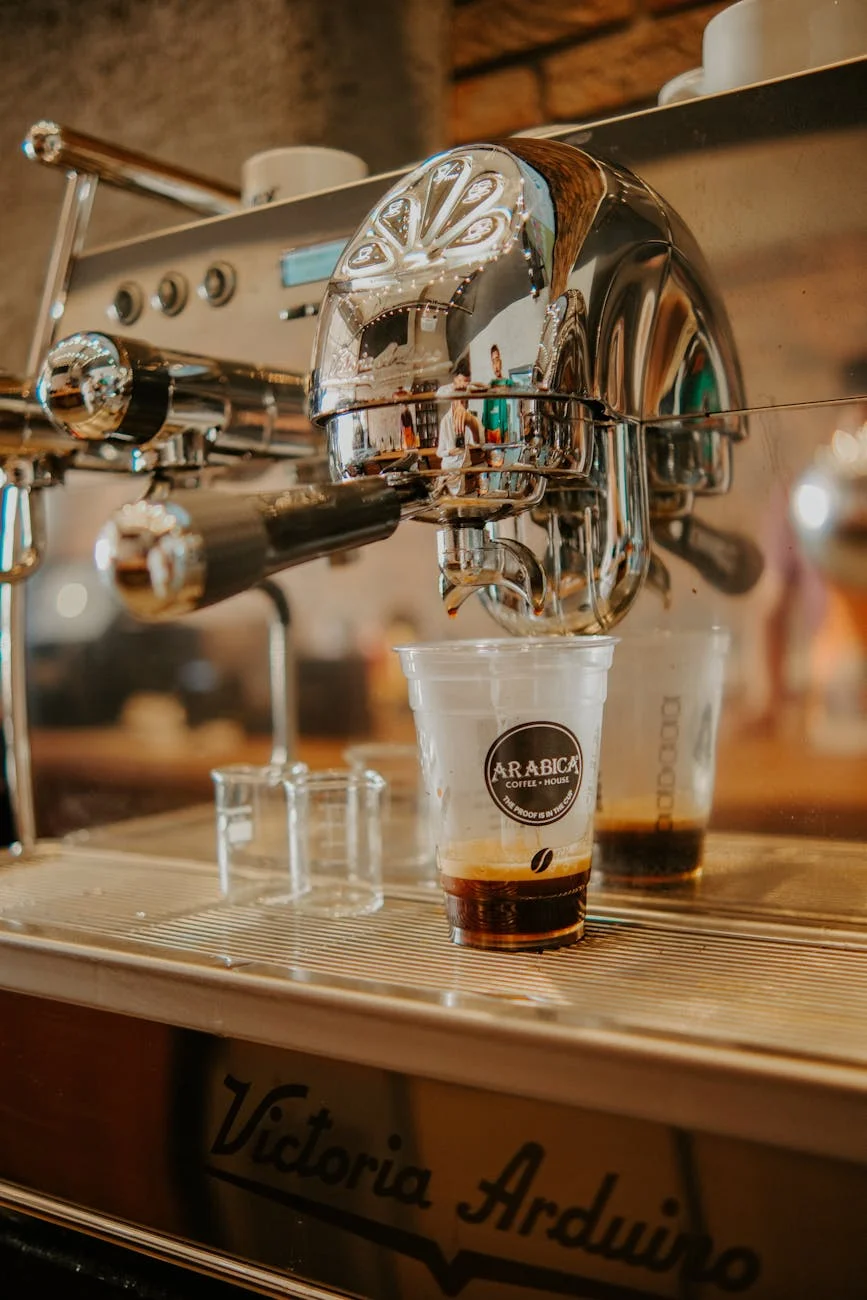
The pursuit of espresso perfection often leads enthusiasts down a path of modification and control. For many, the gentle, declining pressure profile of a manual lever machine represents a pinnacle of extraction quality, known for producing shots with heavy body and nuanced, sweet flavors. However, the cost and workflow of a high-end lever machine can be a significant barrier. This article explores a technical yet rewarding project: modifying a pump-driven machine, such as the Gaggia Classic, with an Arduino microcontroller to replicate the signature pressure profiles of a traditional lever machine. The goal is to bridge the gap between two distinct espresso philosophies, bringing the celebrated characteristics of lever extraction to a widely accessible platform through precise, programmable control.
Understanding the mechanics of a lever profile
To replicate a lever machine’s profile, one must first understand its mechanics. Spring-lever machines, the most common type, are defined by a distinct pressure curve. The barista pulls a lever down to compress a spring and fill the brew chamber with water, a process that allows for a gentle, low-pressure pre-infusion. This phase saturates the coffee puck without fracturing it, which is critical for a uniform extraction.
Upon releasing the lever, the spring expands and pushes the piston, generating maximum pressure (typically 8-9 bar). As the shot progresses and the spring continues to expand, the pressure naturally and gradually declines, often finishing around 4-6 bar. This declining profile is thought to reduce the extraction of bitter compounds toward the end of the shot, contributing to a sweeter, more balanced cup. Direct-lever machines offer more variability, as the pressure is applied directly by the barista, but the spring-lever’s repeatable, declining curve is the primary target for electronic replication.
Hardware for Arduino-based pump control
Translating the smooth mechanics of a lever into an electronic system requires a few key hardware components. The project’s foundation is a Gaggia Classic or a similar single-boiler machine, chosen for its simple circuitry and robust build.
The core components for the modification include:
- Arduino Microcontroller: The brain of the operation, typically a Nano or Uno, which will run the code that dictates the pressure profile.
- Pressure Transducer: A sensor installed in the hydraulic path (often via a T-fitting near the grouphead) to provide real-time pressure feedback to the Arduino. A 0-12 bar or 0-16 bar transducer is common.
- AC Light Dimmer Module: This module, controlled by the Arduino, modulates the voltage sent to the vibratory pump. By reducing the power, it reduces the pump’s flow rate and, consequently, the brew pressure.
- Solid-State Relay (SSR): Used to turn the pump on and off safely, isolating the low-voltage Arduino from the machine’s high-voltage AC circuit.
- Display Screen (Optional): An I2C OLED or LCD screen can provide a real-time readout of target pressure, actual pressure, and elapsed shot time, offering valuable visual feedback.
These components work in a closed-loop system. The Arduino reads the pressure from the transducer, compares it to the target pressure in the programmed profile, and adjusts the power sent to the pump via the dimmer module to match it. This allows for dynamic, real-time pressure control that can be shaped into any desired curve.
Programming a declining pressure curve
The software is where the lever profile truly takes shape. The Arduino code defines the stages of the extraction, translating the mechanical process into a series of timed pressure targets. A typical spring-lever profile program can be broken down into three main phases.
First, a pre-infusion phase is programmed. The code instructs the Arduino to set a low-pressure target, perhaps 1.5-2.5 bar, for a duration of 8-12 seconds. The system will modulate the pump to hold the pressure steady, gently saturating the puck.
Next comes the peak pressure phase. The code rapidly ramps the target pressure to a peak, usually 9 bar. This mimics the moment the lever is released and the spring is at maximum compression. This peak is held for only a few seconds before the final, most crucial phase begins.
The third phase is the pressure decline. The code systematically lowers the target pressure over the remainder of the shot. This can be programmed as a linear decline or a more complex curve to closely match the pressure decay of a specific lever machine’s spring. For example, the target pressure could decrease by 0.2 bar every second until it reaches a terminal pressure of 5 bar, at which point the shot is stopped. This controlled, gradual reduction in pressure is the key to emulating the sought-after lever shot characteristic.
Calibration and practical application
With the hardware installed and the code uploaded, the final stage involves calibration and dialing in. The pressure transducer must be calibrated within the code to ensure its readings are accurate. This often involves cross-referencing its output with a known-good pressure gauge. Once calibrated, the relationship between the dimmer module’s output and the resulting pressure must be fine-tuned—a process known as PID tuning—to ensure the system can hit and hold its targets without significant overshoot or lag.
In practice, the modified machine requires a slightly different workflow. The barista initiates the shot, and the Arduino takes over, executing the pre-programmed profile. The user must still prepare the coffee puck diligently, as variables like grind size, dose, and distribution remain critical. In fact, the precision of a controlled profile can make inconsistencies in puck preparation even more apparent. Dialing in a coffee involves adjusting the grind size to achieve the desired shot time and volume within the constraints of the programmed pressure curve, just as one would with a traditional machine.
Conclusion
Modifying a Gaggia with an Arduino to replicate lever machine profiles is a project that merges traditional espresso theory with modern digital control. By understanding the core mechanics of a lever machine, selecting the appropriate hardware, and programming a precise, declining pressure curve, it is possible to achieve the nuanced and sweet extractions characteristic of this classic brewing method. The process requires technical skill and patience but rewards the user with unparalleled control over the extraction process, allowing for deep exploration into how pressure dynamics shape the final taste in the cup. For those who enjoy tinkering and refining their process, tools that support a consistent workflow are always beneficial, and a variety of such implements are available from retailers like papelespresso.com.



 No products in the cart.