

Unlocking espresso’s potential: a technical guide for super-automatic machines
For baristas accustomed to the tactile feedback and precise control of manual or semi-automatic espresso machines, the world of super-automatics can feel limiting. The Gaggia Anima, like many of its counterparts, automates the grinding, tamping, and extraction process, removing direct user influence over variables like puck preparation and pressure profiling. However, this automation does not preclude the possibility of high-quality espresso. The objective of this guide is to move beyond factory presets and apply a methodical, technical approach to the machine’s available parameters. By understanding the interplay of core variables within this system, it is possible to maximize the flavor profile and produce a cup that is both consistent and nuanced.
The foundation: selecting and managing beans for super-automatics
The journey to a superior extraction begins with the coffee bean, but super-automatic machines impose specific requirements. Unlike standalone grinders that can be easily cleaned of oily residues, the integrated grinders in machines like the Anima are more susceptible to blockages. Very dark, oily roasts can coat the burrs and internal chutes, leading to inconsistent dosing, stale flavor carryover, and potential mechanical failure. For this reason, medium roast coffees are often the ideal starting point. They provide a balance of developed flavor without the excessive surface oils that can hinder grinder performance. The freshness of the beans remains paramount. Using coffee within a few weeks of its roast date ensures that the volatile aromatic compounds responsible for a vibrant flavor profile are still present.
Calibrating the core variables: grind, dose, and volume
Dialing in a super-automatic machine requires a systematic approach to its primary settings. The Gaggia Anima features a stepped grinder and an “Optiaroma” system, which controls the dose, or the amount of coffee used for each shot. These two settings are the most powerful tools for influencing the extraction.
The process should be methodical:
- Adjust the grind first. The grinder should only be adjusted while it is in operation to prevent the beans from jamming the burrs. A finer grind increases the surface area of the coffee, which typically leads to a higher extraction and more body, but risks bitterness if over-extracted. A coarser grind will result in a faster, lower extraction.
- Set the dose (Aroma Strength). Once a baseline grind size is established, the dose can be adjusted. Increasing the dose can add intensity and body, while decreasing it may highlight more delicate notes, assuming the grind is appropriate.
- Program the volume. The final step is to set the liquid volume for the espresso. This determines the brew ratio. A common starting point is a 1:2 ratio (e.g., 18 grams of coffee grounds to 36 grams of liquid espresso), but this can be adjusted by taste. Programming a shorter volume will result in a more concentrated, ristretto-style shot, while a longer volume will produce a milder, lungo-style coffee.
The relationship between these variables is critical for troubleshooting flavor imbalances.
| Flavor Imbalance | Primary Adjustment | Secondary Adjustment | Expected Outcome |
|---|---|---|---|
| Sour, acidic, thin | Set grind finer | Increase dose | Slows extraction, increases body and sweetness |
| Bitter, harsh, astringent | Set grind coarser | Decrease dose | Speeds up extraction, reduces harshness |
Beyond the basics: temperature and pre-infusion
While grind and dose are primary, temperature plays a crucial role in extracting specific flavor compounds. The Anima offers three temperature settings. A lower temperature may be preferable for darker roasts to minimize the extraction of bitter compounds, preserving chocolatey and nutty notes. Conversely, a higher temperature can be beneficial for lighter roasts, helping to properly extract the more complex and delicate fruit and floral notes that might otherwise present as sour. Experimenting with temperature settings after dialing in the primary variables can add another layer of refinement to the final cup. The machine also incorporates a pre-infusion step, where the coffee puck is briefly saturated with low-pressure water before full extraction begins. This is an automated process designed to ensure even saturation and reduce the risk of channeling, a common issue in manual espresso preparation.
Water chemistry and maintenance: the unseen variables
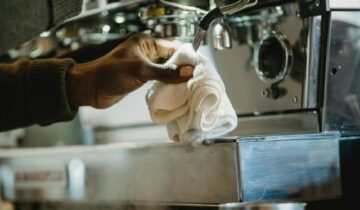
No amount of calibration can compensate for poor water quality or a poorly maintained machine. Water composition, specifically its mineral content (TDS), is fundamental to flavor extraction. Water that is too soft can produce a flat, uninteresting espresso, while water that is too hard will lead to scale buildup and muted flavors. Using filtered water with an appropriate mineral balance is essential. Furthermore, regular maintenance is non-negotiable. Coffee oils accumulate in the brew group and shower screen, becoming rancid and imparting a bitter, stale flavor to every subsequent shot. The brew group should be removed and rinsed weekly. Regular descaling, following the manufacturer’s recommendations, is equally important to prevent mineral deposits from affecting boiler temperature stability and water flow, both of which are critical for consistent extractions.
Conclusion
Achieving a high-quality espresso from a super-automatic machine like the Gaggia Anima requires a shift in perspective for the experienced barista. The process becomes less about manual dexterity and more about systematic, intelligent calibration of the machine’s available parameters. By carefully selecting appropriate beans, methodically adjusting grind, dose, and volume, and strategically using temperature settings, one can guide the machine toward a desired flavor profile. This, combined with an unwavering commitment to clean equipment and quality water, transforms the super-automatic from a simple convenience into a capable tool for daily, nuanced espresso. For those looking to support their workflow, various tools and accessories that aid in maintenance and consistency are available from retailers like papelespresso.com.


 No products in the cart.