

Decoding the Gaggiuino project for espresso beginners
The world of home espresso is filled with paths for improvement, from refining puck preparation to exploring new bean origins. For the technically inclined home barista, the Gaggiuino project represents one of the most profound upgrades available for a classic machine. It is an open-source initiative to equip the Gaggia Classic Pro with the advanced digital controls found in espresso machines costing several times more. This modification moves beyond simple adjustments, offering granular control over the core variables of extraction: temperature, pressure, and flow rate. For the experienced manual user, understanding this project is key to unlocking a new level of precision and experimentation in espresso brewing, transforming a reliable workhorse into a highly sophisticated instrument.
What is the Gaggiuino project?
At its core, the Gaggiuino project is a community-driven, open-source hardware and software modification designed specifically for Gaggia espresso machines. Its primary purpose is to overcome the inherent limitations of the stock machine’s analog controls. A standard Gaggia Classic Pro relies on a simple bimetallic thermostat for temperature regulation, leading to wide temperature swings, and offers no native control over brew pressure beyond what the over-pressure valve (OPV) is set to. The Gaggiuino project replaces this entire system with a modern, microcontroller-based solution.
By installing a suite of sensors and control components, the user gains direct, real-time command over the brewing process. This is not a commercial kit but a detailed DIY guide that allows enthusiasts to source their own parts and assemble the system. The philosophy is one of empowerment, giving baristas the tools to implement complex brewing theories and achieve a degree of shot-to-shot consistency that is otherwise impossible on an entry-level machine.
The core hardware modifications
The Gaggiuino modification involves integrating several electronic components into the Gaggia Classic Pro. Each part serves a specific function in monitoring and controlling the brew cycle. While the exact list can vary slightly based on the build, the fundamental components are consistent.
- Microcontroller: This is the central brain of the operation, typically an STM32 “Black Pill” or a similar board. It runs the custom Gaggiuino firmware, processes sensor inputs, and sends commands to control the machine’s heating element and pump.
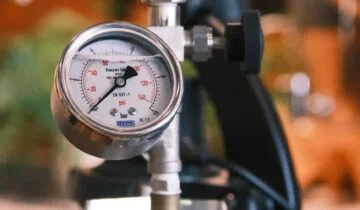
- Sensors: To make intelligent decisions, the system needs data. A pressure transducer is installed to measure brew pressure in real-time, while a thermocouple provides highly accurate temperature readings from the boiler. This feedback loop is what allows for such precise control.
- Solid State Relay (SSR): The stock thermostat is replaced with an SSR. This component allows the microcontroller to pulse the boiler’s heating element with extreme precision, maintaining brew temperature within a very tight range, a method known as PID control.
- Dimmer module: To control pressure, the project incorporates a dimmer module to regulate the power sent to the machine’s vibratory pump. By varying the power, the system can increase or decrease the water pressure on the fly to follow a predetermined profile.
- User interface: A small touchscreen display is typically added to the machine. This screen serves as the command center, allowing the user to select profiles, monitor live brewing data (pressure, temperature, time, and weight), and adjust settings.
Unlocking advanced control with software
The hardware is only half of the equation; the custom Gaggiuino firmware brings it all to life. The software unlocks a suite of features that fundamentally change how the user interacts with the machine. The most significant of these is pressure profiling. Users can design and execute complex pressure curves during a single shot. This means you can program a gentle, low-pressure pre-infusion to saturate the puck, a steady ramp up to a peak pressure, and a gradual decline toward the end of the shot to reduce the chance of channeling and bitterness.
Equally important is the implementation of a Proportional-Integral-Derivative (PID) algorithm for temperature. The firmware uses the thermocouple’s feedback to hold the boiler water at a precise target, eliminating the “temperature surfing” often required with stock machines. This stability is critical for achieving consistent results, especially when working with lighter roast coffees that are sensitive to thermal fluctuations. The software can also integrate with a digital scale via Bluetooth, enabling gravimetric control where shots are stopped automatically based on the liquid weight in the cup.
Practical benefits and considerations
The primary benefit of completing a Gaggiuino build is the unprecedented level of control it provides. It elevates a simple machine into the territory of high-end, pressure-profiling equipment, allowing for deep experimentation with extraction variables. For baristas who enjoy tinkering and want to understand the cause-and-effect relationships between pressure, flow, and taste, the project is immensely rewarding. The ability to tame the harsh pressure ramp of a vibratory pump and maintain flat temperature curves can yield sweeter, more balanced, and more consistent espresso.
However, the project is not without its challenges. It is a technical DIY endeavor that requires a comfort level with electronics, soldering, and reading wiring diagrams. The process involves disassembling the machine and working with its internal components, which will void the manufacturer’s warranty. There is an inherent risk of damaging the machine if steps are not followed carefully. It is best suited for enthusiasts who see the process of building and tuning the machine as part of the hobby itself, not for someone seeking a simple, out-of-the-box upgrade.
Conclusion
The Gaggiuino project is a testament to the passion and ingenuity of the home espresso community. It successfully transforms the Gaggia Classic Pro from an entry-level manual machine into a powerful, data-driven brewing system. By integrating a microcontroller, modern sensors, and intelligent software, it provides the home barista with PID temperature stability and full command over pressure profiling, two of the most impactful features in modern espresso technology. While the installation demands technical skill and a willingness to get your hands dirty, the reward is an unparalleled level of control and a deeper understanding of the espresso extraction process. Ensuring you have the right foundational tools for puck preparation and analysis is, of course, a vital part of making any such upgrade worthwhile.

 No products in the cart.