

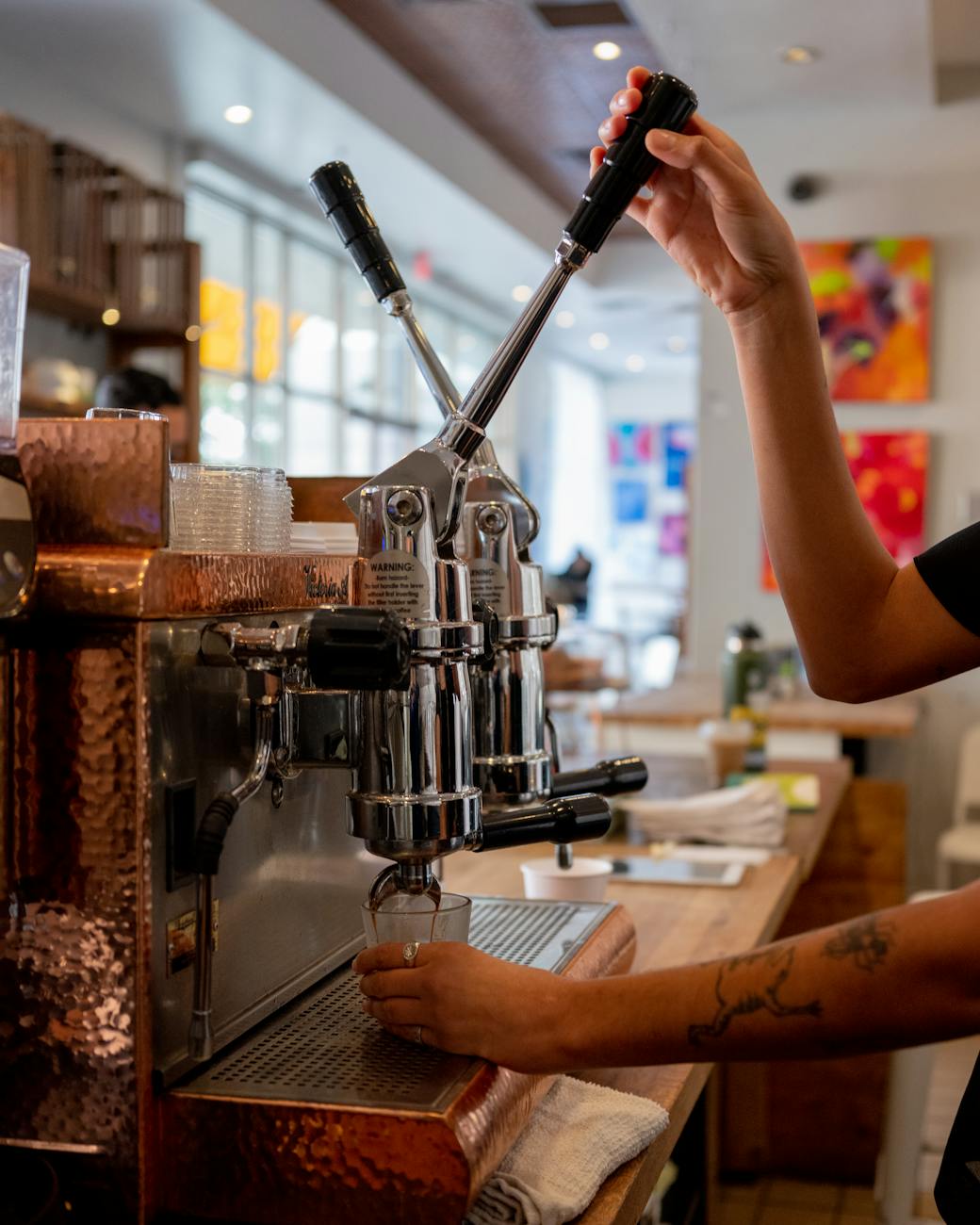
The allure of a vintage lever espresso machine is undeniable. It’s a tactile, engaging experience, connecting the barista directly to the creation of their coffee in a way modern super-automatics never can. However, this hands-on approach comes with a steep learning curve. Many new owners find themselves pulling shots that are thin, sour, and lacking the rich, syrupy texture they crave. Achieving a full-bodied, viscous espresso on these beautiful machines isn’t about a secret trick, but rather a holistic understanding of the variables at play. This guide will walk you through the essential techniques, from bean selection to the art of the pull, to help you master your vintage lever and unlock its full potential for incredible texture and body.
The foundation: Beans and grind consistency
Before you even think about temperature or pressure, the journey to a richer espresso begins with your raw materials. The coffee beans and the way you grind them form the very foundation of your shot’s potential body. Selecting beans with characteristics that promote viscosity is your first step. Generally, medium to medium-dark roasts contain more soluble solids and oils, which are key components of a full-bodied espresso. Coffees that have been naturally or honey-processed also tend to produce a creamier, heavier mouthfeel compared to their washed counterparts. Most importantly, use fresh beans. Coffee that is more than a month past its roast date will have lost much of the CO2 and volatile oils responsible for both crema and body, resulting in a flat, lifeless shot.
Equally important is the grinder. A high-quality burr grinder is not a luxury but a necessity for lever machines. They are far less forgiving of an inconsistent grind than pump-driven machines. A poor grind produces a mix of large particles (boulders) and fine dust (fines), leading to uneven extraction. Water will rush past the boulders while over-extracting the fines, creating a shot that is simultaneously sour, bitter, and thin. Your goal is a consistent, fine grind that provides enough resistance for a slow, controlled pull of the lever. This consistency ensures that water passes through the entire coffee puck evenly, extracting all the desirable solids and oils that build a syrupy, satisfying body.
Mastering temperature: The key to solubility
With the right coffee ground perfectly, your next focus is the brewing water temperature. Temperature is the catalyst for extraction; it dictates how effectively soluble compounds are dissolved from the coffee grounds. For a full-bodied shot, you need water that is hot enough to extract the necessary oils and sugars, but not so hot that it scorches the coffee and introduces unpleasant, astringent flavors. This is the primary challenge with many vintage lever machines, such as the classic La Pavoni Europiccola, which have group heads attached directly to the boiler and are prone to significant temperature swings.
Without a PID controller, you must learn to “temperature surf.” This manual process involves learning your machine’s unique heating and cooling patterns.
- If the group is too hot (a common issue after the machine has been on for a while), you’ll need to perform a cooling flush. Lock in an empty portafilter and pull the lever just enough to run some water through the group, dissipating excess heat.
- If the group is too cool (often the case for the first shot), you can do the opposite with one or two short “warming flushes” to bring it up to an optimal range.
Applying a stick-on thermometer strip to the group head is an invaluable tool, providing a visual reference point that helps you develop a repeatable and consistent pre-shot routine. Achieving thermal stability is crucial for unlocking the rich texture hidden within your coffee beans.
The art of the pull: Pre-infusion and pressure profiling
You have perfect grounds and stable temperature; now comes the defining moment where lever machines truly express their magic. The pull itself is not a simple binary action but a nuanced performance that directly shapes the final texture and body of your espresso. It begins with pre-infusion. This is the act of gently introducing low-pressure water to the coffee puck before applying full extraction pressure. On a spring-lever machine, this happens semi-automatically, but on a direct lever, you control it by raising the lever just enough to let water into the chamber and saturate the grounds. Holding this position for 5 to 10 seconds allows the coffee to swell and settle, eliminating dry pockets and preventing channeling. This ensures a uniform extraction, which is essential for maximizing body.
Following pre-infusion is the pressure profile you create with the lever. Unlike a standard pump machine fixed at 9 bars, you are the pump. You can apply a dynamic pressure curve that enhances sweetness and body. A common and effective technique is a declining profile. Start the pull with firm, steady pressure. As the shot blondes and you near the end of your desired volume, gently and gradually ease off the pressure. This technique reduces the extraction of bitter compounds toward the end of the shot, allowing the sweeter, more viscous elements to dominate the cup. Experimenting with the speed and force of your pull is key to discovering how to craft an espresso with the exact mouthfeel you desire.
Puck prep and troubleshooting
All the previous steps can be undermined by poor puck preparation. The small details of how you dose, distribute, and tamp your coffee are the final gatekeepers of shot quality. Consistency is paramount. Use a scale to weigh your dose every single time. A gram of difference can significantly alter the resistance and flow rate. Once dosed, the grounds must be distributed evenly in the basket. The Weiss Distribution Technique (WDT), which involves using a tool with fine needles to break up clumps and level the grounds, is transformative for preventing channeling in lever machines.
Finally, a firm and perfectly level tamp compacts the grounds into a stable puck. The goal isn’t to press as hard as possible, but to be consistent and ensure the puck’s surface is flat. A crooked tamp will force water to one side, leading to a disastrously uneven extraction. Mastering these final touches ensures that the water flows through the coffee bed as intended, extracting everything evenly and producing that sought-after, syrupy texture.
Here is a table to help troubleshoot common texture issues:
| Problem | Potential Cause | Solution |
|---|---|---|
| Thin, watery, fast shot | Grind is too coarse; Dose is too low; Poor distribution/channeling | Grind finer; Increase coffee dose; Use a WDT tool and ensure a level tamp |
| Hard to pull lever, choked shot | Grind is too fine; Dose is too high | Grind coarser; Reduce coffee dose by 0.5-1g |
| Shot tastes bitter and thin | Brew temperature is too high; Over-extraction from too long a pull | Perform a cooling flush on the group head; Stop the pull sooner |
| Shot tastes sour and thin | Brew temperature is too low; Under-extraction from too fast a pull | Perform a warming flush; Grind finer to increase resistance and shot time |
Mastering a vintage lever machine is a rewarding journey of patience and precision. It’s a craft where every variable matters. Achieving a divine espresso texture is not the result of one single adjustment, but the culmination of a well-executed process. It begins with high-quality, fresh beans and a consistent grind, forming the foundation for a good extraction. From there, you must learn to manually manage your machine’s temperature, a crucial step for unlocking solubility. The true artistry is expressed in the pull itself, using gentle pre-infusion and a thoughtful pressure profile to build body and sweetness. Combined with meticulous puck preparation, these steps will transform your espresso from thin and disappointing to rich, syrupy, and deeply satisfying, proving the timeless capability of these magnificent machines.
 No products in the cart.