

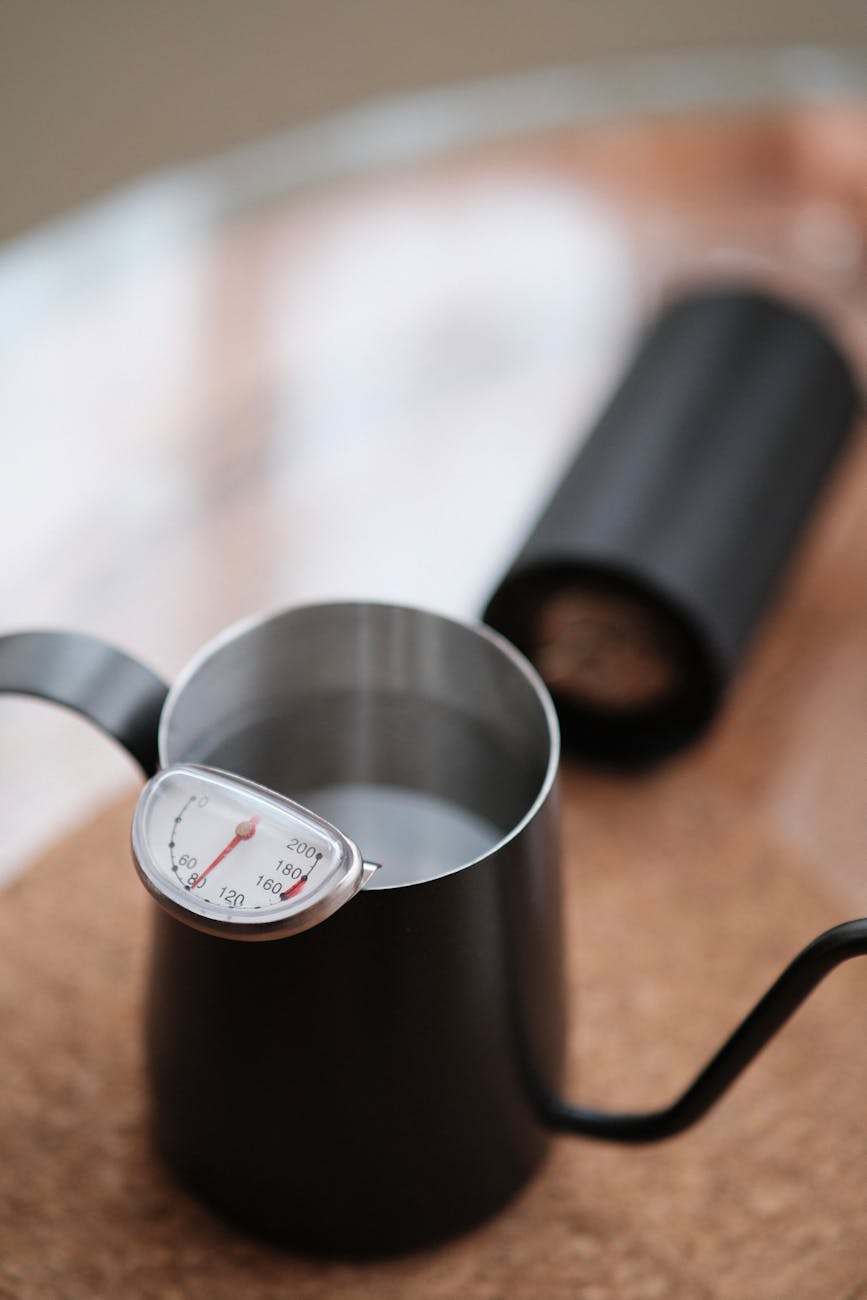
Mastering your brew: A guide to coffee temperature and roast profiles
The quest for the perfect cup of coffee is a journey filled with variables. From the origin of the bean to the size of the grind, every detail matters. Yet, one of the most powerful and often overlooked tools in a home brewer’s arsenal is water temperature. It’s not as simple as just using boiling water for every brew. The temperature of your water acts as a solvent, directly influencing which flavor compounds are extracted from the coffee grounds. This article will explore the crucial relationship between brew temperature and different coffee roast profiles. We will explain how to tailor your water temperature to unlock the delicate notes in a light roast and tame the bold intensity of a dark roast, transforming your daily coffee into a truly exceptional experience.
The science of temperature and extraction
Before we can match temperatures to roasts, it’s important to understand why it matters. The process of brewing coffee is called extraction. In simple terms, it’s the act of dissolving the flavor solids from coffee grounds into water. Temperature is the engine that drives this process. Hotter water has more energy, which means it extracts these compounds more quickly and efficiently.
This leads to two key concepts:
- Under-extraction: This happens when the water is too cold or the brew time is too short. The water fails to pull out enough of the desirable sugars and oils, leaving behind the initial, quickly-dissolving acids. The result is a coffee that tastes sour, thin, and sometimes salty.
- Over-extraction: This is the opposite problem, caused by water that is too hot or a brew time that is too long. The water extracts all the good stuff and then keeps going, pulling out unwanted bitter and astringent compounds. This results in a cup that is harsh, bitter, and hollow.
Your goal is to find the perfect balance. By controlling the temperature, you control the rate of extraction, giving you the power to highlight the best qualities of your chosen beans.
Unlocking delicate notes in light roasts
Light roast coffees are roasted for a shorter time, leaving the beans physically harder and denser. They retain more of the coffee cherry’s original characteristics, often featuring bright, acidic, and complex floral or fruity notes. Because these beans are less porous and soluble than their darker counterparts, they present a challenge for extraction. You need more energy to penetrate the bean’s structure and pull out those delicate, nuanced flavors.
This is where higher temperatures come in. For light roasts, you should aim for a water temperature between 92-96°C (198-205°F). This hotter water has the power to properly break down the compounds within the dense bean, ensuring you get a full, sweet extraction. Using water that’s too cool will result in an under-extracted, unpleasantly sour cup that tastes more like green vegetables than a delightful coffee. The higher heat brings the inherent sweetness forward to balance the bright acidity, creating a vibrant and lively brew.
Taming the intensity of dark roasts
As we move to the other end of the spectrum, the rules change completely. Dark roast beans have spent a much longer time in the roaster. This process makes them more brittle, porous, and far more soluble. The original flavors of the bean have been largely replaced by notes developed during the roasting process: deep chocolate, caramel, nuts, and smoke. The acidity is significantly reduced, and the potential for bitterness is greatly increased.
Because dark roast beans give up their flavors so easily, using high-temperature water is a recipe for disaster. It will rapidly over-extract the grounds, pulling out harsh, ashy, and intensely bitter flavors. To brew a rich, smooth, and full-bodied cup from a dark roast, you need to use cooler water. A temperature range of 85-90°C (185-195°F) is ideal. This gentler temperature slows down the extraction, allowing you to dissolve the desirable rich and sweet compounds without grabbing the bitter ones along with them. The result is a bold but smooth cup that highlights the roasty sweetness you’re looking for.
Finding the sweet spot for medium roasts and a quick guide
Medium roasts, as you might expect, sit comfortably in the middle. They offer a balance between the origin characteristics found in light roasts and the rich, toasted notes of dark roasts. This balance makes them more forgiving and provides a great starting point for experimentation. Generally, a good starting temperature for a medium roast is around 90-93°C (195-200°F).
This is where you can truly start to “dial in” your brew based on taste. If your medium roast tastes a little flat and sour, try increasing the temperature by a degree or two to extract more sweetness. If it has a slight bitter edge, lower the temperature to soften it. Think of the recommended temperatures not as rigid rules, but as highly accurate starting points on your brewing journey.
Here is a simple table to use as a quick reference:
| Roast profile | Bean characteristics | Recommended temp (°C) | Recommended temp (°F) | Desired flavor profile |
|---|---|---|---|---|
| Light roast | Dense, less soluble, acidic | 92-96°C | 198-205°F | Bright, acidic, floral, fruity |
| Medium roast | Balanced, versatile | 90-93°C | 195-200°F | Sweet, balanced, rounded |
| Dark roast | Porous, highly soluble, low acid | 85-90°C | 185-195°F | Rich, bold, chocolatey, smooth |
Controlling your brew temperature is one of the most effective ways to elevate your coffee from good to great. As we’ve seen, it’s not a one-size-fits-all parameter. The physical properties of the coffee bean change dramatically during the roasting process, and your brewing method must adapt accordingly. The core principle is simple: use hotter water for dense, light roasts to unlock their complex flavors, and use cooler water for porous, dark roasts to avoid extracting unpleasant bitterness. By investing in a simple kettle with temperature control, you give yourself the power to experiment. Use these guidelines as your starting point, taste the results, and adjust. After all, the perfect brew temperature is ultimately the one that makes a cup of coffee you truly love.

 No products in the cart.