

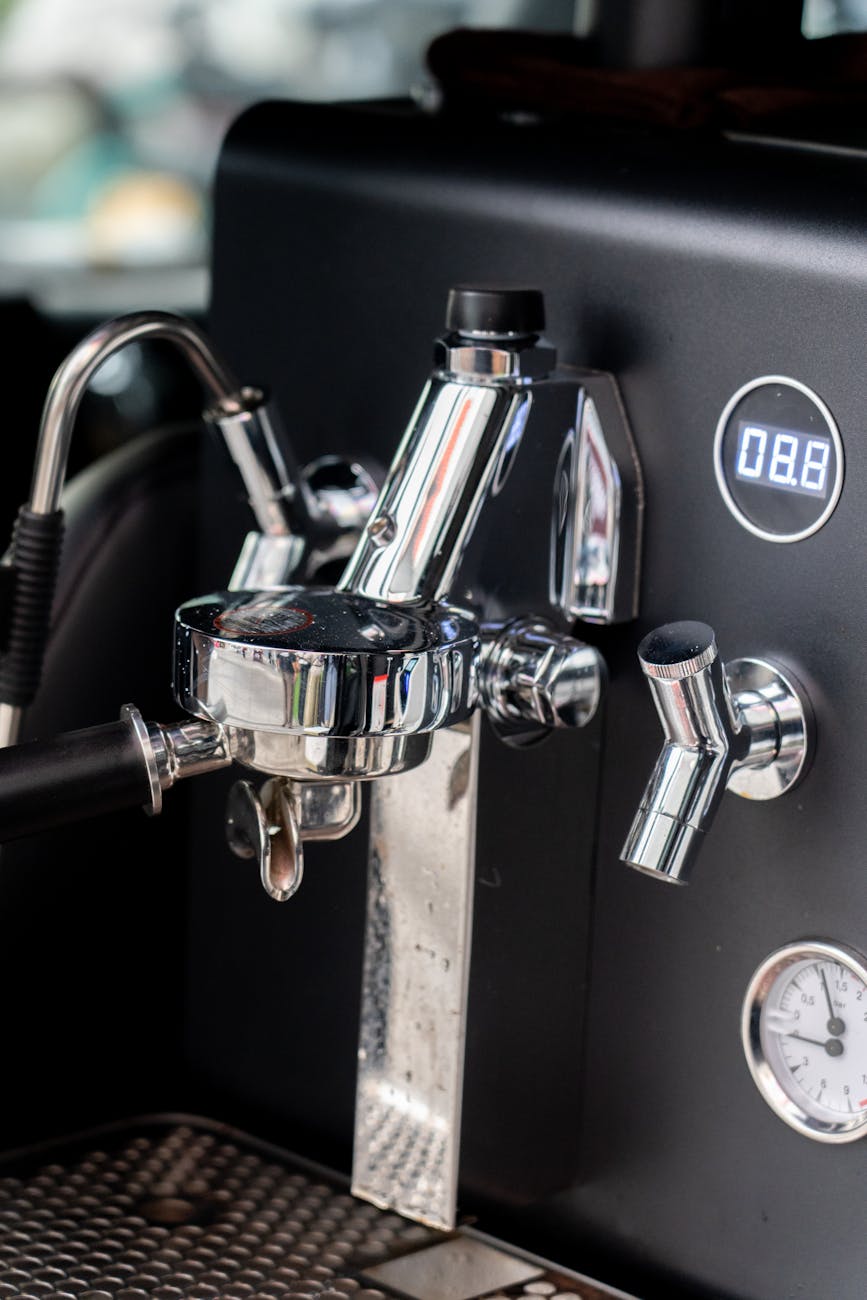
The manual lever espresso machine represents the pinnacle of hands-on coffee brewing, offering the barista complete control over every variable in the extraction process. Chief among these is pressure profiling—the art of manipulating the pressure applied to the coffee puck throughout the shot. However, this control is only half of the equation. The other critical, interconnected variable is the grinder setting. Simply setting your grinder and pulling the lever is a recipe for frustration. To truly unlock the potential of your lever machine and craft exceptional espresso, you must learn to adjust your grind size in harmony with your desired pressure profile. This article will guide you through this nuanced dance, exploring how to tailor your grind for different profiles to achieve a balanced, delicious, and repeatable extraction.
The dance between pressure and grind size
At its core, espresso extraction is about forcing hot water through a tightly packed bed of coffee grounds. The size of these grounds creates resistance. A finer grind creates a more compact puck with less space between particles, increasing resistance and slowing the flow of water. A coarser grind does the opposite, creating more space and allowing water to pass through more easily. On a standard semi-automatic machine with a fixed 9-bar pump, the barista’s primary job is to adjust the grind size to achieve a target extraction time and yield. The pressure is a constant.
With a manual lever machine, this relationship becomes a dynamic interplay. You are not a slave to a fixed pressure; you are its conductor. This means you can’t think of grind size in isolation. If you plan to pull a shot with a long, low-pressure pre-infusion, the ideal grind size will be different than for a shot with a fast, high-pressure ramp-up. The grind setting and the pressure profile are two levers you must operate in tandem. One without consideration for the other will lead to an imbalanced shot. Understanding this symbiosis is the first and most crucial step toward mastering your manual lever machine.
Decoding the pressure profile: from pre-infusion to tail-off
To match your grind to a pressure profile, you must first understand the distinct phases of a lever shot and how grind size influences each one. A typical pull can be broken down into several key stages:
- Pre-infusion: This is the initial phase where water is introduced to the puck at low pressure (typically 1-4 bars). The goal is to gently and evenly saturate the grounds. A grind that is too fine can impede this saturation, leading to dry spots and channeling later. Conversely, a grind that is slightly coarser can help the water permeate the entire puck more uniformly during a long pre-infusion.
- Ramp-up: This is the stage where you begin applying more force to the lever, increasing the pressure toward your peak target. The integrity of your coffee puck is tested here. If your grind is too coarse, the rapidly increasing pressure can blast through weak points, creating channels and ruining the shot before it even truly begins.
- Peak pressure: This is the main extraction phase, where most of the coffee’s soluble compounds are dissolved. Here, the grind must provide enough resistance to maintain your target pressure (e.g., 6-9 bars) and control the flow rate. The wrong grind will cause the shot to either gush out uncontrollably (too coarse) or choke the machine (too fine).
- Tapering off: As the shot progresses, many baristas will allow the pressure to naturally decline. This gentle finish can reduce the extraction of bitter compounds. The grind size affects how this tail-end behaves, influencing the final body and flavor balance of the shot.
Practical strategies for dialing in your lever machine
Dialing in a lever machine is an iterative process of adjusting grind and pressure together. Instead of aiming for a rigid “25-second shot,” you are chasing a taste profile. Let’s explore how to approach this for different profiling goals.
Start with a baseline. A good starting point is to aim for a profile with a 10-second pre-infusion at 2 bars, followed by a ramp-up to 8 bars, holding it there until you see blonding, and then letting the pressure taper off. For this, you will likely need to grind slightly finer than you would for a standard 9-bar pump machine shot. This is because the extended pre-infusion will have already saturated the puck, and a slightly finer grind provides the necessary resistance for the 8-bar peak pressure phase.
From there, you can experiment. If you want to pull a “blooming” shot with a very long (20-30 second) pre-infusion, you’ll need to grind finer still to prevent water from dripping through too early and to build a rich, syrupy body. Conversely, for a very light roast coffee, you might opt for a lower peak pressure (e.g., 6-7 bars) to avoid extracting astringent flavors. In this case, you would need to grind coarser to allow for an appropriate flow rate at that lower pressure.
Here is a basic reference table to guide your adjustments:
| Desired Profile Style | Pressure Characteristics | General Grind Adjustment (from a 9-bar baseline) | Flavor Goal |
|---|---|---|---|
| Classic Lever | Gentle pre-infusion, peak at 9 bars, natural decline. | Slightly finer. | Balanced, rich body, classic espresso notes. |
| “Slayer” Style | Very long, low-pressure pre-infusion, then full pressure. | Significantly finer. | High sweetness, syrupy texture, muted acidity. |
| Low Pressure (Light Roasts) | Gentle pre-infusion, peak at 6-7 bars. | Coarser. | Highlighting delicate acidity and floral notes. |
| Quick Ramp (Dark Roasts) | Short pre-infusion, fast ramp to 8 bars, quick decline. | Slightly coarser. | Heavy body, reduced bitterness, chocolate notes. |
Troubleshooting: what the puck is telling you
Your espresso shot and the spent puck provide valuable feedback for your next adjustment. Learning to read these signs is key to consistency.
- The shot gushes out: If you feel very little resistance on the lever and the shot flows like a faucet, your grind is too coarse for the pressure you are applying. The immediate solution is to grind finer. Alternatively, you could try pulling the next shot with less peak pressure to see if you can salvage the grind setting.
- The lever is impossible to pull: If you apply force and the lever barely moves, or only a few dark, syrupy drips emerge, your grind is too fine. This chokes the machine and leads to over-extraction and bitterness. The solution is to grind coarser.
- You see channeling (spurters): If you have a bottomless portafilter and see jets of water spraying out, it means water has found a path of least resistance and is not flowing evenly through the puck. This can be a sign of poor puck preparation (tamping, distribution), but it is often a grind/pressure mismatch. A rapid pressure ramp-up on a slightly-too-coarse grind is a common culprit. Try grinding a step finer and applying pressure more gently at the start of your ramp-up.
Ultimately, the journey of mastering a manual lever is one of experimentation and sensory feedback. The concepts of grind size and pressure are not independent silos but are intrinsically linked in a delicate performance. By understanding how a finer or coarser grind interacts with different phases of your pressure profile, you move from merely operating a machine to truly conducting an extraction. This article provides the foundational knowledge, but the real learning happens with each shot you pull. Embrace the process, taste everything, and don’t be afraid to adjust both your burrs and your pull style. The perfect shot is not a fixed number, but a moving target that you, the barista, have the unique power to hit.
 No products in the cart.