

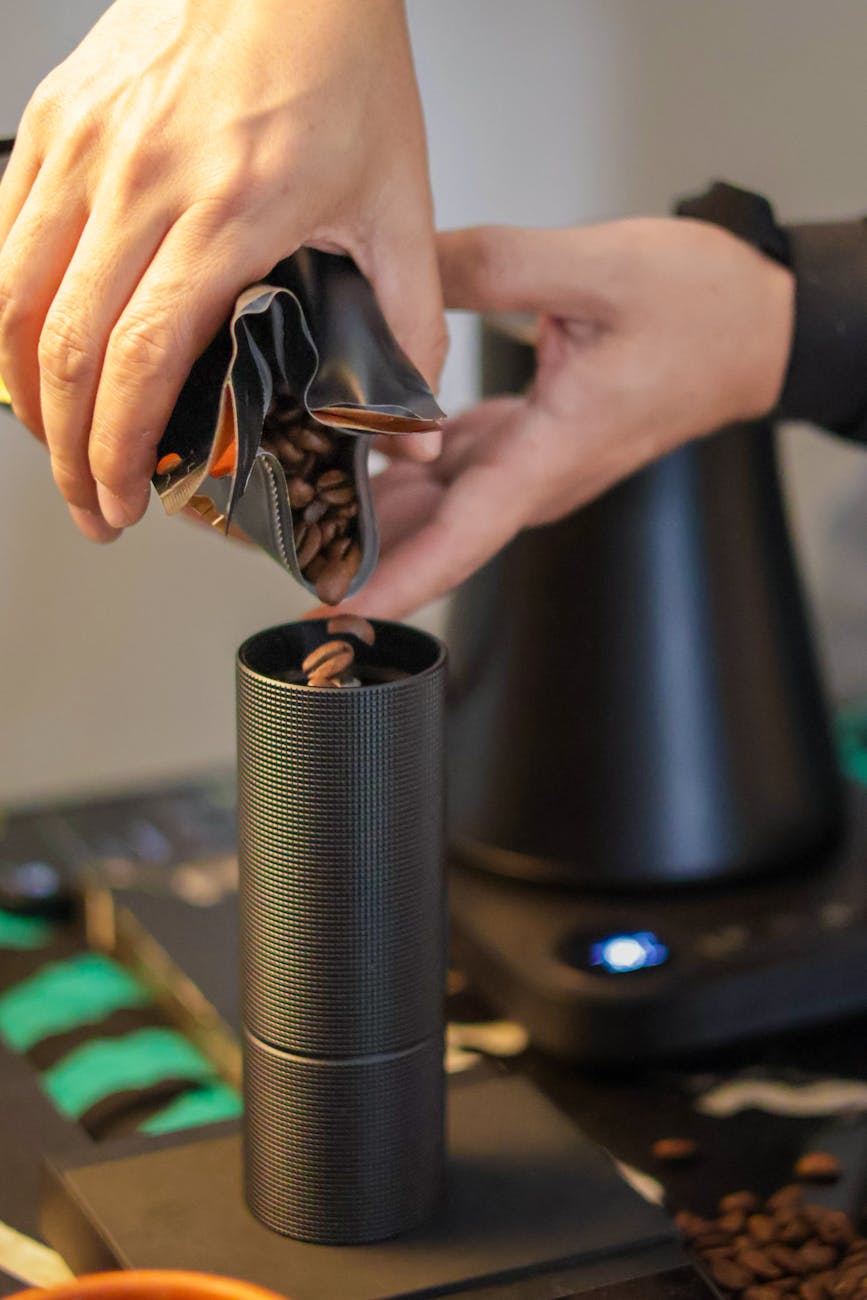
If you’re a coffee enthusiast who grinds your own beans, you’ve undoubtedly faced the frustrating enemy of a clean coffee station: static electricity. That fine spray of coffee grounds and chaff that clings to your grinder, your counter, and your hands is more than just a mess. It can lead to an inconsistent dose and wasted coffee. Fortunately, there’s a brilliantly simple and effective solution that has become a staple in the specialty coffee community. This technique, known as the Ross Droplet Technique or RDT, can completely transform your grinding workflow from a messy chore into a clean, precise process. This article will guide you through exactly what RDT is, why it works, and how to use it correctly to banish static from your routine for good.
Why static is the enemy of a good grind
Before we can defeat an enemy, we must understand it. Static electricity in coffee grinding is a result of the triboelectric effect. As the dry coffee beans are violently fractured and tumbled inside the grinder, they rub against the burrs and each other, creating friction. This friction causes electrons to transfer, building up a static charge on the coffee grounds and chaff. The problem is significantly worse in low-humidity environments, which is why you might notice it’s a bigger issue during the dry winter months. Lighter roasted beans, which tend to be drier and harder than their darker counterparts, are also more susceptible to generating static. This buildup causes grounds to repel each other and cling to any available surface, creating that familiar cloud of coffee dust and making a consistent, clean grind nearly impossible.
Introducing the Ross Droplet Technique (RDT)
The Ross Droplet Technique, often shortened to RDT, is the practice of adding a minuscule amount of water to your whole beans immediately before grinding. The name comes from David Ross, a home barista who popularized the method on online coffee forums. The science behind its effectiveness is simple: the addition of a tiny bit of moisture increases the electrical conductivity on the surface of the beans. This moisture provides a path for the static charge to dissipate safely, preventing it from building up in the first place. Instead of an unruly, charged cloud of particles, you get fluffy, static-free grounds that fall neatly into your portafilter or grounds bin. It’s a beautifully elegant solution that doesn’t require any special equipment, just a drop of water.
How to perform the RDT step-by-step
Implementing the RDT into your coffee routine is incredibly easy, but precision is key. The goal is to add just enough moisture to coat the beans’ surfaces without making them wet. Here is a simple, effective method:
- Weigh your dose: Start by weighing the exact amount of whole beans you need for your brew. This technique is best suited for single-dosing.
- Prepare your water: The easiest tool is a small spray bottle that produces a fine mist. If you don’t have one, you can use the handle of a spoon. Simply dip the very tip of the handle in water. A wet fingertip also works in a pinch.
- Apply the water: This is the most crucial step. If using a spray bottle, give your beans one single spritz from a distance. If using a spoon handle, briefly stir it through the beans. You are aiming for a barely perceptible amount of moisture, not visible droplets.
- Shake the beans: Immediately after adding the water, give your dosing cup a vigorous shake for a few seconds. This ensures the tiny amount of moisture is distributed evenly across all the beans.
- Grind immediately: Dump the beans into your grinder and grind as you normally would. You should notice a dramatic reduction or complete elimination of static.
Important considerations and best practices
While RDT is a game-changer, it’s essential to do it correctly to avoid potential issues. The most common mistake is using too much water. An excessive amount of moisture can cause coffee grounds to clump inside your grinder, potentially leading to blockages and, over the long term, rust on steel burrs. It’s always better to start with less water and add a tiny bit more if you still see static. Many grinder manufacturers caution against introducing any moisture, so it’s a good idea to check your warranty, though the tiny, evaporating amount used in RDT is considered safe by the vast majority of the coffee community.
| Water amount | Visual cue | Potential outcome |
|---|---|---|
| Too little | Beans look completely dry | Ineffective RDT, static remains. |
| Just right | A slight, temporary sheen on beans | Static is eliminated, producing fluffy grounds. |
| Too much | Visible water droplets on beans | Clumping in the grinder, messy cleanup, potential for rust. |
To summarize, static is a persistent annoyance in coffee grinding caused by friction, especially in dry conditions. The Ross Droplet Technique offers a remarkably simple and effective solution. By introducing a tiny amount of water to your beans right before grinding, you increase their conductivity and allow the static charge to dissipate harmlessly. This results in a cleaner, less wasteful, and more consistent grinding experience. Remember the key steps: weigh your beans, add a single spritz or a quick stir with a wet spoon handle, shake to distribute, and grind immediately. The most important rule is that less is more. When done correctly, this small change to your routine will have a huge impact on your workflow, proving that sometimes the best solutions are the simplest ones.


 No products in the cart.