

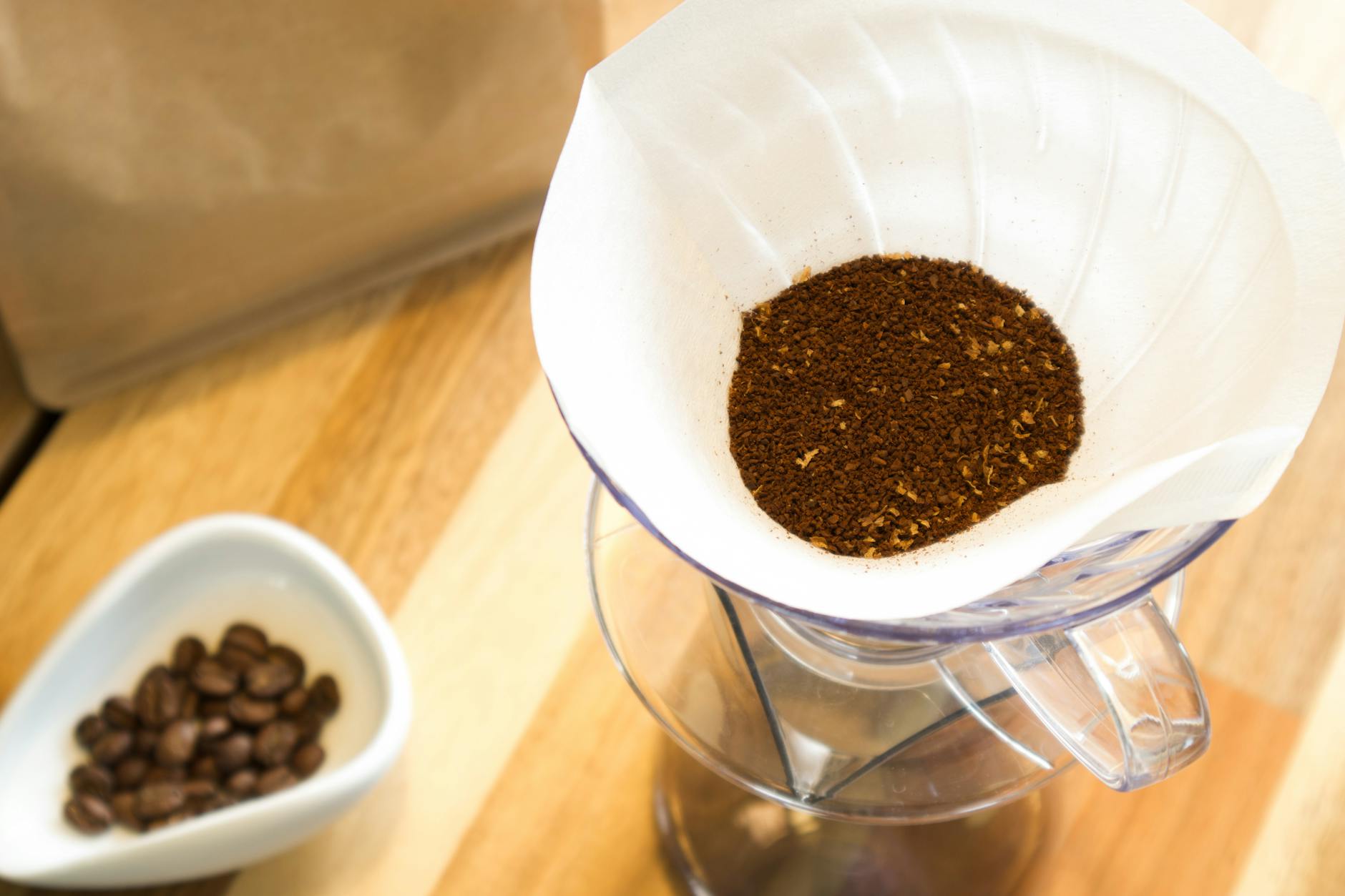
The journey to brewing exceptional coffee at home often starts with the beans, but the true secret lies in the grind. A quality coffee grinder is arguably the most important piece of equipment you can own, and choosing the right one can be daunting. The market is filled with options, but the most significant decision you’ll face is between a dedicated espresso grinder and a versatile all-purpose grinder. While they both turn whole beans into coffee grounds, their design, mechanics, and purpose are fundamentally different. This article will demystify these differences, exploring the nuances of grind size, adjustment mechanisms, and overall functionality to help you understand which type of grinder is the perfect match for your brewing habits and coffee aspirations.
Grind size and consistency: The heart of extraction
Before we can compare grinders, we must first understand why the grind matters so much. Coffee brewing is simply an act of extraction, where water dissolves flavorful compounds from coffee grounds. The size and uniformity of these grounds dictate how this extraction happens. A coarse grind, like rough sea salt, has less surface area, slowing down extraction and making it ideal for methods with long contact times like a French press. A fine grind, like powdered sugar, has immense surface area, allowing for a very fast and intense extraction, which is required for espresso.
This leads to the most critical factor: consistency. If your grinder produces a mix of fine “dust” and large “boulders,” the coffee will extract unevenly. The fine particles will over-extract, tasting bitter and harsh, while the large particles will under-extract, tasting sour and weak. A good grinder produces particles of a uniform size, leading to a balanced, clean, and delicious cup. It’s this pursuit of consistency, especially at very fine settings, that creates the primary divide between espresso and all-purpose grinders.
The specialist: Mechanics of an espresso grinder
An espresso grinder is a tool of pure precision, engineered for one specific task: producing a fine, consistent grind suitable for high-pressure extraction. Its entire design is optimized to allow the barista to make tiny, incremental changes to perfect an espresso shot, a process known as “dialing in.”
The key features that define an espresso grinder include:
- Adjustment mechanism: This is the most significant difference. Espresso grinders almost always feature a stepless or micro-stepped adjustment. A stepless grinder has no fixed settings, allowing for infinite, tiny adjustments between the burrs. This is crucial because a minuscule change in grind size can alter an espresso shot’s extraction time by several seconds.
- Burr set: They often feature larger flat or conical burrs designed to produce a highly uniform grind in the fine espresso range with minimal heat buildup. The larger surface area allows for faster, more consistent grinding.
- Purpose-built features: Most espresso grinders are built for a specific workflow. They typically include a portafilter holder or cradle, allowing you to grind directly into your basket. Many also have programmable timed or weight-based dosing for repeatable, precise amounts of coffee every time.
This specialization means that while an espresso grinder excels at its job, it’s often a poor choice for other brew methods. Its adjustment mechanism isn’t designed for quick, large changes from fine to coarse, and its performance can decline at coarser settings.
The jack-of-all-trades: Versatility of an all-purpose grinder
As the name suggests, an all-purpose grinder (sometimes called a “brew grinder”) is designed to handle a wide spectrum of grind sizes, from very coarse for cold brew and French press to medium for drip and pour-over, and fine enough for a Moka pot or some entry-level espresso machines. It’s built for flexibility rather than the singular precision of an espresso grinder.
Its defining characteristic is a stepped adjustment mechanism. Instead of a smooth, infinite dial, you’ll feel distinct “clicks” as you change the grind setting. Each click represents a pre-defined distance between the burrs. While high-end all-purpose grinders have many steps, they still lack the near-infinite control of a stepless espresso grinder. That one perfect espresso setting might fall between two clicks, leaving you unable to dial in your shot perfectly.
While some all-purpose grinders are marketed as “espresso capable,” they are best suited for pressurized portafilters found on beginner machines, which are more forgiving of grind inconsistencies. For a non-pressurized basket on a semi-automatic machine, the lack of fine adjustment will quickly become a source of frustration.
Which grinder is right for your coffee journey?
Choosing between these two types of grinders comes down to your primary brewing method. Answering the question, “How do I make my coffee most of the time?” will give you your answer. There is no single “best” grinder, only the best grinder for you.
If you are a dedicated espresso enthusiast with a semi-automatic machine, investing in a dedicated espresso grinder is non-negotiable. It is the key to unlocking consistent, delicious shots. If, however, you enjoy a variety of methods like pour-over, AeroPress, and French press, and only occasionally dabble with a Moka pot or a basic espresso machine, an all-purpose grinder is the more practical and economical choice.
Here is a table to summarize the key differences:
| Feature | Espresso grinder | All-purpose grinder |
|---|---|---|
| Best for | Espresso, especially with non-pressurized machines. | Pour-over, drip, French press, AeroPress, cold brew. |
| Adjustment type | Stepless or micro-stepped for infinite fine-tuning. | Stepped with distinct settings. |
| Grind range | Narrow and focused on the fine end of the spectrum. | Wide, from coarse to fine. |
| Key strength | Precision and repeatability for dialing in espresso. | Versatility to switch between multiple brew methods. |
Ultimately, trying to force one grinder to do the other’s job well often leads to compromise and frustration. Many serious coffee enthusiasts eventually own two grinders: one for espresso and one for everything else.
In conclusion, the choice between an espresso and an all-purpose grinder is a choice between specialization and versatility. Espresso grinders are precision instruments, offering the stepless, micro-level control necessary to perfect the demanding art of espresso extraction. Their design is focused entirely on consistency and fine-tuning within a very narrow grind range. In contrast, all-purpose grinders are the adaptable workhorses of the coffee world, providing a wide range of settings to accommodate everything from a French press to a pour-over. While they sacrifice the ultra-fine precision needed for true espresso, they offer unparalleled flexibility. Your final decision should be guided by your daily brewing ritual, ensuring the grinder you choose is a partner, not a bottleneck, in your pursuit of better coffee.
 No products in the cart.