

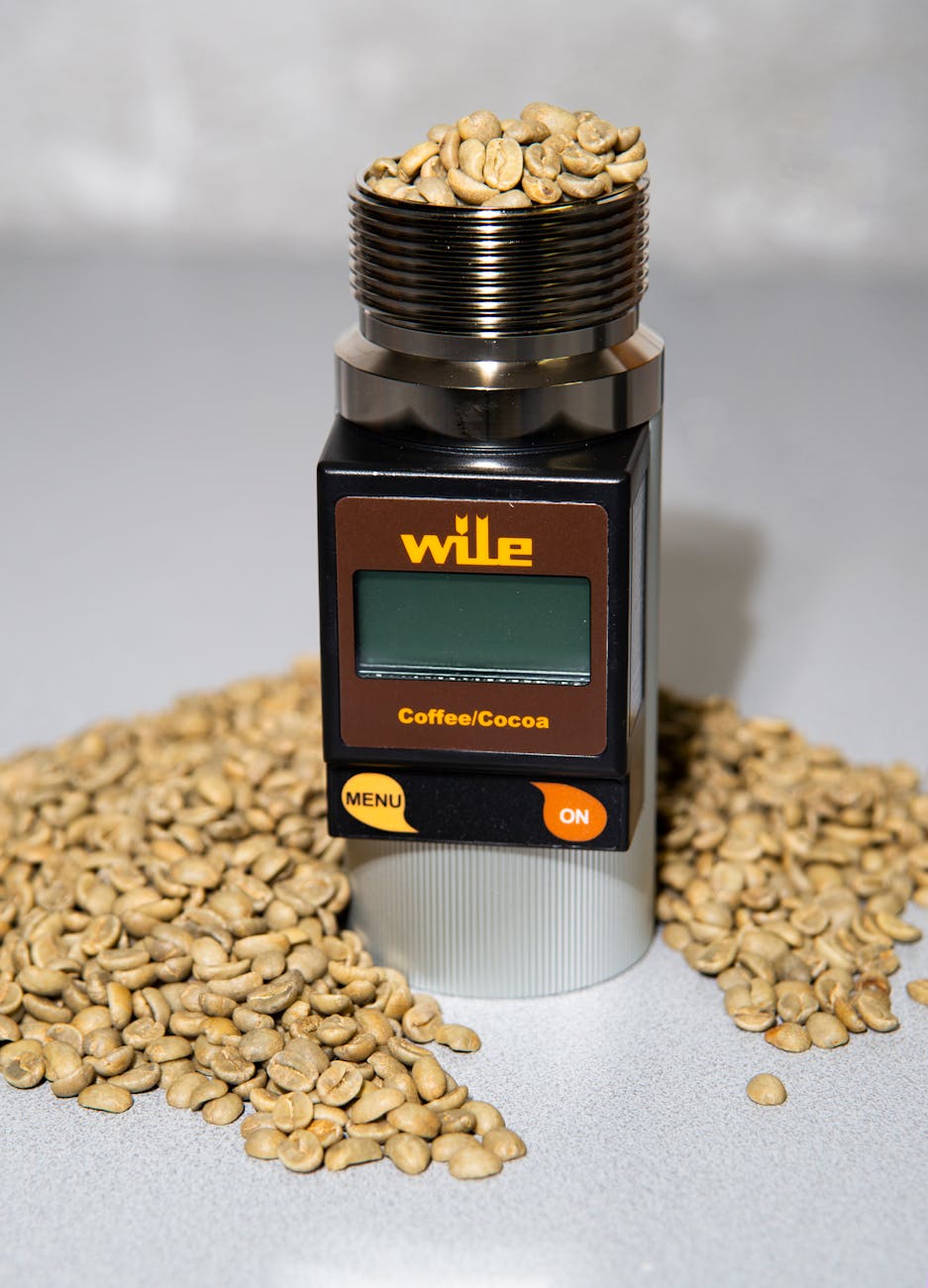
Unlocking espresso: How coffee bean moisture content affects puck resistance
Every coffee enthusiast on the quest for the perfect espresso shot knows the ritual. You meticulously weigh your beans, dial in the grind size, tamp with precision, and monitor the pressure and temperature. Yet, sometimes, a shot that was perfect yesterday suddenly runs too fast or chokes the machine today. While we often blame the grind setting or our tamping technique, a hidden variable is frequently at play: the moisture content of the coffee beans. This often-overlooked factor has a profound effect on how coffee grinds and behaves under pressure. This article will explore the direct relationship between coffee bean moisture and the resulting espresso puck resistance, revealing how this subtle property can make or break your extraction.
What is moisture content and why does it matter?
Before we can understand its effect, we need to clarify what moisture content is. It’s the amount of water retained within the cellular structure of a roasted coffee bean, typically expressed as a percentage. Green, unroasted coffee beans have a moisture content between 9% and 12%. During the roasting process, this water is largely evaporated, and a properly roasted bean for espresso usually lands between 1% and 2% moisture. However, this number isn’t static. Roasted coffee is hygroscopic, meaning it readily absorbs moisture from the surrounding air. A bag of beans opened in a humid environment will gain moisture, while one in a very dry climate will lose it. This change in moisture fundamentally alters the bean’s physical properties, particularly its density and brittleness, which is the starting point for its impact on puck resistance.
From brittle beans to fine particles
The moisture level inside a coffee bean directly dictates how it shatters in a grinder. Think of it like the difference between snapping a dry twig versus a green one. A coffee bean with very low moisture content (e.g., below 1%) is extremely brittle. When it hits the burrs of a grinder, it shatters into a wider range of particle sizes, producing a significant amount of very small particles, known as fines.
Conversely, a bean with a slightly higher moisture content (e.g., closer to 2%) is more pliable. It resists shattering and is cut more cleanly by the burrs. This results in a more uniform grind with a much lower proportion of fines. Therefore, two different batches of beans at the exact same grinder setting can produce dramatically different particle distributions simply due to a small variance in their internal moisture. This difference in fines is the primary mechanical reason why moisture affects the final extraction.
How grind distribution creates puck resistance
Now we connect the grind to the action in the portafilter. Espresso puck resistance is simply a measure of how difficult it is for water to pass through the compacted bed of coffee grounds. The structure of this coffee bed is determined by the size and distribution of the ground particles. When you have a grind with a high percentage of fines—produced by those dry, brittle beans—those tiny particles fill in the empty spaces between the larger grounds. This creates a denser, less permeable puck. The water has to navigate a much more complex and restricted path, which dramatically increases the resistance and slows down the flow rate.
On the other hand, a uniform grind with few fines—from beans with adequate moisture—leaves more open space between particles. This creates a more permeable puck, allowing water to flow through with less opposition. This decreases the overall resistance, causing the shot to run faster. Understanding this relationship is key to diagnosing extraction problems.
Practical impact on dialing in your espresso
This entire chain reaction has a very real impact on your daily espresso routine. A change in bean moisture requires an adjustment to your grind size to achieve the same shot time and extraction quality. If you don’t account for it, you will get either under-extracted or over-extracted shots.
- Low Moisture (Drier Beans): The high amount of fines will create high resistance. If you use your normal grind setting, the shot may run very slowly or even choke the machine. To compensate, you must grind coarser to reduce the surface area and create a more permeable puck.
- High Moisture (More Humid Beans): The lack of fines will create low resistance, leading to a fast shot (a “gusher”) that is sour and under-extracted. To fix this, you must grind finer to increase the surface area and build more resistance.
This dynamic is why a “dialed in” grind setting is never permanent. It must adapt to the age of the beans and even the ambient humidity of the day.
| Characteristic | Low Moisture Content (e.g., <1%) | Higher Moisture Content (e.g., >1.5%) |
|---|---|---|
| Bean Property | Brittle and dense | More pliable and less dense |
| Grinding Result | Produces many fines, uneven particle size | Produces fewer fines, more uniform particle size |
| Puck Resistance | High resistance | Low resistance |
| Shot Behavior (Unadjusted Grind) | Runs slow, may choke, high risk of channeling | Runs fast, “gusher,” watery |
| Flavor Profile | Bitter, astringent, over-extracted | Sour, weak, under-extracted |
| Required Grind Adjustment | Grind coarser to compensate | Grind finer to compensate |
In conclusion, the moisture content of your coffee beans is a critical, dynamic variable in espresso preparation. It sets off a chain reaction that begins with the bean’s brittleness, determines the amount of fines produced during grinding, and ultimately dictates the puck’s resistance to water. A drier bean creates more fines and higher resistance, while a more hydrated bean does the opposite. Recognizing this allows you to move beyond blaming the grinder alone and start thinking about the coffee itself. By understanding how humidity and bean age affect moisture, you can anticipate changes and adjust your grind proactively, transforming frustrating inconsistency into masterful control and ensuring a delicious, well-balanced espresso shot, every single time.



 No products in the cart.