

The quest for the perfect espresso shot at home is a journey filled with variables, from bean origin and roast level to grind size and water temperature. Among these, one of the most critical yet often misunderstood elements is pump pressure. Many home baristas are familiar with the magic number—9 bars—but what does it actually mean? Why is it the industry standard, and how does deviating from it affect the final taste in your cup? This article will demystify the role of pump pressure in home espresso brewing. We will explore its fundamental purpose in extraction, dissect the 9-bar benchmark, and examine how manipulating pressure can unlock new dimensions of flavor, transforming your coffee-making from a routine into a precise craft.
What is brew pressure and why it matters
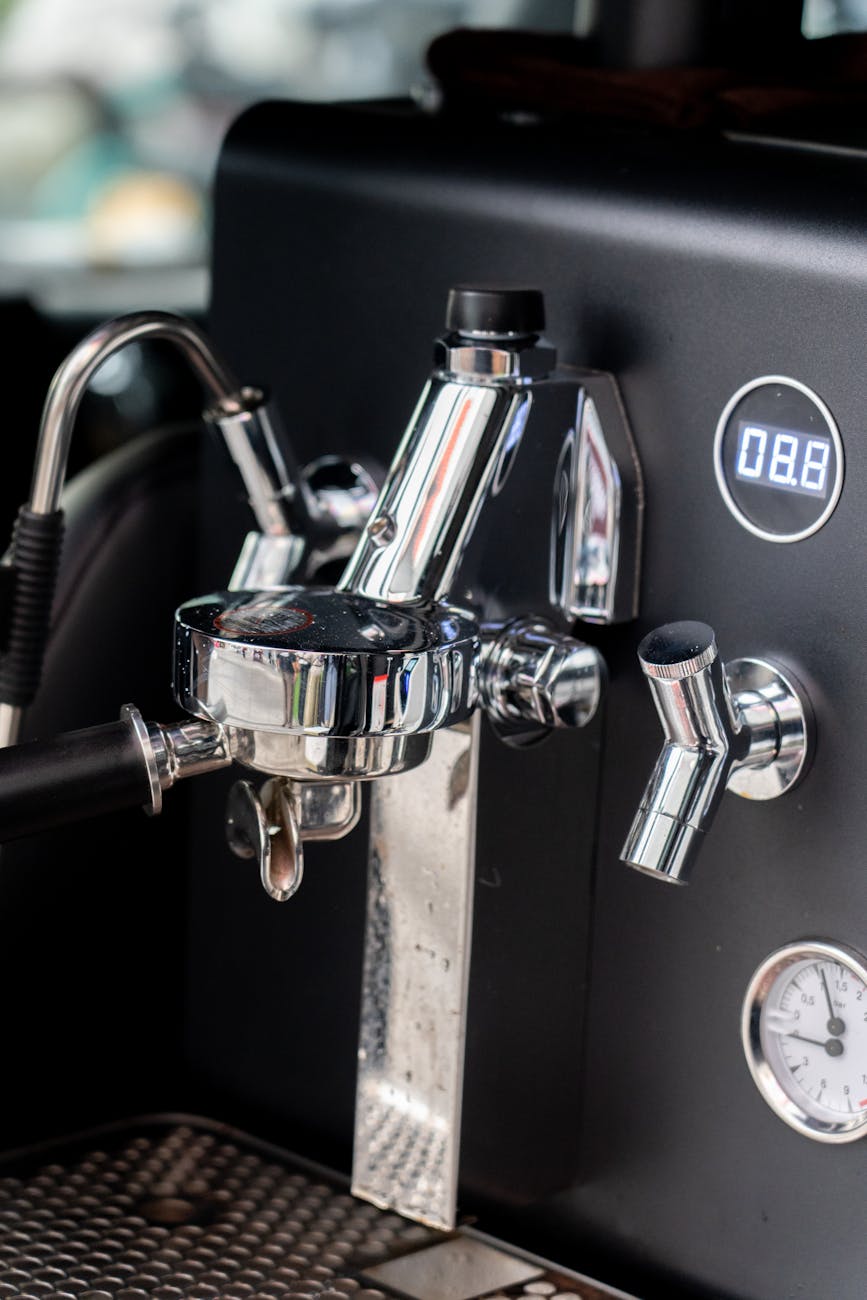
At its core, brew pressure is the force the espresso machine’s pump exerts to push hot water through a compacted puck of finely ground coffee. It’s important to distinguish between pump pressure, often shown on a machine’s gauge, and the actual pressure experienced at the grouphead, which can be slightly lower. This force is the engine of espresso extraction. Without it, water would simply trickle through the grounds, resulting in a weak, under-extracted coffee, more akin to a pour-over than a true espresso.
The primary function of high pressure is to overcome the resistance of the tightly packed coffee puck. This allows for a swift and efficient extraction, typically within 25-30 seconds. During this short window, the pressurized water works to dissolve and emulsify the coffee’s soluble compounds: sugars for sweetness, acids for brightness, and oils which are crucial for creating espresso’s signature velvety body and stable crema. In essence, pressure is the key that unlocks the dense concentration of flavor that defines an espresso shot. It dictates the speed, efficiency, and overall character of the extraction process.
The 9-bar standard: A benchmark, not a dogma
The concept of 9 bars of pressure as the ideal for espresso is deeply ingrained in coffee culture. This standard originated in post-war Italy with the development of pump-driven espresso machines. Through extensive experimentation, pioneers found that a pressure of approximately 9 atmospheres (or 9 bars) provided the best balance for traditional Italian-style, darker-roasted coffee blends. It was powerful enough to extract rich flavors and produce a thick crema without being so aggressive that it caused channeling—where water punches holes through the puck, leading to an uneven, bitter extraction.
However, it’s a mistake to view 9 bars as a rigid, unchangeable rule. It is more accurately described as an exceptionally effective benchmark. It works consistently well for a wide variety of coffees and provides a reliable starting point for any home barista. But as specialty coffee has evolved, particularly with the rise of lighter roasts, baristas have discovered that different pressure levels can be used to highlight specific characteristics in the bean. Thinking of 9 bars as a proven foundation—rather than a strict law—opens the door to more intentional and nuanced brewing.
How different pressure levels affect your espresso
Moving away from the 9-bar standard can have a dramatic impact on the final taste, texture, and aroma of your espresso. Adjusting pressure is another tool, just like changing grind size or dose, that allows you to steer the extraction in a desired direction. Lower pressures tend to be more gentle and forgiving, while higher pressures are aggressive and demand perfect puck preparation to avoid flaws.
Here’s a breakdown of what you can generally expect at different pressure ranges:
- Low Pressure (6-8 bars): Brewing at a lower pressure slows down the extraction. This gentler approach can be highly beneficial for light-roasted, dense beans, which are often more difficult to extract evenly. It tends to reduce bitterness and can accentuate delicate floral notes and bright acidity. The resulting shot often has a softer, rounder body and can be sweeter, though it may produce a slightly thinner crema.
- Standard Pressure (9 bars): This is the sweet spot for a reason. It delivers a balanced and complex shot with a rich body, clear flavors, and a thick, persistent crema. It’s the ideal starting point that reliably produces a classic, well-rounded espresso profile for most medium to dark roasts.
- High Pressure (10+ bars): Pushing the pressure beyond 9 bars significantly increases the risk of channeling. This aggressive extraction can easily lead to over-extraction, pulling out unwanted bitter and astringent compounds. While it might produce a visually impressive, thick crema, the flavor is often compromised, becoming harsh and muddy, with the bean’s more subtle nuances completely lost.
| Pressure Range | Extraction Speed | Common Taste Profile | Best For |
|---|---|---|---|
| 6-8 Bars (Low) | Slower, more gentle | Softer body, heightened acidity and sweetness, less bitterness | Light roasts, single origins, forgiving flawed puck prep |
| 9 Bars (Standard) | Balanced, efficient | Classic espresso: balanced sweetness, acidity, and body | All-rounder, traditional espresso blends, medium/dark roasts |
| 10+ Bars (High) | Fast, aggressive | Potentially bitter, astringent, muted complex flavors | Not generally recommended; highly prone to channeling |
Pressure profiling: The next frontier in home espresso
For enthusiasts looking to gain ultimate control over extraction, the most advanced technique is pressure profiling. This involves actively manipulating the pressure at different stages of the brewing process, rather than holding it at a static level. This capability, once reserved for very high-end commercial machines, is now becoming more accessible to home users through manual lever machines, flow control modification kits, and advanced prosumer machines.
A typical pressure profile might look like this:
- Pre-infusion: The shot begins at a very low pressure (e.g., 2-4 bars) for several seconds. This gently saturates the coffee puck, swelling the grounds and settling the bed. This single step dramatically reduces the likelihood of channeling when full pressure is applied.
- Ramp-up: The pressure is gradually or quickly increased to the main extraction level.
- Full Pressure: The shot continues at the target pressure, often around 8 or 9 bars, for the bulk of the extraction.
- Ramp-down: Towards the end of the shot, the pressure is tapered off. Since bitter compounds are often extracted last, reducing pressure can minimize their presence in the final cup, resulting in a sweeter, cleaner finish.
Pressure profiling empowers the barista to fine-tune the extraction for a specific bean, highlighting desired flavors while suppressing unwanted ones. It represents the pinnacle of control in espresso brewing.
In conclusion, pump pressure is far more than a simple number on a gauge; it is a dynamic force that fundamentally shapes the character of your espresso. We’ve seen that while 9 bars serves as an invaluable and time-tested benchmark, it is not an absolute rule. Understanding how pressure works allows a home barista to make intentional choices. Lowering the pressure can bring out delicate, sweet notes in a light roast, while mastering the classic 9 bars is key to a balanced, traditional shot. For the truly dedicated, exploring pressure profiling opens up a world of nuance and control. Ultimately, recognizing the profound influence of pressure elevates your brewing, turning it from a mechanical process into an art form focused on flavor.


 No products in the cart.