

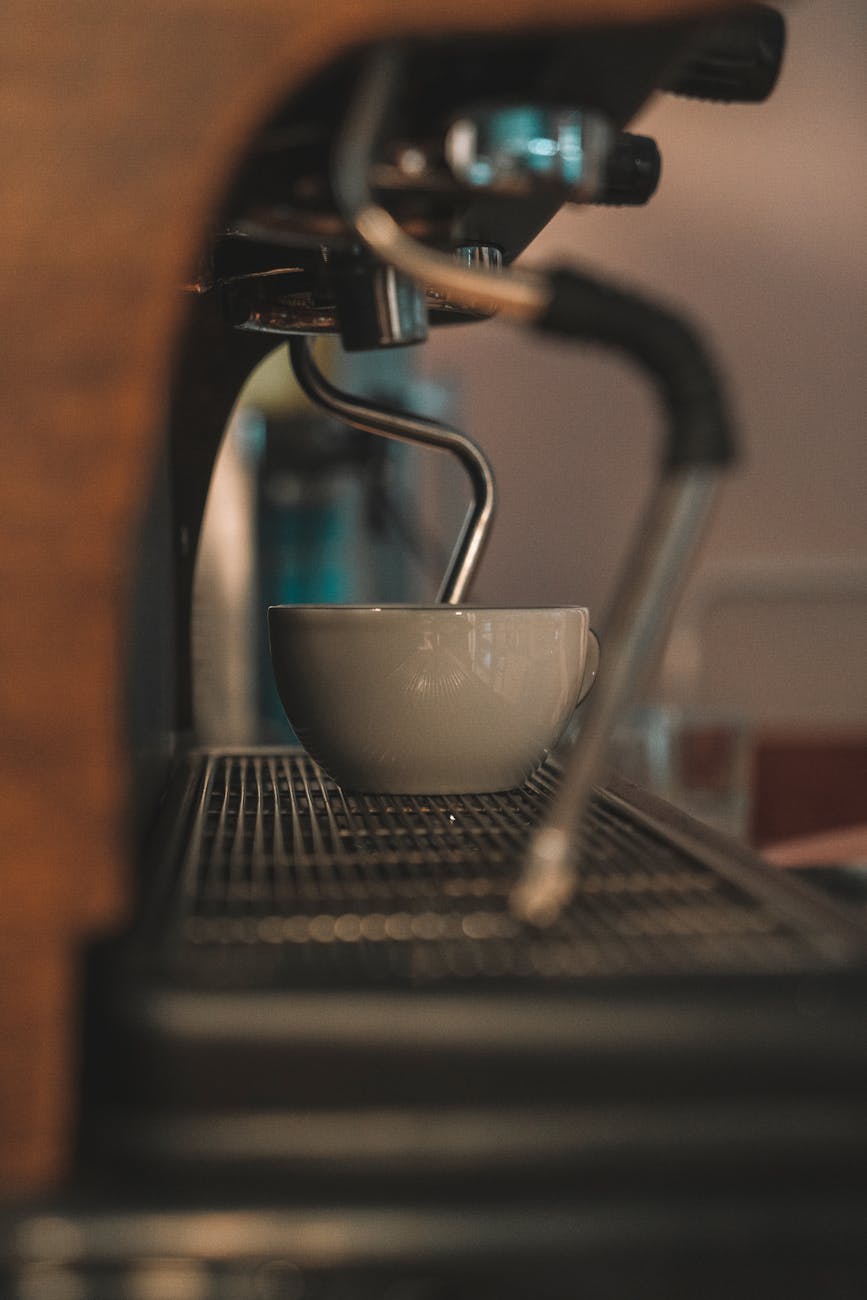
There’s a unique excitement that comes with opening a fresh bag of espresso beans. The aroma promises new flavors and a delightful coffee experience. However, that promise can quickly turn to frustration when your first few shots are sour, bitter, or just plain disappointing. Every coffee is different, with its own unique density, roast level, and origin characteristics. This means the settings that worked for your last bag of beans likely won’t work for this new one. This process of adjusting your equipment and technique to extract the best possible flavor is called “dialing in.” This guide provides a clear, step-by-step workflow to help you navigate this process efficiently, turning that bag of unknown potential into consistently delicious espresso.
The essentials: a starting point for any bean
Before you even grind a single bean, it’s crucial to understand the fundamentals. Dialing in is about controlling variables to achieve a balanced extraction. Your goal is to find the perfect recipe of dose, yield, and time that highlights the coffee’s best attributes. First, ensure you have the right tools: an espresso machine, a quality burr grinder, a digital scale with 0.1g accuracy, a timer, and a tamper. Your scale is the most important tool here; guessing is the enemy of consistency.
Next, look at your beans. Are they a light, medium, or dark roast? This is your first clue.
- Light roasts are denser and less soluble, often requiring a finer grind, a slightly higher brew temperature, and a longer ratio (e.g., 1:2.5 or 1:3) to extract their delicate, acidic notes.
- Dark roasts are more brittle and soluble, so they extract easily. They often taste better with a coarser grind and a shorter ratio (e.g., 1:1.5 or 1:2) to avoid bitterness and highlight their deep, chocolatey flavors.
With this in mind, you can establish a universal starting point. A great baseline recipe for most beans is a 1:2 brew ratio in about 25 to 30 seconds. For example, if you use 18 grams of dry coffee, you’ll aim for 36 grams of liquid espresso in your cup. This is your control variable, the foundation from which all adjustments will be made.
The workflow: dose, grind, and yield
The key to a logical workflow is to change only one variable at a time. Trying to adjust the grind and the dose simultaneously will leave you lost and confused. Follow this sequence for a clear and repeatable process.
First, lock in your dose. Your dose, or the amount of dry coffee grounds you use, is determined by the size of your portafilter basket. Common sizes are 14g, 18g, or 20g. Fill your basket with your chosen dose and be consistent. Use your scale to ensure you are using exactly 18.0g every single time, not 17.8g one shot and 18.3g the next. Once you’ve decided on your dose, don’t change it for now. This becomes your constant.
Second, adjust the grind to control time. With your dose locked in (e.g., 18g) and your target yield set (e.g., 36g), your primary goal is to make the shot finish within the 25-30 second window. The grind size is your main tool for this.
- If your 36g shot comes out in 15 seconds, it’s too fast. Your grind is too coarse. You need to make the grind finer to create more resistance for the water, slowing down the shot.
- If your 36g shot takes 45 seconds, it’s too slow. Your grind is too fine. You need to make the grind coarser to allow the water to flow through more easily, speeding up the shot.
Make small adjustments to your grinder setting until you can consistently pull your 18g in / 36g out shot in that 25-30 second range.
Tasting and troubleshooting common problems
Once you’ve hit your target time, it’s time to taste. The clock gets you in the ballpark, but your palate tells you if you’ve hit a home run. Espresso flavor issues almost always come down to extraction. Under-extraction happens when the water doesn’t pull enough soluble compounds from the coffee, resulting in a sour, acidic, and thin-tasting shot. Over-extraction is the opposite, where the water has pulled too many undesirable compounds, leading to a bitter, astringent, and dry taste.
This is where you adjust your yield (brew ratio) based on taste. If your shot in the target time tastes sour, you need to extract more. To do this, increase the yield. Instead of stopping at 36g, let the shot run to 38g or 40g. This extra water contact will pull more sweetness from the coffee to balance the acidity. If the shot tastes bitter, you’ve extracted too much. Decrease the yield by stopping the shot earlier, perhaps at 32g or 34g. This reduces the amount of bitter compounds in the final cup.
Sometimes, a shot can taste both sour and bitter. This is often a sign of channeling, where water punches a hole through the coffee puck instead of flowing through it evenly. This is a puck preparation issue, so focus on distributing the grounds evenly before tamping.
| Taste Profile | Likely Cause | Primary Solution |
|---|---|---|
| Sour, salty, acidic, thin | Under-extraction | Grind finer to slow the shot down. If time is correct, increase the yield (e.g., from 1:2 to 1:2.2). |
| Bitter, harsh, astringent, dry | Over-extraction | Grind coarser to speed the shot up. If time is correct, decrease the yield (e.g., from 1:2 to 1:1.8). |
| Both sour and bitter | Uneven extraction (Channeling) | Improve puck prep: use a distribution tool (WDT), ensure a level tamp, and check for clumps in the grounds. |
Fine-tuning for perfection
Once you’ve eliminated any obvious sourness or bitterness and have a balanced shot, you can begin to fine-tune. This is the part of the process where you go from a “good” espresso to a “great” one that truly represents the bean’s potential. The rule remains the same: adjust only one variable at a time and taste the result. Maybe your 18g in / 37g out shot in 28 seconds is balanced, but you wonder if it could be a little sweeter. Try pulling the next shot to 38g and see what happens. Does it improve? Or does a hint of bitterness creep in?
For those looking to go even deeper, you can explore other variables like brew temperature. As a general rule, a higher temperature can increase extraction and bring out more sweetness in lighter roasts, while a lower temperature can tame bitterness in darker roasts. However, these adjustments should only be made after you have mastered the relationship between grind and yield. Keeping a simple log in a notebook or on your phone can be incredibly helpful. Note the dose, grind setting, yield, time, and your tasting notes. This creates a valuable record for when you buy the same beans again or helps you dial in new ones faster in the future.
Dialing in a new bag of espresso beans is a fundamental skill for any home barista. It transforms coffee making from a game of chance into a methodical craft. The process, while detailed, is simple at its core: establish a baseline recipe like a 1:2 ratio, then systematically work through the variables. First, lock in a consistent dose. Next, adjust your grind size to reach your target shot time. Finally, use your palate as the ultimate guide, fine-tuning the yield to balance the flavors and eliminate sourness or bitterness. Remember to only change one thing at a time. With patience and practice, this workflow will become second nature, empowering you to unlock the delicious, hidden potential within every new bag of coffee you bring home.

 No products in the cart.