

There’s nothing quite like the ritual of a morning cappuccino. The rich aroma of espresso, the creamy texture of steamed milk, it’s a perfect start to the day. But what happens when that first sip is overwhelmingly bitter? It’s a common frustration that can ruin the entire experience. Many people immediately blame their coffee beans, rushing out to buy a new bag. The good news is, your beans are probably not the problem. That persistent bitterness is often a sign of a small error in your brewing process. In this guide, we will explore how to diagnose and eliminate bitterness from your cappuccino by focusing on your technique and equipment, allowing you to unlock the delicious, balanced flavors hidden within the coffee beans you already have.
Mastering your espresso extraction
The heart of your cappuccino is the espresso shot, and this is where bitterness most often originates. Bitterness is a classic sign of over-extraction, which happens when water pulls too many soluble compounds from the coffee grounds. Think of it like steeping a tea bag for too long; it eventually turns harsh and astringent. To fix this, you need to control the key variables of extraction: grind size, dose, and time.
- Grind size: This is your most powerful tool. If your grind is too fine, the water struggles to pass through, extending the contact time and over-extracting the coffee. Try making your grind slightly coarser. This will allow the water to flow through more easily, reducing the extraction time and pulling out fewer bitter compounds. Make small, incremental adjustments until you find the sweet spot.
- Shot time: A well-balanced espresso shot should typically take between 25 and 30 seconds to pull. If your shots are running much longer, for instance, 40 seconds or more, they are almost guaranteed to be bitter. Adjusting your grind size is the primary way to control this timing.
- Dose and yield: The ratio of dry coffee grounds (dose) to liquid espresso (yield) is critical. A classic starting point is a 1:2 ratio. For example, if you use 18 grams of coffee grounds in your portafilter, you should aim for about 36 grams of liquid espresso in your cup. If your yield is much higher, you are diluting the shot and extending the extraction, which can increase bitterness.
By focusing on these three elements, you can “dial in” your shot to produce a balanced espresso base that is sweet and rich rather than sharp and bitter.
Dialing in temperature and pressure
Once your grind and time are in a good range, the next layer to examine involves your machine’s settings. Water temperature plays a massive role in which flavors are extracted from your coffee. If the water is too hot, it will essentially scorch the grounds on contact, leading to an immediate, unpleasant bitterness, regardless of your extraction time. The ideal brewing temperature for espresso is generally between 90–96°C (195–205°F). Many modern espresso machines allow you to adjust this. If you suspect your water is too hot, try lowering the temperature by a degree or two and taste the difference.
While brew pressure is less adjustable on most home machines, it’s worth understanding. Excessively high pressure can force water through the coffee puck too aggressively, creating channels. This leads to an uneven extraction where some parts of the coffee are over-extracted (bitter) and others are under-extracted (sour), resulting in a terribly unbalanced shot. This is why proper puck preparation, which we’ll cover next, is so important to work in harmony with your machine’s pressure.
The crucial art of puck preparation
How you prepare the coffee grounds in your portafilter—often called “puck prep”—is a fundamental step that is easily overlooked. An uneven coffee bed is a primary cause of channeling, where water finds paths of least resistance and bypasses large sections of the grounds. This results in a messy, unbalanced extraction.
First, ensure your coffee grounds are evenly distributed in the basket. You can achieve this by gently tapping the side of the portafilter or using a simple distribution tool (WDT). After distributing, it’s time to tamp. Your goal is to create a level and uniformly compressed puck of coffee. It’s not about tamping as hard as you can; it’s about being consistent. An uneven tamp will leave some areas less dense than others, inviting water to channel through and cause over-extraction. A level, consistent tamp ensures that water flows evenly through the entire coffee bed, promoting a balanced and sweet extraction.
Perfecting your milk and keeping things clean
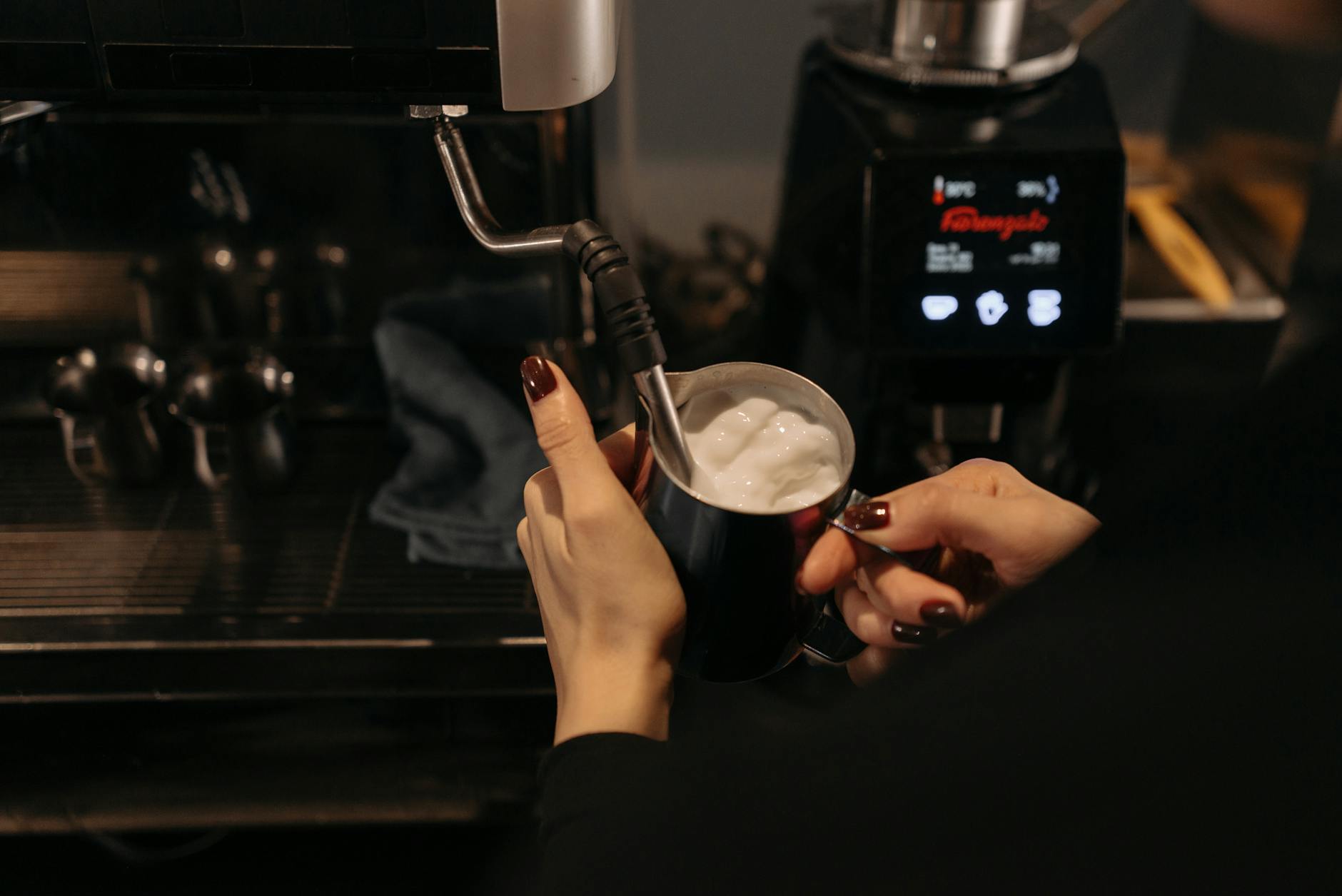
While the espresso is the main suspect, the milk can also contribute to unwanted flavors. Overheating or “scalding” your milk by steaming it for too long will break down its natural sugars (lactose). Instead of tasting sweet and creamy, scalded milk tastes flat and can even have a slightly burnt, bitter flavor. The ideal temperature for steamed milk is around 60–65°C (140–150°F). At this temperature, the milk is at its peak sweetness, which will perfectly complement your espresso and help balance any remaining acidity or bitterness.
Finally, never underestimate the importance of cleanliness. Old, rancid coffee oils build up inside your machine’s group head, shower screen, and portafilter. If not cleaned regularly, these oils will impart a foul, bitter taste to every single shot you pull. Make sure to backflush your machine (if it has a three-way solenoid valve) and clean your baskets and portafilter with a dedicated coffee cleaner on a regular basis. A clean machine is the foundation for delicious coffee.
| Problem Symptom | Likely Cause | Solution |
|---|---|---|
| Espresso shot runs for over 35 seconds and tastes harsh. | Over-extraction due to a grind that is too fine. | Make the grind slightly coarser to speed up the flow rate to 25-30 seconds. |
| The espresso has a burnt or scorched taste. | Brewing water temperature is too high. | Lower the machine’s brew temperature to the 90-96°C (195-205°F) range. |
| Shot starts with a good flow but then gushes out quickly. | Channeling from poor puck preparation. | Focus on even distribution and a level tamp before brewing. |
| The final cappuccino tastes flat, and the milk lacks sweetness. | Milk was overheated during steaming. | Steam milk to 60-65°C (140-150°F) and no higher. |
| All shots have a persistent, underlying rancid bitterness. | Buildup of old coffee oils in the machine. | Perform a thorough cleaning of the group head, portafilter, and basket. |
Finding a bitter cappuccino on your counter can be disheartening, but it’s a problem that is almost always solvable without a trip to the store. The solution lies not in the beans themselves, but in the way you handle them. By paying close attention to your espresso extraction—specifically your grind size, shot time, and puck prep—you can eliminate the primary sources of bitterness. Furthermore, ensuring your brew temperature is in the correct range and that you aren’t scalding your milk will add layers of sweetness and balance. A clean machine provides the final piece of the puzzle. Brewing a perfect cappuccino is a craft, and with a little practice and attention to these details, you can transform your bitter brews into sweet, creamy, and delicious drinks.


 No products in the cart.