

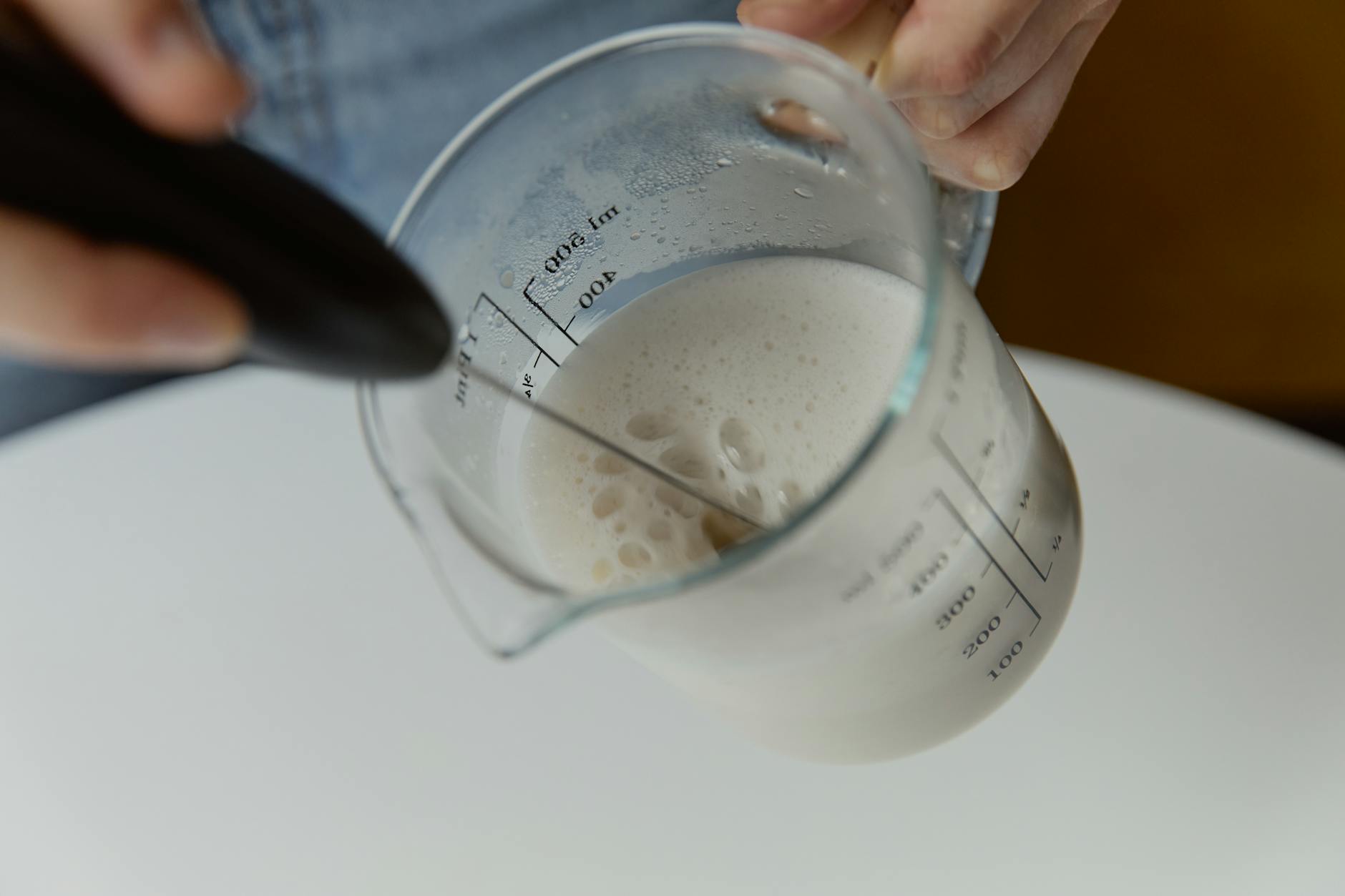
The secret to the perfect cappuccino: unlocking the role of milk fat
The quest for the perfect cappuccino is a journey of balance. While the quality of the espresso shot is undeniably crucial, the soul of a great cappuccino lies in its milk foam. Many baristas and home coffee lovers focus on steaming technique, but a critical variable is often overlooked: the milk’s fat content. This single factor is a cornerstone of cappuccino recipe development, profoundly influencing everything from the foam’s texture and stability to the overall flavor profile of the final drink. Understanding how fat interacts with proteins and heat during the steaming process is the key to moving from a good cappuccino to an unforgettable one. This article will delve into the science and art of milk fat, exploring how it shapes the final cup.
The science of milk foam: a tale of fats and proteins
To master the cappuccino, you first need to understand what happens when you introduce steam into milk. It’s a delicate dance between two key components: proteins and fats. Milk contains two main types of proteins, casein and whey, which are essential for creating foam. When you inject air into cold milk, these proteins unfold and wrap themselves around the air bubbles, forming a protective, stable structure. This is what creates the initial foam.
Fat, in the form of tiny globules, plays a more complex role. At cold temperatures, the solid fat globules can actually help stabilize this protein network, contributing to a good initial froth. However, as the milk heats up past 30-40°C (86-104°F), the fat melts. This liquid fat can then disrupt the delicate protein film around the air bubbles, causing them to pop and destabilizing the foam. This is why temperature control is critical. A skilled barista heats the milk quickly enough to create the foam structure before the melting fat can do too much damage. The amount of fat present, therefore, directly dictates the challenge and the potential reward of the steaming process.
How fat content shapes cappuccino texture and mouthfeel
The percentage of fat in your milk is the single biggest predictor of your cappuccino’s final texture. It’s the difference between a light, airy cloud and a rich, velvety liquid. Each type of milk offers a distinct experience, fundamentally changing the structure of the drink.
- Skim milk (0-0.5% fat): With very little fat to destabilize the protein structures, skim milk is incredibly easy to foam. It produces a large volume of stiff, airy, and very dry foam, almost like a meringue. While it creates a visually impressive dome, the texture is light and bubbly, lacking the creamy mouthfeel that many desire in a cappuccino. The foam also tends to separate from the liquid milk more quickly.
- Low-fat milk (1-2% fat): This is a popular middle ground. It offers better flavor and a creamier texture than skim milk while still being relatively easy to foam. The resulting microfoam is often good but can be less stable and not as rich as that made from whole milk. It’s a compromise that can work well, especially if you prefer a less decadent drink.
- Whole milk (3.25-4% fat): This is the undisputed industry standard for a reason. The higher fat content, when steamed correctly, creates a beautiful, glossy microfoam with a velvety, paint-like consistency. The fat globules contribute to a rich, full-bodied mouthfeel that coats the palate. This “wet foam” is not only luxurious to drink but is also the ideal canvas for creating intricate latte art due to its elasticity and stability.
The impact of fat on flavor perception
Fat is a powerful flavor carrier, and its presence in milk significantly alters how we perceive the taste of the espresso. Think of it as a modulator that can either mute or enhance certain characteristics of your coffee. A higher fat content tends to round out the sharp edges of an espresso, softening its acidity and bitterness. It enhances the deep, rich notes like chocolate, caramel, and nuts, creating a more integrated and comforting flavor profile. The result is a smooth, balanced, and often sweeter-tasting beverage, as the richness can increase the perception of sweetness from the milk’s natural lactose.
Conversely, using lower-fat milk allows the espresso’s intrinsic qualities to shine through more directly. If you are using a bright, floral, or fruity single-origin bean, a low-fat or skim milk cappuccino will preserve those delicate and acidic notes. For some, this clarity is desirable. For others, it can come across as harsh or unbalanced. The choice, therefore, is not just about health or texture; it’s a creative decision that should be tailored to the specific espresso bean you are working with to achieve your desired flavor outcome.
Practical application: choosing the right milk for your recipe
Developing your perfect cappuccino recipe means aligning your choice of milk with your desired outcome for texture, taste, and visual appeal. There is no single “best” milk; there is only the best milk for the specific experience you want to create. For the traditionalist seeking a classic Italian cappuccino with a rich body and the potential for beautiful latte art, whole milk is the unequivocal choice. Its balance of fat and protein provides the ideal canvas for a creamy, flavorful, and visually stunning drink.
If your priority is flavor clarity, especially with a high-quality single-origin espresso, experimenting with 2% milk can yield fantastic results. It provides enough structure for a pleasant microfoam without overpowering the coffee’s nuanced profile. For those who love an exceptionally thick and dry foam cap that you can eat with a spoon, skim milk will deliver that texture, though at the expense of creaminess. Understanding these trade-offs is key to intentional recipe design.
| Milk Type | Typical Fat % | Foam Texture | Flavor Impact | Best For |
|---|---|---|---|---|
| Skim Milk | 0 – 0.5% | Stiff, dry, airy, large bubbles | Allows espresso’s bright/acidic notes to dominate | Very dry, traditional “dome” style cappuccinos |
| Low-Fat Milk (2%) | 1.5 – 2% | Softer foam, decent microfoam, less rich | A balance; preserves some coffee notes with light creaminess | Everyday drinking, highlighting single-origin espressos |
| Whole Milk | 3.25 – 4% | Velvety, creamy, glossy, stable microfoam | Rounds out flavor, enhances sweetness and body | Classic cappuccinos, latte art, rich flavor profile |
Ultimately, the role of milk fat in a cappuccino is a testament to the idea that every ingredient matters. It’s a variable that allows for immense creativity, enabling a barista to craft a wide spectrum of drinks from a single espresso base. By consciously selecting milk based on its fat content, you take control of the final cup, ensuring it aligns perfectly with your taste and aesthetic goals.
Conclusion
In summary, the fat content of milk is not a minor detail but a fundamental pillar in the architecture of a cappuccino. It is the primary driver of the drink’s final texture, dictating whether the foam is light and airy or rich and velvety. Furthermore, fat acts as a crucial modulator of flavor, either softening the sharp notes of an espresso to create a smooth, integrated taste or allowing its brighter characteristics to remain at the forefront. As we’ve seen, whole milk remains the standard for its luxurious mouthfeel and latte art potential, while lower-fat options offer a different experience centered on flavor clarity. The ultimate takeaway is that there is no one-size-fits-all answer. The perfect cappuccino is a personal creation, and a deep understanding of milk fat empowers every coffee enthusiast to experiment and develop a recipe that is uniquely their own.



 No products in the cart.