

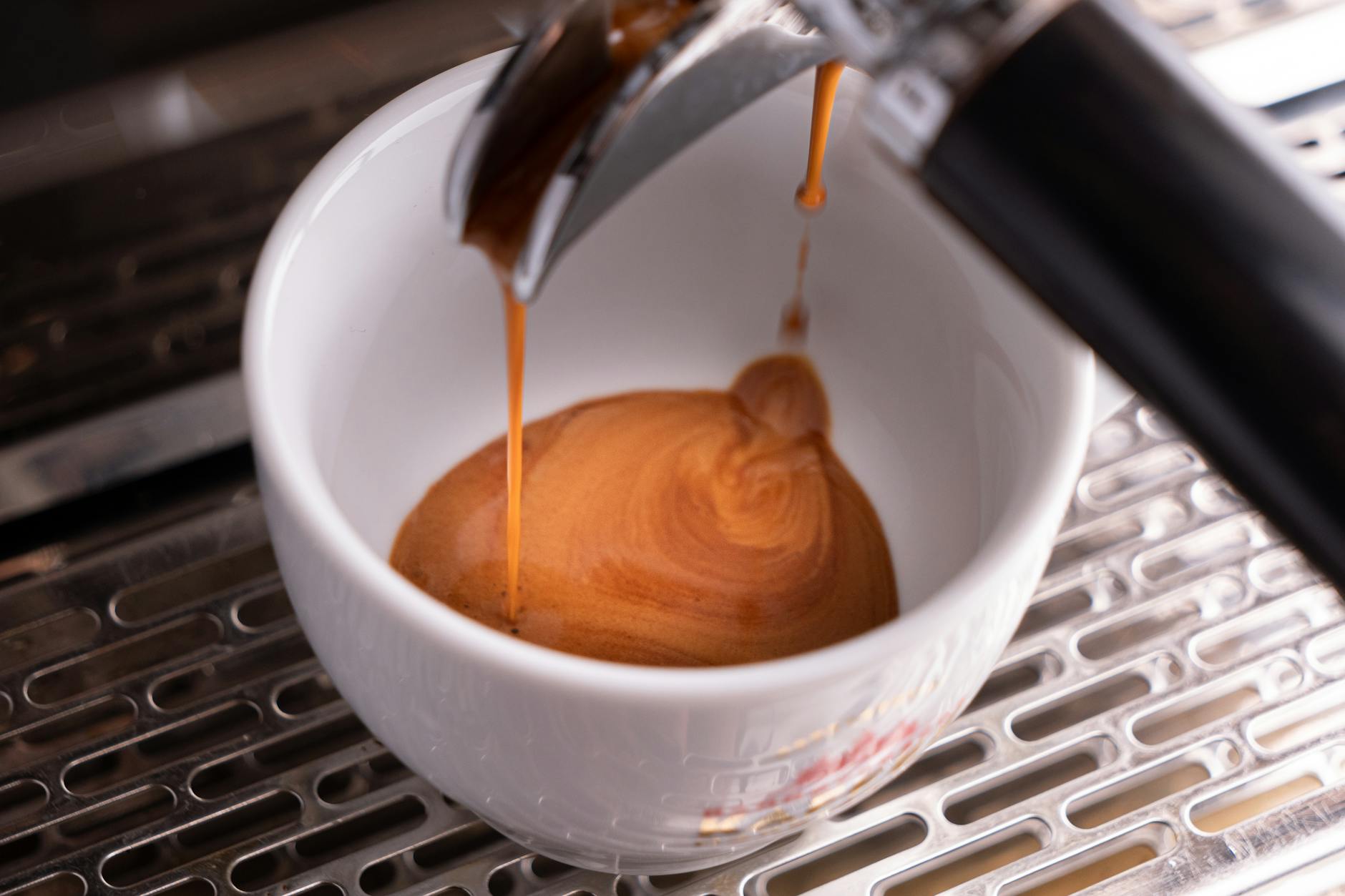
The pursuit of the perfect espresso shot at home is a rewarding journey. A key visual indicator of a well-pulled shot is the crema, that rich, reddish-brown foam that crowns the coffee. However, many home baristas using popular Starbucks-style dark roast beans find themselves frustrated with a thin, weak, or quickly dissipating crema. This is a common challenge, but it is not insurmountable. The unique characteristics of dark-roasted coffee require a specific approach to brewing. This article will guide you through the reasons why your dark roast espresso might lack a luscious crema and provide actionable troubleshooting steps. We will explore everything from the nature of the beans themselves to the nuances of your grind, tamp, and extraction process to help you achieve that picture-perfect shot.
Understanding crema and the dark roast challenge
Before we can fix a problem, we must understand its source. Crema is a beautiful emulsion of coffee oils, carbon dioxide (CO2), and suspended coffee solids. This CO2 is a natural byproduct of the roasting process and is trapped within the bean. When hot, pressurized water hits the ground coffee, this gas is rapidly released, creating the fine foam we call crema. Freshness is paramount because the CO2 that creates crema begins to escape the bean as soon as the roasting process is complete. This process is called de-gassing.
This is where dark roast beans, like those popularized by Starbucks, present a unique challenge. The intense heat and longer duration of a dark roast bring the coffee’s internal oils to the surface, giving the beans their characteristic sheen. This process also makes the beans more porous, allowing CO2 to escape much more quickly than in a lighter roast. A bag of dark roast beans from a supermarket shelf, which may have been roasted weeks or even months ago, has likely lost most of its crema-producing CO2. While these beans can still make a flavorful coffee, creating a thick, stable crema becomes significantly more difficult.
Dialing in your grind and puck preparation
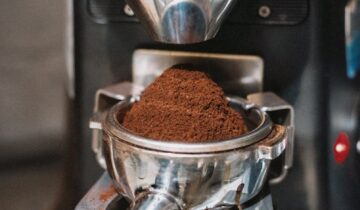
Assuming you have the freshest beans possible, the next critical stage is how you prepare the coffee for extraction. Your grinder is arguably the most important piece of equipment in your espresso setup. For espresso, you need a fine, consistent grind resembling the texture of table salt or granulated sugar. If your grind is too coarse, water will pass through the coffee puck too quickly, resulting in a fast, watery shot with a thin, bubbly crema. This is known as under-extraction.
Once you have the right grind, focus on your dose and tamp. Follow these steps:
- Dose correctly: Use a coffee scale to measure the correct amount of coffee for your portafilter basket. A typical double shot uses between 16-19 grams. Under-dosing leaves too much space in the basket, preventing the machine from building adequate pressure for a proper extraction.
- Distribute evenly: After dosing, gently tap the side of the portafilter to settle the grounds and level the bed of coffee. An uneven bed will lead to channeling, where water finds the path of least resistance, again causing under-extraction.
- Tamp with purpose: Apply firm, level pressure to the coffee grounds. The goal is to create a compact and evenly dense puck. A common guideline is to apply about 30 pounds of pressure. A crooked or uneven tamp is a primary cause of channeling and a poor shot.
These preparation steps work together to create a uniformly resistant puck, forcing the water to saturate the grounds evenly and extract the oils and CO2 needed for a great crema.
Mastering the extraction
With a perfectly prepared puck, your attention now turns to the extraction itself. This is the moment of truth where all your preparation pays off. The “golden rule” for a standard double espresso shot is an extraction time of about 25 to 30 seconds, yielding roughly 2 ounces (or 32-38 grams) of liquid coffee. This timing is your most valuable diagnostic tool.
If your shot runs much faster than 25 seconds, your crema will be thin and pale. This points to a grind that is too coarse or an insufficient dose. Conversely, if the shot takes much longer than 30 seconds to pull, it will likely taste bitter, and while the crema might look dark, it could be thin due to the puck being choked. In this case, your grind is too fine.
For dark roasts specifically, water temperature also plays a role. These beans are more soluble and extract easily. Using water that is too hot (above 203°F or 95°C) can scorch the grounds, leading to a bitter taste and potentially damaging the delicate crema. If your machine allows for temperature adjustment, try a slightly lower temperature, around 195-200°F (90-93°C), to achieve a smoother extraction.
Troubleshooting guide and final considerations
Achieving great crema with dark roasts is a process of elimination. If you’re still struggling, use this table to diagnose the issue and find a solution. Remember to only change one variable at a time so you can accurately assess its impact.
| Problem | Potential Cause | Solution |
|---|---|---|
| Crema is thin, pale, and bubbly. Shot runs too fast (<20 seconds). | Grind is too coarse, dose is too low, or tamp is too light. | Adjust grind finer. Increase dose slightly. Tamp with more pressure. |
| No crema at all, shot is watery. | Beans are very stale. Grind is extremely coarse. | Use fresh beans with a recent roast date. Adjust grind much finer. |
| Crema is dark but thin. Shot runs too slow (>35 seconds). | Grind is too fine. Dose is too high. Tamp is too hard. | Adjust grind coarser. Reduce the dose slightly. Tamp with less pressure. |
| Crema looks good initially but disappears very quickly. | Beans are de-gassing quickly (common with dark roasts). | This is partly characteristic of 100% Arabica dark roasts. Ensure perfect extraction timing to maximize what you can get. |
Finally, remember that oily dark roast beans can be tough on your equipment. The oils can build up and clog your grinder’s burrs over time, leading to an inconsistent grind. Clean your grinder regularly to ensure it performs optimally. While the crema from a 100% Arabica dark roast may never be as thick and long-lasting as that from a blend containing Robusta beans, by focusing on freshness and mastering your technique, you can dramatically improve its quality.
In conclusion, the quest for a rich crema from Starbucks-style dark roast beans is a battle fought primarily against time and bean chemistry. Because these beans de-gas so rapidly, the single most impactful factor is freshness. Sourcing beans with a recent roast date is your best first step. From there, success lies in meticulous technique. A fine, consistent grind, a proper and evenly distributed dose, and a firm, level tamp are the foundations of a great shot. Mastering your extraction by aiming for that 25-30 second window allows you to pull the very best from your beans. While the crema from these beans may be more delicate by nature, applying these principles will transform your thin, disappointing shots into rich, flavorful espresso with a satisfying crown of crema.
 No products in the cart.