

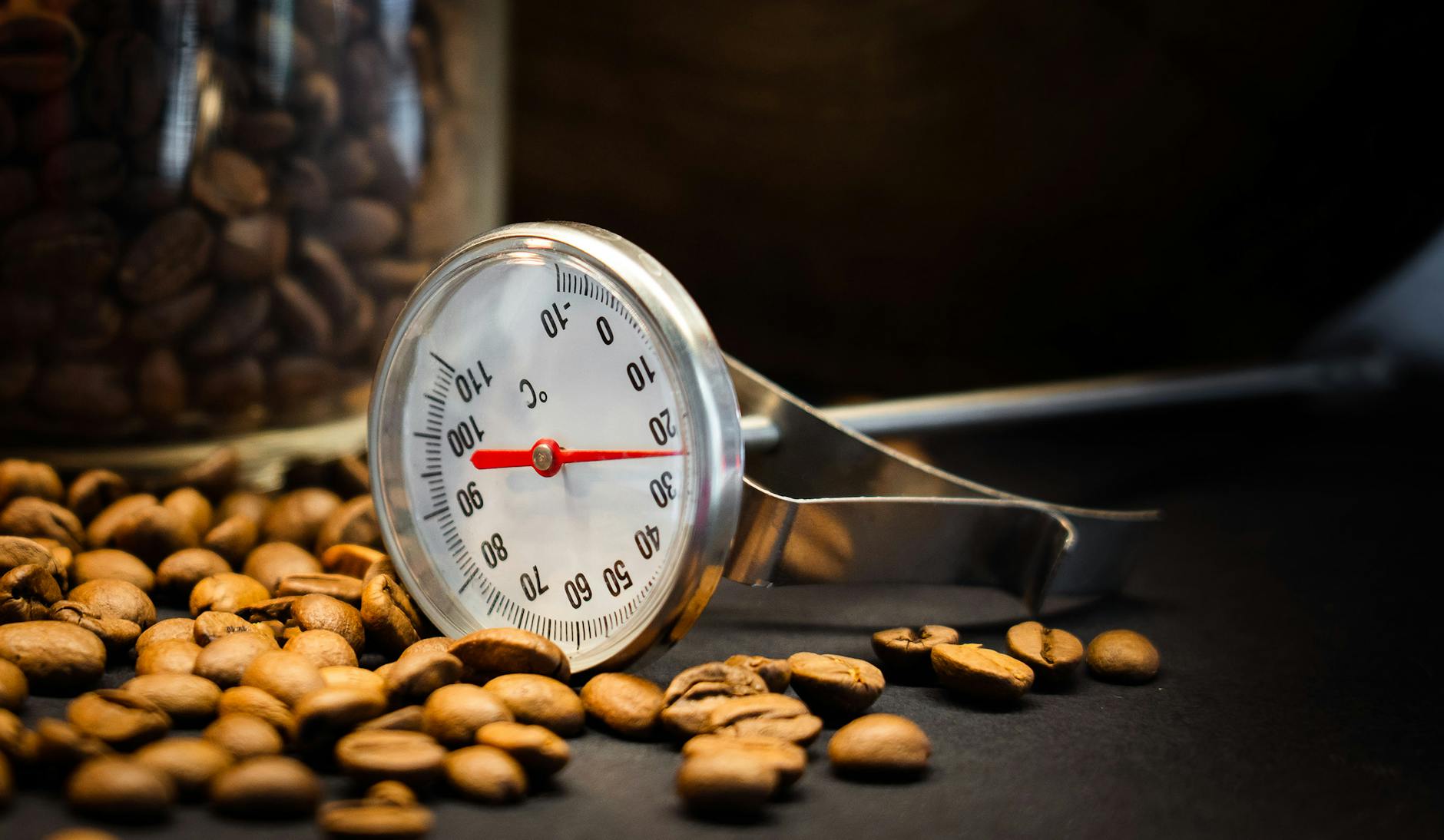
The ultimate guide to temperature for dark roast espresso
Brewing the perfect shot of espresso is a delicate dance of science and art, where every variable matters. For lovers of dark roasted coffee, with its rich, bold flavors of chocolate and caramel, this dance can be particularly challenging. Many home baristas find themselves pulling shots that are overwhelmingly bitter or disappointingly flat, without realizing the culprit is often hiding in plain sight: the brew water temperature. While grind size and pressure get most of the attention, temperature is the silent partner that dictates which flavors are extracted from your beans. This guide will delve into the science of extraction for dark roasts, helping you understand why a lower temperature is your key to unlocking a balanced, sweet, and complex shot of espresso every single time.
Why dark roasts are different
Before we can set the temperature, we need to understand the unique characteristics of a dark roasted coffee bean. The roasting process fundamentally changes the bean’s physical and chemical structure. Dark roasts are heated for a longer duration or at a higher temperature, pushing them past the “second crack.” This process makes the beans more porous, brittle, and less dense than their lighter counterparts. Crucially, the cellular structure of the bean becomes more fragile and soluble.
What does this mean for extraction? Solubility is key. Because dark roast beans are more soluble, the desirable flavor compounds—the sugars, oils, and deep chocolatey notes—are much easier to extract. However, this also means the undesirable compounds, those responsible for ashy bitterness and harshness, are also readily available. Using water that is too hot acts as an aggressive solvent, ripping out everything at once and leading to a classic case of over-extraction. The goal, therefore, is to use a gentler approach to coax out the sweetness without unleashing the bitterness.
The golden rule: Go cooler for dark roasts
In espresso extraction, temperature dictates the rate and efficiency of the process. Hotter water extracts compounds faster, while cooler water does so more slowly. For dense, lightly roasted beans, you often need higher temperatures—typically in the 92°C to 96°C (198°F to 205°F) range—to effectively penetrate the bean’s structure and extract its complex acids and sugars. Applying this same logic to a dark roast would be a recipe for disaster.
Due to their increased solubility, dark roasts require a significantly lower brewing temperature. The ideal range for most dark roasted coffee falls between 88°C and 92°C (190°F to 198°F). Starting at the lower end of this spectrum is often the best strategy. This cooler water provides a gentler extraction, allowing you to pull the rich, syrupy body and sweet notes of caramel and cocoa while leaving the harsh, bitter compounds behind. It gives you more control over a bean that is already eager to give up its flavor.
Dialing in your temperature by taste
The 88-92°C range is a fantastic starting point, but your specific coffee beans, grinder, and machine will require fine-tuning. The best tool you have for this process is your palate. Let taste be your guide to finding the perfect temperature for your specific setup.
A great baseline to start your experiments is 90°C (194°F). Pull a shot and taste it carefully. Is it intensely bitter, ashy, or does it have a “burnt” flavor? This is a clear sign of over-extraction, and you should lower your temperature by one or two degrees. On the other hand, if the shot tastes sour, thin, or lacks the characteristic sweetness and body of a dark roast, it might be under-extracted. In this case, try increasing the temperature by a degree. Make small, incremental changes and only adjust one variable at a time to accurately assess the impact.
| Taste profile | Potential problem | Temperature adjustment |
|---|---|---|
| Bitter, ashy, burnt, hollow | Over-extraction | Lower the temperature by 1-2°C (2-4°F) |
| Balanced, sweet, rich, full-bodied | Sweet spot | Keep the temperature the same |
| Sour, acidic, thin, weak | Under-extraction | Raise the temperature by 1°C (2°F) |
How temperature interacts with other variables
Temperature is a powerful tool, but it doesn’t work in a vacuum. To truly master dark roast espresso, you must understand how temperature interacts with other key variables like grind size and brew ratio. Because dark roasts extract so easily, you may find that a slightly coarser grind is necessary to prevent the shot from choking your machine or running too slowly, which would also contribute to bitterness. A coarser grind reduces the surface area, slowing down extraction to complement the lower temperature.
Similarly, your brew ratio (the ratio of dry coffee grounds to liquid espresso) is critical. A traditional 1:2 ratio—for example, 18 grams of coffee producing a 36-gram shot—is an excellent starting point. If your shot is still a little too intense even at a lower temperature, you could try a slightly longer ratio, like 1:2.5, to dilute the flavor and find a better balance. The interplay between a cooler temperature, a slightly coarser grind, and a stable brew ratio is where the magic happens.
Conclusion
Mastering espresso from dark roasted beans is not about following a rigid formula but about understanding the principles of extraction. The most critical takeaway is that dark roasts are more soluble and therefore demand a gentler touch, which translates directly to a lower brewing temperature. By abandoning the high-heat settings better suited for light roasts and embracing a cooler range of 88°C to 92°C (190°F to 198°F), you gain significant control over the final taste. This simple adjustment prevents the extraction of harsh, bitter compounds and unlocks the deep, sweet, and comforting flavors of chocolate and caramel that make dark roasts so beloved. Use this temperature range as your guide, let your palate be the judge, and you will be well on your way to pulling consistently delicious espresso.

 No products in the cart.