

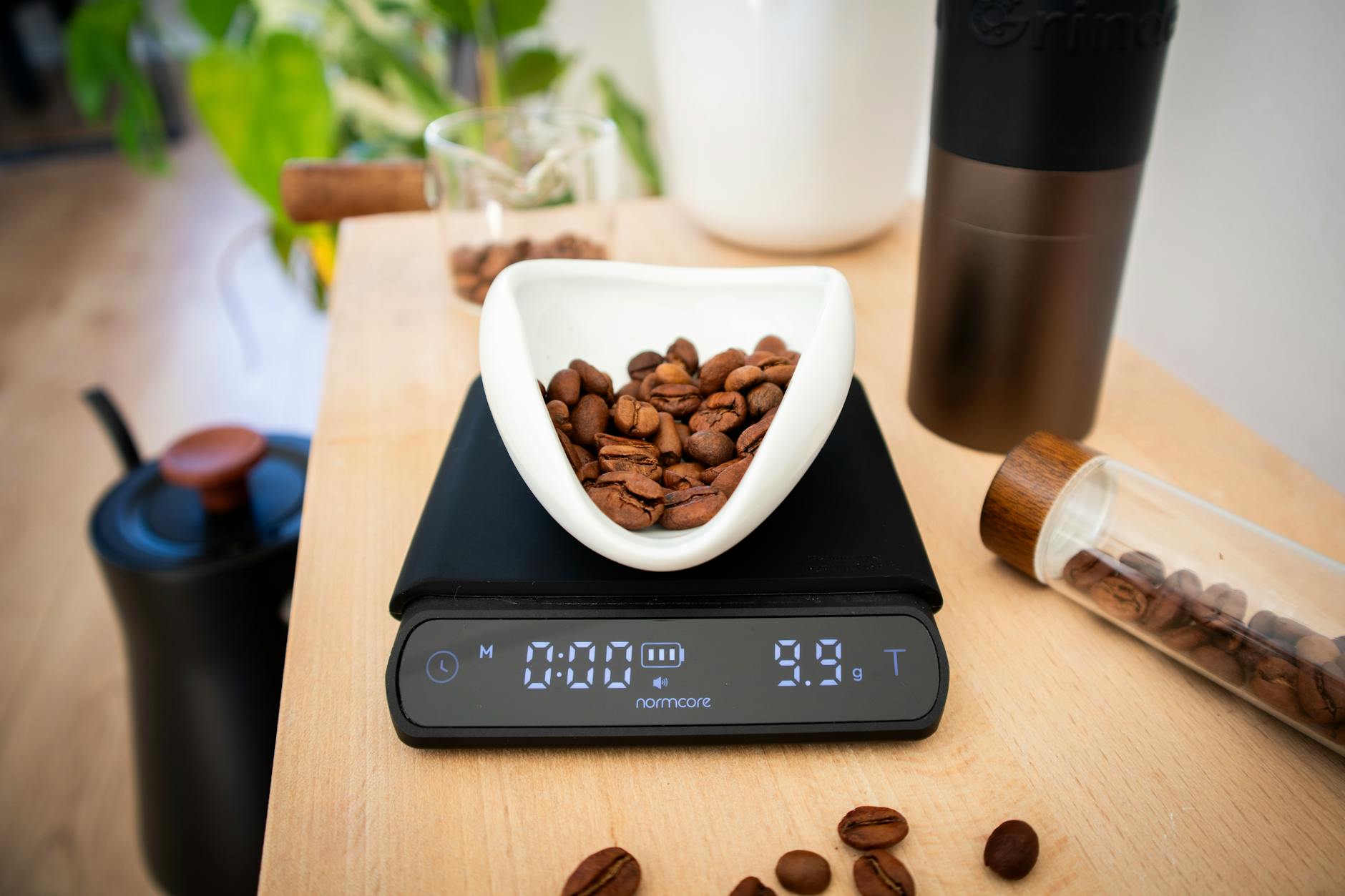
The pursuit of the perfect espresso is a journey of precision. Coffee enthusiasts obsess over grind size, water temperature, tamping pressure, and extraction time, often weighing their coffee beans and final shot yield to the tenth of a gram. Every variable is meticulously controlled to achieve a balanced, delicious, and, most importantly, repeatable result. Yet, for many, this scientific approach stops the moment the shot is pulled. When it comes to sweetening the drink, precision is often replaced by a casual spoonful or a packet of sugar. This article will explore why this final step deserves the same level of accuracy as the rest of the brewing process and guide you on how to measure sugar accurately for truly consistent espresso recipes.
The final ingredient: Why sugar measurement matters
Think of your final espresso drink, whether it’s a straight shot, a macchiato, or a latte, as a complete recipe. Every component plays a critical role in the final taste profile. You wouldn’t add a “pinch” of salt to a baking recipe and expect consistent results every time, and the same logic applies here. Sugar is not just a sweetener; it’s a flavor-balancing ingredient that interacts with the acidity, bitterness, and aromatic compounds of the coffee.
An imprecise amount of sugar can completely alter the drinking experience you worked so hard to create. A little too much can overpower the delicate floral or fruity notes of a high-quality single-origin bean. Too little might fail to temper the coffee’s natural acidity, leaving the drink unbalanced. By failing to measure this final ingredient, you introduce a significant variable that undermines all the precision you applied earlier. True consistency means controlling all the inputs, and that includes the sugar.
The problem with spoons and packets: Volume vs. weight
The most common methods for adding sugar, using a teaspoon or a pre-portioned packet, are fundamentally flawed because they measure by volume, not by weight. The problem with volume is that it is highly inconsistent and dependent on the density of the substance being measured. Different types of sugar have varying crystal sizes, shapes, and air gaps between them.
A level teaspoon of fine-grained caster sugar will weigh significantly more than a level teaspoon of coarse demerara sugar. Even with the same type of sugar, how tightly you pack it into the spoon will change the amount you add. This variability makes it impossible to replicate a recipe with any real accuracy. Consider the difference in weight for a single, common unit of volume:
| Sugar type | Measurement (Volume) | Average weight (Grams) |
|---|---|---|
| Granulated white sugar | 1 Teaspoon | ~4.2g |
| Packed brown sugar | 1 Teaspoon | ~4.5g |
| Demerara sugar (coarse) | 1 Teaspoon | ~3.8g |
| Superfine (caster) sugar | 1 Teaspoon | ~4.8g |
As the table shows, a recipe calling for “one teaspoon of sugar” could result in a 25% difference in sweetness depending on the type of sugar used. This is a massive variable. The only way to eliminate this inconsistency is to measure your sugar by its actual mass, or weight.
The simple solution: Using a digital gram scale
Fortunately, the solution is both simple and accessible. The key to accurate sugar measurement is a digital scale that measures in increments of 0.1 grams. The good news is that if you’re already weighing your coffee beans, you likely own the perfect tool for the job. You don’t need a separate, specialized piece of equipment. Your coffee scale is your sugar scale.
When using a scale for this purpose, a few features are particularly helpful:
- Precision to 0.1g: This level of accuracy allows you to make very fine adjustments to your recipe. The difference between 4.0g and 4.5g of sugar is noticeable in a small drink like an espresso.
- Tare function: This is non-negotiable. The tare (or “zero”) button allows you to place your cup on the scale and reset the weight to zero, so you are only measuring the ingredient you add next.
- Quick response time: A scale that registers weight changes quickly makes for a much smoother and less frustrating workflow.
By switching from a spoon to a scale, you move from approximation to definition. Your recipe is no longer “a shot with a spoonful of sugar” but “a shot with 4.2g of granulated sugar.” This is a language of precision that guarantees repeatability.
Integrating sugar measurement into your espresso workflow
Adopting this method requires only a minor adjustment to your coffee-making routine. Once you do it a few times, it will become second nature. Here is a simple, step-by-step process for incorporating weight-based sugar measurement into your workflow:
- Place your cup on the scale. Before you begin brewing, place your empty espresso cup onto your digital scale.
- Tare the scale. Press the “tare” or “zero” button. The scale’s display should now read 0.0g, effectively ignoring the weight of your cup.
- Add your sugar. Carefully spoon or pour your desired amount of sugar into the cup until the scale reaches your target weight. For example, you might aim for 4.5g.
- Brew your espresso. Remove the cup from the scale and place it under your portafilter. Pull your shot of espresso directly on top of the pre-weighed sugar. The heat and turbulence of the extraction will help dissolve it instantly.
- Stir and taste. Give the espresso a quick stir to ensure all the sugar is fully dissolved.
With this method, you have an exact, repeatable number. If you find the drink is too sweet, you can adjust your recipe to 4.0g next time. If it’s not sweet enough, you can try 5.0g. You are now in complete control, able to fine-tune the recipe to perfection and, more importantly, replicate it flawlessly every single time.
Ultimately, the journey to exceptional coffee at home is about controlling variables to achieve consistency. We invest in high-quality grinders, precise scales, and advanced machines to perfect the extraction, so why leave the final touch to chance? Measuring sugar by volume with a spoon is a game of guesswork. By switching to weight and using a digital gram scale, you treat sugar as the critical ingredient it is. This small change in your workflow closes the loop on precision, transforming your drink-making from an art of approximation into a science of repeatability. It ensures that the perfect sweetened espresso you create today can be enjoyed in the exact same way tomorrow.


 No products in the cart.