

The chemistry of adding sugar to espresso: Why timing matters for flavor
For many coffee lovers, a small spoonful of sugar is the final touch that transforms a potent shot of espresso into a perfectly balanced indulgence. But beyond the simple question of if you should add sugar, lies a more complex and debated topic: when should you add it? Is it better to place the sugar in the cup before the shot is pulled, or to stir it in afterwards? This isn’t just a matter of ritual; it’s a question rooted in the fascinating chemistry of extraction, dissolution, and sensory perception. The timing of this simple act can significantly alter the final flavor, aroma, and mouthfeel of your espresso. In this article, we will delve into the science behind this choice, exploring how temperature, crema, and dissolution rates interact to create a different experience in the cup.
An espresso’s delicate balance: More than just coffee
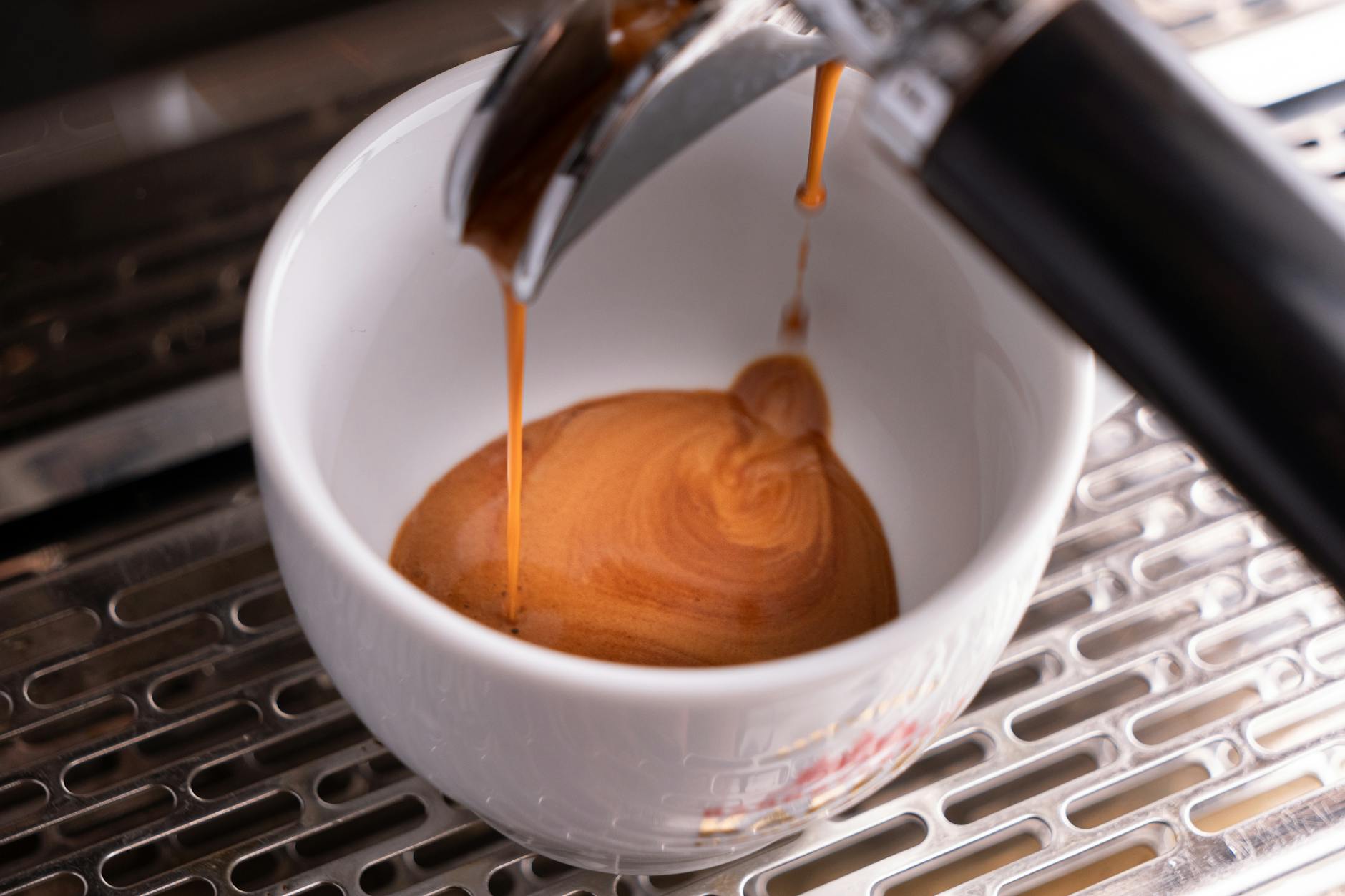
To understand why timing matters, we must first appreciate what an espresso is. It’s not just strong coffee; it’s a complex colloidal emulsion created by forcing hot water through finely-ground coffee beans at high pressure. This process extracts a wide range of compounds, resulting in two distinct parts: the liquid coffee and the crema.
The liquid portion contains dissolved solids, acids, and sugars that define the core flavor profile. But the magic is in the crema. This reddish-brown foam is a delicate matrix of emulsified coffee oils, proteins, and melanoidins (compounds formed during roasting). Crucially, it also traps pressurized carbon dioxide (CO2) gas released from the beans. This crema is not just for looks; it contributes significantly to the espresso’s aroma, a longer-lasting aftertaste, and its characteristic velvety mouthfeel. Understanding that espresso is this delicate, two-part system is fundamental to seeing how the introduction of sugar can either integrate with it harmoniously or disrupt its structure.
The sweet science of dissolution
At its core, adding sugar to coffee is a lesson in solubility. When you add sugar (sucrose) crystals to a liquid, the water molecules surround the individual sucrose molecules and pull them away from the crystal structure until they are evenly dispersed. This process is called dissolution. The single most important factor governing the speed of this process is temperature.
Hot liquids have more kinetic energy; their molecules are moving faster. This increased energy allows the water molecules to break down the sugar crystals more quickly and efficiently. A freshly pulled espresso shot is typically around 90°C (194°F), providing an ideal environment for rapid dissolution. Waiting even 30-60 seconds can cause the temperature to drop significantly, slowing down the process. Incomplete dissolution results in a gritty texture at the bottom of the cup and an unevenly sweetened drink, where the first sips are bitter and the last is overpoweringly sweet. Therefore, the goal is to dissolve the sugar completely and evenly, and temperature is our greatest ally.
The moment of truth: Adding sugar before vs. after
Here we arrive at the central debate, where the principles of espresso structure and dissolution collide. The two methods create distinct chemical and physical reactions in the cup.
Adding sugar to the cup before brewing is a method favored by many traditionalists. When you place sugar in the demitasse first, the hot, high-pressure stream of espresso hits the crystals directly. This combination of intense heat and agitation from the stream creates the perfect conditions for hyper-efficient dissolution. The sugar dissolves almost instantly and integrates completely into the liquid portion of the shot as it is being created. The crema then forms a distinct layer on top of the already sweetened liquid. This method helps preserve the crema’s structure, as it isn’t violently disrupted by a spoon after the fact.
Conversely, adding sugar to the cup after brewing is the more common practice. Here, the espresso shot is fully formed, with its crema intact. Adding sugar at this stage requires manual stirring. While the espresso is still hot, the act of stirring violently breaks down the delicate foam of the crema. This ruptures the tiny bubbles, releasing the trapped CO2 and aromatic compounds in a quick burst. While this provides an immediate aromatic hit, it also causes the crema to dissipate much faster, altering the texture and mouthfeel of the remaining sips.
| Timing | Pros | Cons |
|---|---|---|
| Before brewing |
|
|
| After brewing |
|
|
From chemistry to cup: The impact on flavor and mouthfeel
The final and most important question is: how do these methods actually change the taste? The chemical differences translate directly into distinct sensory experiences. Adding sugar before the brew tends to produce a drink with a more rounded, homogenous, and mellow sweetness. The sugar feels like an intrinsic part of the espresso from the very first sip, softening any harsh bitter notes without overpowering the coffee’s inherent flavors. The mouthfeel remains velvety and consistent, thanks to the well-preserved crema.
Adding sugar after the brew creates a more dynamic and evolving experience. The first moments allow you to appreciate the visual beauty and initial aroma of the untouched crema. The act of stirring then provides a secondary, powerful aromatic release. However, the flavor can feel more layered than integrated—an initial hit of unsweetened coffee followed by sweetness. The rapid deflation of the crema also leads to a thinner mouthfeel for the latter half of the drink. Neither is inherently better, but they are undeniably different.
Ultimately, the chemistry of adding sugar to espresso reveals that timing is far from trivial. It is a deliberate choice that dictates the balance between flavor integration and aromatic release, between a stable, velvety crema and a momentary burst of fragrance. We’ve seen how adding sugar before brewing leverages the full heat and force of the extraction for a seamless, integrated sweetness that preserves the crema. In contrast, adding it after prioritizes experiencing the untouched shot first, with the trade-off being a disrupted crema upon stirring. There is no single “correct” method. The ideal timing is a matter of personal preference. Do you prioritize a smooth, consistent flavor profile or a dynamic aromatic experience? We encourage you to experiment with both techniques and discover which ritual crafts your perfect cup of espresso.

 No products in the cart.