

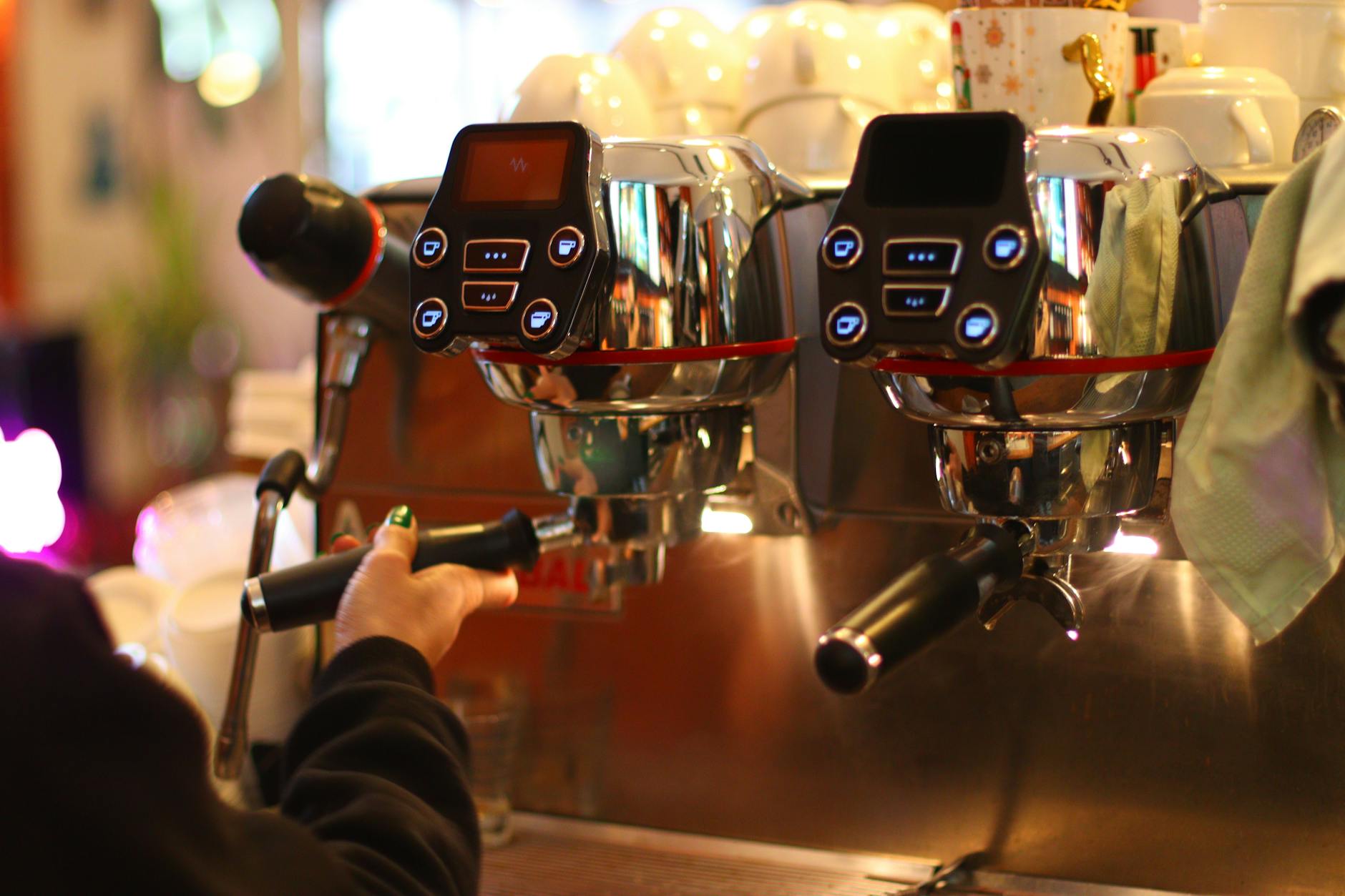
Perfecting your espresso: How to adjust grind size for the Gaggia Classic double basket
The Gaggia Classic is a legendary machine in the world of home espresso, capable of producing truly cafe-quality shots. However, many new owners find themselves frustrated, pulling shots that are either sour and watery or bitter and sludgy. More often than not, the culprit isn’t the machine but a misunderstanding of the most critical variable in espresso making: the coffee grind size. Specifically for the Gaggia’s stock double basket, mastering the grind is the key that unlocks its full potential. This guide will walk you through the theory and practice of dialing in your grinder, transforming your inconsistent morning coffee into a consistently delicious ritual that rivals your favorite coffee shop.
Why grind size is the cornerstone of espresso
Before touching your grinder, it’s crucial to understand why grind size matters so much. Making espresso is a process of extraction. Hot, pressurized water is forced through a tightly packed puck of coffee grounds, dissolving a portion of the coffee’s soluble compounds into the water. Your grind size is the primary tool you have to control the speed of this process.
Think of it like a dam. A finer grind creates a more compact puck with less space between the particles. This provides more resistance to the water, slowing down the flow and increasing the contact time between water and coffee. A coarser grind creates more space, allowing water to pass through much faster. This relationship directly impacts taste:
- Under-extraction: If the grind is too coarse, water rushes through too quickly. The shot will be fast, pale, and taste unpleasantly sour and weak.
- Over-extraction: If the grind is too fine, water struggles to get through. The shot will be slow, syrupy, and taste intensely bitter, harsh, and sometimes burnt.
The goal is a balanced extraction, capturing the sweet spot between these two extremes. For a powerful machine like the Gaggia Classic, controlling the flow with your grind is paramount to achieving that perfect balance in your double basket.
The essential tools for the job
To methodically adjust your grind, you need consistency in your process. This requires a few key pieces of equipment. While you can try to eyeball it, using the right tools removes the guesswork and makes the process repeatable. Before you start pulling shots, make sure you have the following on hand:
- A quality burr grinder: This is non-negotiable. Blade grinders chop beans into inconsistent boulder-and-dust mixtures, making a balanced extraction impossible. A burr grinder provides the uniform particles necessary for espresso.
- A digital scale (0.1g accuracy): Precision is key. You need a scale to measure your dose (the dry coffee grounds) and your yield (the liquid espresso in the cup).
- A timer: You need to know how long your shot is running. Most coffee scales have a built-in timer, but your phone’s stopwatch works perfectly well.
- Fresh coffee beans: Use beans that were roasted within the last month. Older beans lose CO2, which affects crema and makes them behave erratically during extraction.
- Your Gaggia Classic and double basket: We’ll be focusing on the standard 58mm double basket, which is the ideal starting point for dialing in any new coffee.
A step-by-step guide to dialing in your shot
Now we get to the practical part. The goal is to establish a recipe and change only one variable at a time—in this case, the grind size. A classic starting recipe for a Gaggia Classic double basket is a 1:2 brew ratio in 25 to 30 seconds. This means for every gram of dry coffee you put in, you want two grams of liquid espresso out.
- Choose your dose: Start with a consistent dose of dry coffee grounds. For a standard Gaggia double basket, 17 grams is a great starting point. Weigh it carefully every time.
- Find a starting grind setting: Adjust your grinder to a fine setting. A good starting point is a setting that you think might be too fine and choke the machine. It’s much easier to make the grind coarser than to guess from a setting that is too coarse.
- Prepare your puck: After grinding 17g of coffee into your portafilter, distribute the grounds evenly to avoid channeling (where water finds a path of least resistance). A gentle tap on the counter and a firm, level tamp are crucial for a consistent puck.
- Pull the shot and measure: Place your cup on the scale, tare it to zero, and start your timer the moment you flip the brew switch. Watch the scale and stop the shot just before it reaches your target yield. For our 17g dose, the target yield is 34 grams of liquid espresso.
- Assess the time: Once you’ve stopped the shot at 34g, check your timer. How long did it take? This number, combined with the taste, will tell you exactly what to do next.
Interpreting the results and making adjustments
Your first shot is almost never perfect. It’s a data point. Based on the time it took to reach your 34g yield, you can make an informed adjustment to your grind. The key is to make small, incremental changes to your grinder setting. Moving the dial a tiny bit can have a significant effect on shot time.
Use this table as your guide to troubleshooting:
| Shot time (for 1:2 ratio) | Likely diagnosis | Common taste profile | Solution |
|---|---|---|---|
| Under 25 seconds | Under-extracted | Sour, acidic, weak, thin body | Adjust your grind finer. This will increase resistance and slow the shot down. |
| 25 – 30 seconds | Well-extracted (Ideal range) | Balanced, sweet, complex, pleasant acidity | You’re in the sweet spot! You can now make micro-adjustments to taste. |
| Over 30 seconds | Over-extracted | Bitter, harsh, astringent, burnt | Adjust your grind coarser. This will decrease resistance and speed the shot up. |
Remember to only change the grind setting. Keep your dose (17g) and yield (34g) the same for every test shot until you hit that 25-30 second window. Once you’re in the ballpark, you can finally trust your palate. Does it taste a little bitter? Try a slightly coarser grind for a 25-second shot. A bit sour? Go slightly finer for a 30-second shot. This is where you fine-tune for the perfect taste.
Conclusion
Dialing in your grind size for the Gaggia Classic double basket is less of a dark art and more of a simple, repeatable science. By understanding the core relationship between grind size and extraction time, you can move from guesswork to precision. The process is straightforward: arm yourself with the right tools like a scale and a good burr grinder, establish a consistent recipe (like 17g in, 34g out), and then make small, methodical adjustments to your grind until your shots are pulling in the 25-30 second range. This single skill is the most important one you can learn as a home barista. Mastering it will unlock the delicious, balanced, and syrupy espresso that your Gaggia Classic is truly capable of producing.
 No products in the cart.