

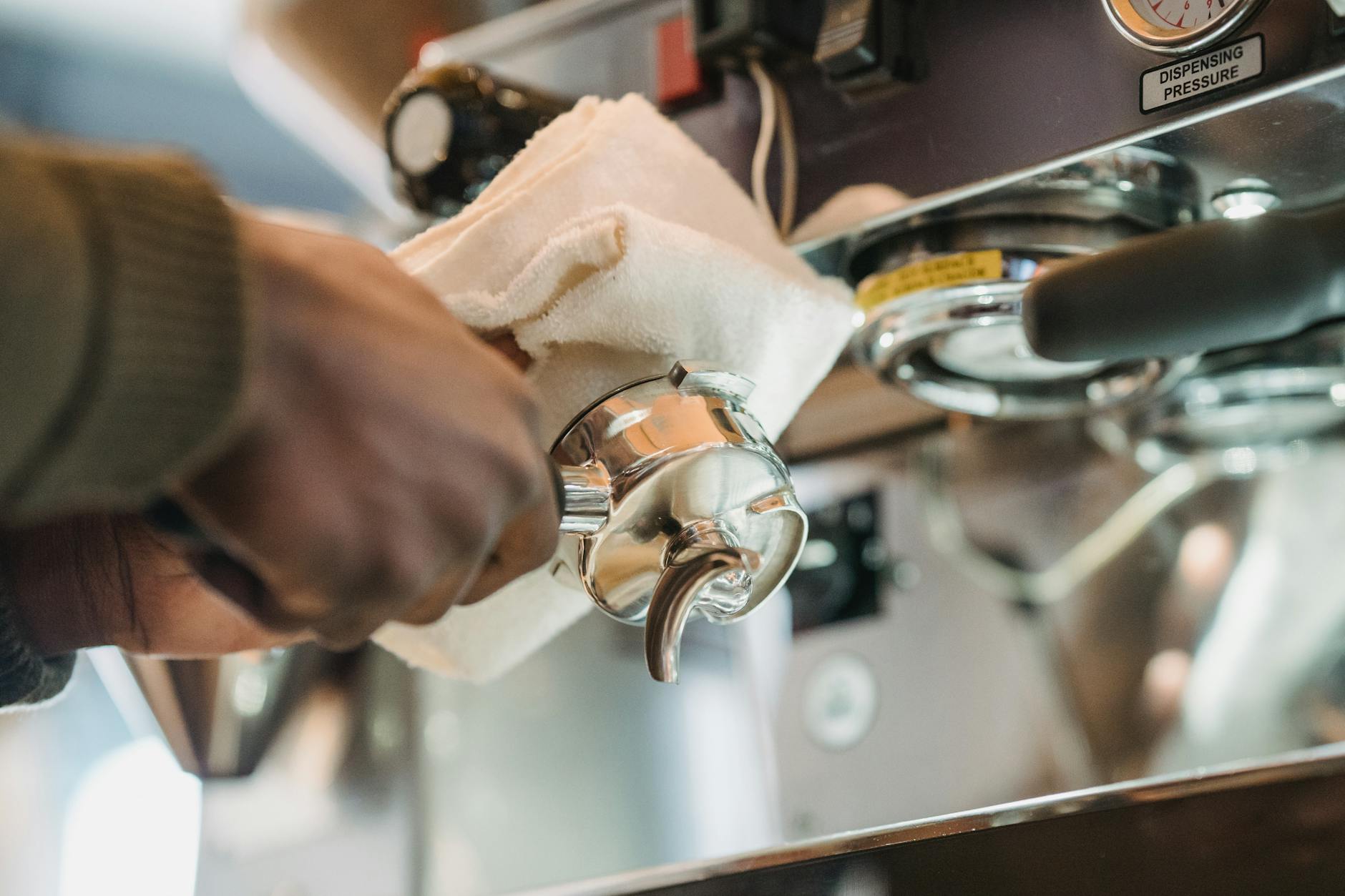
The Gaggia Classic Pro is a legendary machine, a gateway for many into the world of authentic espresso. But what happens when that satisfying, smooth motion of locking in your portafilter turns into a frustrating struggle? You’re not alone. Many Gaggia owners, both new and experienced, encounter a portafilter that’s suddenly stiff, difficult to turn, or won’t lock in all the way. This common issue can be alarming, making you worry that something is seriously wrong with your beloved machine. Fortunately, the cause is rarely a major defect. More often than not, it’s a simple maintenance issue or a small oversight in your brewing workflow that can be easily identified and corrected with a little know-how.
The usual suspects: Coffee grounds and the group head gasket
Before you start thinking about expensive repairs, let’s look at the two most common culprits: built-up coffee grounds and a worn-out group head gasket. Every time you pull a shot, tiny coffee particles and oils are left behind on the shower screen and, more importantly, around the rubber group head gasket. Over time, these residues build up and harden, creating a gritty, uneven surface. This build-up physically obstructs the portafilter ears from smoothly gliding into place, causing that stiff or crunchy feeling.
The solution is simple but crucial: regular cleaning. After every brewing session, you should do a quick flush of the group head. More importantly, make it a weekly habit to take a stiff brush and clean around the group head gasket and shower screen. This dislodges any stubborn grounds. If the problem persists, the gasket itself may be the issue. Over months of heat and pressure, the rubber gasket can become hard, brittle, and lose its flexibility. A hardened gasket doesn’t compress properly, requiring much more force to create a seal, which translates to a very stiff portafilter.
Is your coffee basket the culprit?
If your group head is sparkling clean and you’re still wrestling with the portafilter, it’s time to look at your basket. The single biggest reason a portafilter won’t lock in is overdosing. You might be putting too much coffee in the basket. When you lock in the portafilter, the coffee puck should have a small amount of clearance below the shower screen. If you’ve dosed too much, the coffee grounds will press directly against the screen, physically preventing the portafilter from turning all the way.
You can check for this easily. Dose and tamp your coffee as usual, but before locking it into the machine, gently rest the portafilter in the group head and then remove it. You shouldn’t see an imprint of the shower screen screw on your coffee puck. If you do, you’re overdosing. Reduce your dose by a gram or two and try again. Also, consider the basket itself. Are you using the original Gaggia basket or an aftermarket one? Precision baskets, while excellent, can sometimes have slightly different depths or rim thicknesses, which might affect the fit until they are properly broken in.
Understanding wear, tear, and new parts
Like any mechanical device, your Gaggia espresso machine experiences wear and tear. The group head gasket is a consumable part designed to be replaced. A good rule of thumb is to replace your gasket every 6 to 12 months, depending on usage. When you install a new gasket, you should expect the portafilter to feel tighter than it did with the old one. This is completely normal. The new rubber is thicker and more pliable, and it will take a week or two of regular use for it to compress and “settle” into the group head. So, if the difficulty started right after you replaced the gasket, don’t panic. It’s a sign that you have a fresh, tight seal.
In rarer cases, the brass lugs on the group head or the ears on the portafilter itself can wear down over many years, but this is not a common issue on well-maintained machines. The key takeaway is to treat the gasket as a regular maintenance item, just like changing the oil in a car.
A quick troubleshooting guide
Navigating the issue can be made simpler by following a logical process. Start with the easiest and most common fixes before assuming a more serious problem. By working through the potential causes systematically, you can quickly identify and solve the problem, getting you back to pulling great shots without the struggle. A tight portafilter is almost always a sign that something needs a simple adjustment or cleaning.
Here is a simple table to help you diagnose the problem at a glance:
| Symptom | Potential cause | How to fix it |
|---|---|---|
| Gritty or crunchy feeling when locking in | Old coffee grounds built up in the group head. | Perform a thorough cleaning of the group head, gasket, and shower screen with a brush. |
| Portafilter stops abruptly and won’t turn to the 6 o’clock position | Too much coffee in the basket (overdosing). | Reduce the amount of coffee grounds in your dose. Ensure there is a small gap between the tamped coffee and the shower screen. |
| Requires extreme force to lock in, feels very stiff | The group head gasket is old, hard, and no longer flexible. | Replace the group head gasket. This is a standard maintenance item. |
| Became tight immediately after installing a new part | A new gasket or a new precision basket has been installed. | This is normal. Continue using the machine; the part will break in over a week or two of use. |
In conclusion, a Gaggia portafilter that is hard to lock in is a common and highly fixable issue. It’s not a sign of a faulty machine but rather a call for attention to your cleaning and maintenance routine. By starting with the basics, a thorough cleaning of the group head, you can often solve the problem in minutes. If that doesn’t work, evaluating your coffee dose and basket is the next logical step. Finally, understanding that the group head gasket is a wearable part that needs periodic replacement will keep your machine running smoothly for years. Embrace these simple steps as part of the rewarding ritual of being a home barista, ensuring every espresso you make starts with a smooth, satisfying lock-in.

 No products in the cart.