

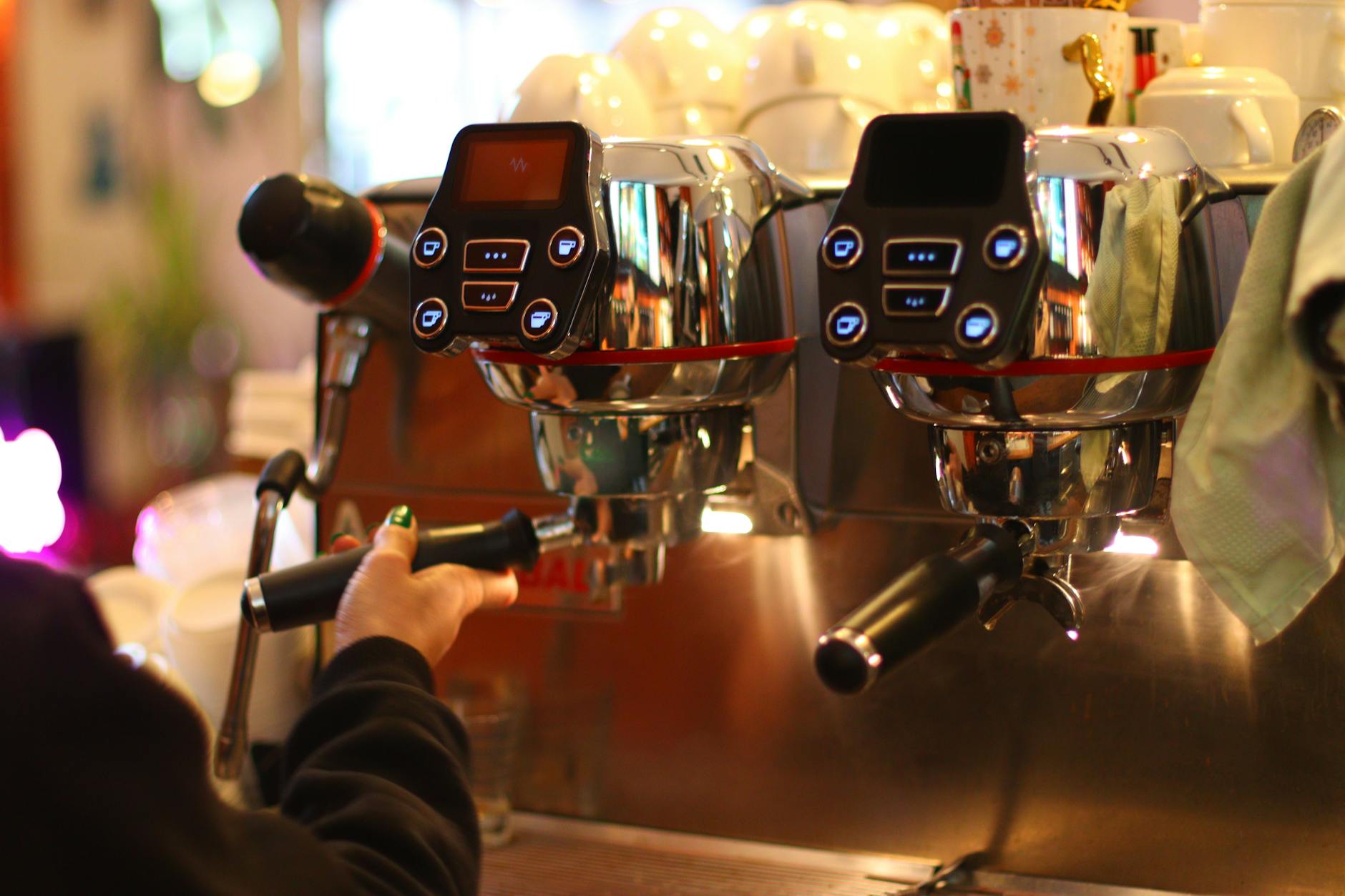
The Gaggia Classic and its successor, the Classic Pro, are legendary in the home espresso community. They offer a gateway to authentic espresso without the four-figure price tag of more advanced machines. However, achieving cafe-quality results requires mastering one of its biggest quirks: temperature stability. The machine’s simple design, while robust, leads to significant temperature swings during the brewing process. This can turn a potentially perfect shot into something sour or bitter. This article will guide you through the essential techniques, from simple pre-shot routines to advanced modifications, that will allow you to tame the Gaggia’s boiler and pull consistently delicious espresso shots. We will explore why this happens and provide actionable steps to achieve thermal stability.
Understanding the temperature challenge
To control the temperature, you first need to understand why it’s unstable. The Gaggia Classic Pro uses a small, single aluminum boiler paired with a simple bimetallic thermostat. This thermostat works like the one in a basic home oven; it tells the heating element to turn on when the temperature drops below a certain point and turn off when it rises above another. This range between the on and off points is called the deadband. In a stock Gaggia, this deadband can be quite wide, leading to temperature swings of 10°C (around 20°F) or more.
This means that depending on when you start your extraction within that heating cycle, the water hitting your coffee puck could be too hot or too cold. Water that is too hot will over-extract the coffee, resulting in a bitter, harsh taste. Conversely, water that is too cold will under-extract it, leading to a sour, weak shot. The key to better espresso is to minimize this variable and ensure you are brewing at a consistent, optimal temperature every single time. The following chapters will focus on how to gain control over this cycle.
Mastering your pre-shot routine
Before diving into more complex techniques, consistency starts with a solid foundation. A repeatable pre-shot routine is the first and most important step toward temperature stability. It’s not just about turning the machine on; it’s about bringing the entire brew path up to a stable thermal mass.
Follow these steps for a more stable starting point:
- Allow a proper warm-up: A common mistake is pulling a shot as soon as the ready light comes on. While the water in the boiler might be hot, the group head and portafilter are still cold. A cold portafilter can zap the heat right out of your brew water. Let the machine warm up for at least 15-20 minutes with the portafilter locked in.
- Perform a warming flush: Just before you pull your shot, run a few ounces of water through the group head (with the portafilter in place). This serves two purposes. It purges any superheated or stagnant water from the system and, more importantly, it transfers heat to the group head and portafilter, helping to stabilize the temperature of the entire assembly.
- Prepare your puck quickly: Once you remove the portafilter to dose and tamp your coffee, work efficiently. Leaving the portafilter out for too long will cause it to lose precious heat. A consistent and quick workflow minimizes temperature loss before you lock in and brew.
By making this routine a habit, you eliminate several variables and create a much more predictable starting point for your extraction.
The art of temperature surfing
Temperature surfing is the most popular technique for managing the Gaggia’s heating cycle without any modifications. The goal is to initiate the brew at the exact same point in the heating cycle every time, ensuring consistent brew water temperature. It involves manually triggering the heating element and timing your shot based on the machine’s indicator lights. While it requires some practice, it’s a free and highly effective method.
Here’s a common and reliable method:
- With the machine fully warmed up, place your cup on the scale and turn on the brew switch for a few seconds until the “ready” light turns off. This tricks the thermostat into thinking the water is cold and engages the heating element.
- Turn the brew switch off. Now, the boiler is actively heating.
- Wait for the “ready” light to turn back on, indicating the boiler has reached the top of its heating cycle.
- As soon as the light comes on, start a timer. This is your reference point.
- Start your shot at a predetermined time after the light comes on. A common starting point is 10 seconds. By brewing as the temperature is coasting down from its peak, you hit a more stable and predictable point.
You can adjust this timing to influence the extraction. Shorter waits result in higher temperatures, while longer waits result in lower temperatures.
| Goal Temperature | Technique | Best For |
|---|---|---|
| Higher | Start the shot 3-5 seconds after the ready light turns on. | Light roasts, enhancing acidity and brightness. |
| Medium / Consistent | Start the shot 8-12 seconds after the ready light turns on. | Medium roasts, aiming for balance and repeatability. |
| Lower | Start the shot 15-20 seconds after the ready light turns on. | Dark roasts, reducing bitterness and taming harsh notes. |
The ultimate solution: Installing a PID controller
While temperature surfing is effective, it requires constant attention and timing. For those seeking ultimate precision and “set it and forget it” convenience, the definitive upgrade is a PID (Proportional-Integral-Derivative) controller. A PID is a small digital controller that replaces the machine’s simple thermostat. Instead of the wide on/off deadband of the stock thermostat, a PID intelligently pulses the heating element to hold the boiler temperature with incredible accuracy, often within a single degree.
The benefits of installing a PID are transformative:
- Rock-solid stability: The primary benefit is eliminating temperature swings. You set your desired brew temperature (e.g., 93°C), and the PID maintains it precisely.
- Repeatability: Every shot you pull will be at the exact same temperature, removing a massive variable from your espresso-making process. This makes dialing in new beans much easier.
- Full control: A PID allows you to easily experiment with different brew temperatures to extract different flavors from your coffee beans, a level of control normally reserved for very expensive machines.
Installing a PID is a popular DIY project for Gaggia owners, and many companies sell pre-wired kits with detailed instructions, making the process accessible even for those without a background in electronics. It is truly the single best modification you can make to a Gaggia Classic Pro.
In conclusion, transforming your Gaggia Classic Pro from a good machine into a great one hinges on mastering its temperature. We began by understanding the core issue: the wide deadband of the stock thermostat. From there, we established that a consistent pre-shot routine—including a proper warm-up and warming flushes—is the non-negotiable foundation for stability. For those wanting to work with the stock machine, the art of temperature surfing offers a free yet powerful method to pull repeatable shots by timing them within the heating cycle. Finally, for the ultimate in precision and convenience, installing a PID controller elevates the machine to a new level, providing set-and-forget stability that rivals equipment many times its price. With these techniques, any Gaggia owner can overcome the machine’s primary limitation and unlock its full potential.

 No products in the cart.