

Why your Gaggia espresso tastes sour and how to fix it
There’s nothing quite like the ritual of pulling a rich, aromatic shot of espresso from your Gaggia machine. It’s a moment of pure potential. But that potential can quickly turn to disappointment when the first sip is overwhelmingly sour, sharp, and acidic. If you’re puckering your lips instead of savoring a balanced brew, you’re not alone. This is one of the most common issues for home baristas. The good news is that a sour espresso is not a sign of a bad machine or bad coffee; it’s a clear signal of under-extraction. In this guide, we’ll break down exactly what that means and walk you through the simple, methodical steps to transform your sour shots into the sweet, complex espresso your Gaggia is capable of producing.
Understanding the science of a sour shot
Before we start adjusting knobs and changing settings, it’s crucial to understand why your espresso tastes sour. Espresso extraction is a chemical process where hot, pressurized water dissolves compounds from your coffee grounds. This doesn’t happen all at once; different flavor compounds dissolve at different rates. The first things to be extracted are the fats and acids, which contribute bright, fruity, and, if not balanced, sour notes. Next come the sugars, which provide sweetness and body. Finally, the more bitter compounds are extracted, which add depth. A perfectly balanced shot has the right mix of all three.
Sourness is the dominant taste when the extraction process is stopped too early. The water simply hasn’t had enough contact time with the coffee grounds to dissolve the desirable sugars that balance out those initial acids. This is called under-extraction. You can often see it happening: the shot will run very fast, look pale and thin, and have a light, bubbly crema that disappears quickly. Your Gaggia isn’t the problem; it’s a powerful tool that needs to be told how to brew properly. The following chapters will show you how to give it the right instructions.
The number one culprit: Grind size and dose
The most influential factor in controlling extraction time is your coffee grind. Think of your coffee puck as a barrier for the water. If the coffee grounds are too coarse, there are large gaps between them, and the water rushes through with little resistance. This leads to a very fast shot (e.g., under 20 seconds) and classic under-extraction sourness. To fix this, you need to slow the water down, and the best way to do that is by making your grind finer. A finer grind creates a more compact coffee bed, forcing the water to work harder and spend more time extracting those all-important sugars.
Alongside the grind, your dose—the amount of coffee in the portafilter—plays a vital role. Using too little coffee for your basket size can also cause a fast, soupy shot. A proper dose ensures there’s enough coffee to provide adequate resistance. For a standard double-shot basket on a Gaggia, a good starting point is between 16 and 18 grams. Using a coffee scale to measure your dose every single time is non-negotiable for consistency. Make one small adjustment at a time: first, ensure your dose is correct, then start dialing in the grind finer until you hit the desired shot time.
Distribution and tamping for an even flow
You can have the perfect grind size and dose, but if the coffee grounds are not evenly distributed and tamped in the portafilter, you’ll still get a bad shot. When the coffee bed is uneven, water will exploit the weakest points, a phenomenon known as channeling. Water gushes through these low-density channels, under-extracting the coffee there, while other parts of the puck remain under-saturated. This results in a messy, unbalanced shot that tastes both sour (from the channels) and weak.
To prevent channeling, focus on these two steps:
- Distribution: After grinding into your portafilter, the grounds will likely be in a mound. You need to level them out. You can do this by gently tapping the side of the portafilter or, for even better results, using a simple distribution tool (like a WDT tool, which uses fine needles to break up clumps and distribute grounds evenly).
- Tamping: The goal of tamping is not to press as hard as you can, but to create a level and evenly compressed coffee puck. Apply firm, consistent pressure and make sure your tamper is perfectly flat. A crooked tamp will leave one side more compressed than the other, inviting water to channel through the less-dense side.
Perfecting your puck preparation ensures that water flows evenly through the entire coffee bed, leading to a complete and balanced extraction.
Dialing in your brew time and temperature
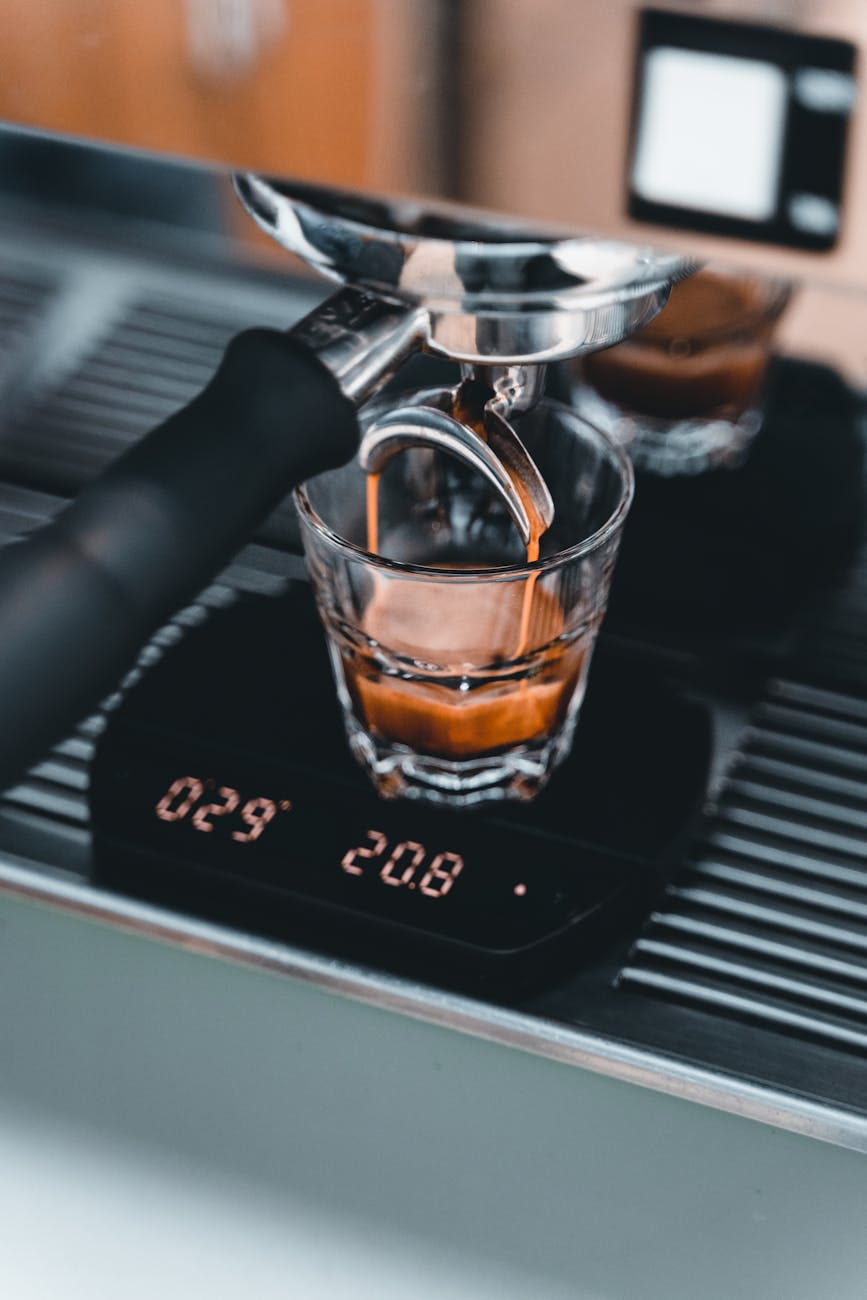
With your grind, dose, and puck prep sorted, the final pieces of the puzzle are brew time and temperature. These are the indicators that tell you if your other variables are correct. A general rule of thumb for espresso is to aim for a 1:2 brew ratio in about 25-30 seconds. This means for every 1 gram of coffee you put in, you want 2 grams of liquid espresso out. So, if you started with an 18-gram dose, you’d aim for a 36-gram shot, and the time to get there should be around 25-30 seconds from the moment you press the brew button.
If your 36-gram shot finishes in 15 seconds and tastes sour, you know you need to grind finer to slow it down. If it takes 45 seconds and tastes bitter, you need to grind coarser to speed it up.
Temperature is also critical. Water that is too cold will fail to extract the sugars, resulting in a sour shot regardless of your brew time. Gaggia machines like the Classic have a single boiler and can have temperature fluctuations. To combat this, always allow your machine to fully warm up for at least 15 minutes. It’s also essential to heat up your group head and portafilter by running a “blank shot” (water only) right before you brew. This prevents the cold metal from stealing heat from your brew water.
Troubleshooting your sour Gaggia shot
| Symptom | Likely Cause | Primary Solution | Secondary Solution |
|---|---|---|---|
| Shot runs very fast (<20 secs) and is sour/watery. | Under-extraction | Grind finer. This is the most effective way to slow down the shot. | Increase your dose slightly (e.g., from 17g to 17.5g). |
| Espresso looks blonde and thin with weak crema. | Under-extraction / Channeling | Grind finer. | Improve puck distribution (WDT) and ensure a level tamp. |
| Shot time is correct (25-30 secs) but still tastes sour. | Brew temperature is too low. | Warm up the machine longer. Run a blank shot to heat the portafilter and group head. | Check if your machine’s thermostat is functioning correctly. |
| The first few drops are dark, then it gushes out blonde. | Channeling | Improve puck preparation. Focus on even distribution and a level tamp. | Ensure your dose isn’t too low for the basket size. |
Conclusion
A sour shot from your Gaggia is not a failure; it’s a feedback loop telling you precisely what needs to be adjusted. In almost every case, it points to under-extraction—a problem solved by extending the contact time between water and coffee. By methodically working through the key variables, you can take control of your brew. Start by ensuring a consistent dose, then make small, incremental adjustments to your grind size to be finer. Perfect your puck preparation with even distribution and a level tamp to prevent channeling. Finally, manage your brew time and temperature to hit that sweet spot of 25-30 seconds. Dialing in espresso is a rewarding process of discovery. With patience and attention to these details, you will eliminate sourness and unlock the rich, sweet, and complex flavors your Gaggia machine is waiting to deliver.

 No products in the cart.