

Gaggia maintenance: When to deep clean vs. daily rinse your components
Owning a Gaggia espresso machine is a commitment to quality coffee. That rich, aromatic shot of espresso you crave each morning doesn’t just happen by magic; it’s the result of precision engineering. However, to keep that Gaggia performing at its peak, a consistent cleaning routine is non-negotiable. Many owners get confused about the difference between a quick daily rinse and a more involved deep clean. Is a simple water flush enough? How often do you need to break out the special cleaners? Understanding the purpose behind each type of cleaning is the key to preserving the taste of your coffee and extending the life of your machine. This guide will break down the essential tasks, explaining when a simple rinse suffices and when it’s time for a thorough deep clean.
The daily rinse: Your first line of defense
Think of the daily rinse as the immediate tidying up after cooking a meal. You wouldn’t leave food residue on your pans to harden overnight, and the same principle applies to your Gaggia. Coffee is an oily substance, and these oils, along with microscopic coffee grounds, begin to cling to surfaces the moment you pull a shot. If left unchecked, they quickly turn rancid, imparting a bitter, stale flavor to your next brew. The daily rinse is a simple, proactive habit that takes less than two minutes but is the single most important thing you can do for your coffee’s flavor.
This routine doesn’t require any special chemicals, just hot water and a bit of diligence. It focuses on the components that come into direct contact with coffee and milk with every use:
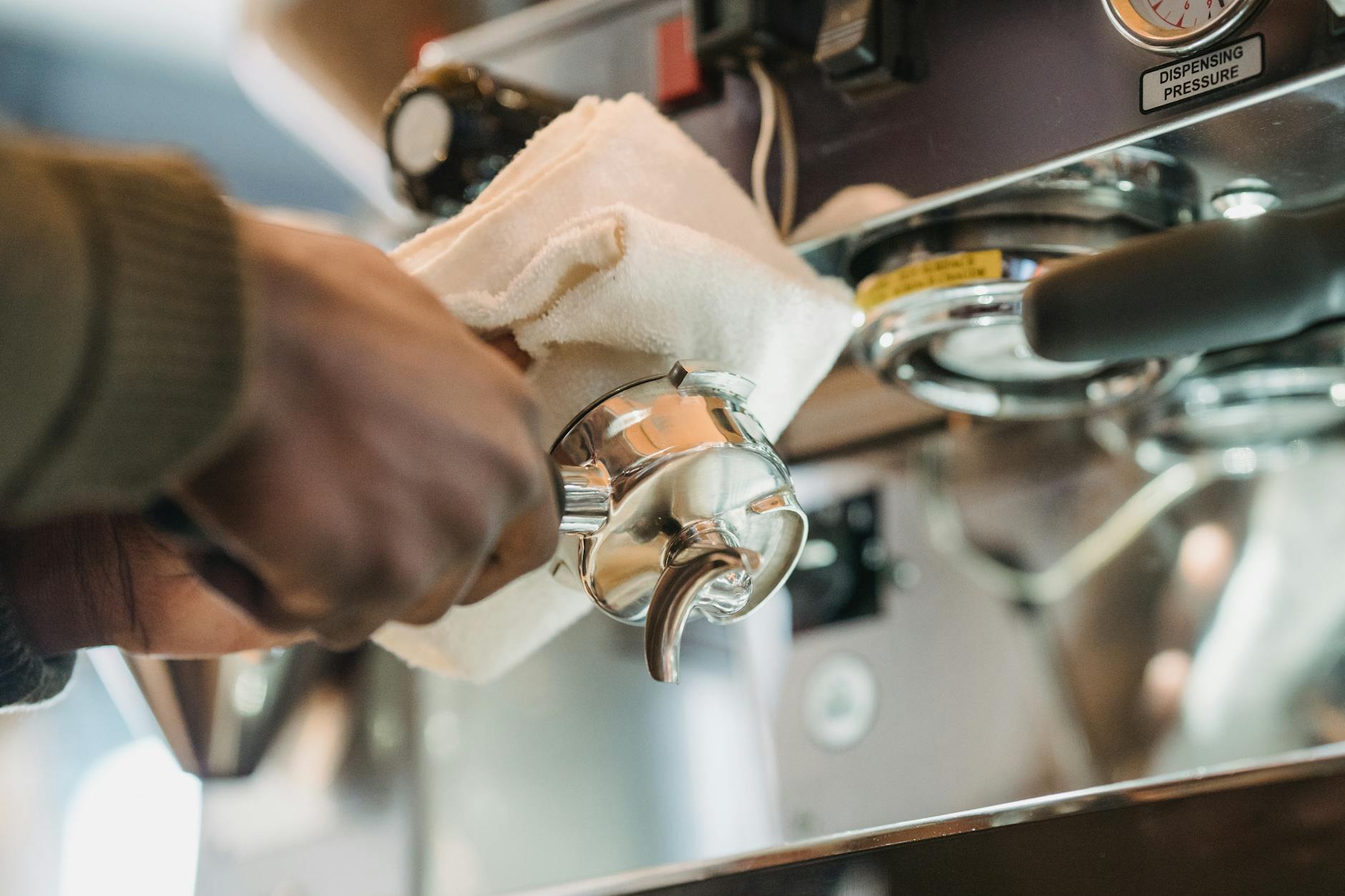
- The Portafilter and Basket: After knocking out the used coffee puck, immediately rinse the portafilter and basket under hot water. Use your fingers or a soft brush to dislodge any stubborn grounds.
- The Group Head: Run a short “blank” shot of hot water through the group head without the portafilter locked in. This flushes out any grounds and oils from the shower screen.
- The Steam Wand: Immediately after steaming milk, purge the wand by opening the steam valve for a couple of seconds to blow out any internal milk residue. Then, wipe the exterior with a dedicated damp cloth before the milk has a chance to cook on.
Integrating these quick steps into your coffee-making ritual ensures you’re starting with a clean slate for every single shot, preventing the rapid buildup that leads to poor taste.
The deep clean: Eradicating hidden buildup
While the daily rinse is crucial for immediate hygiene, it can’t reach the stubborn, baked-on oils and mineral deposits that accumulate over time. This is where the deep clean comes in. It’s a more intensive, periodic process designed to tackle the grime that a simple water flush leaves behind. This process requires specialized espresso machine cleaners (like Cafiza or other similar products) which are formulated to break down coffee oils, and descalers, which dissolve the mineral scale from water.
Deep cleaning targets the same components as the daily rinse but in a much more thorough way:
- Backflushing the Group Head: This is the most critical deep cleaning task. It involves using a blind basket (one with no holes) in your portafilter along with a dose of espresso machine cleaner. By running the machine, you force the hot water and cleaning solution back up into the group head and three-way solenoid valve, dissolving and flushing out rancid oils from the internal pathways.
- Soaking Components: The portafilter, metal baskets, and shower screen (after carefully unscrewing it from the group head) should be soaked in a solution of hot water and espresso cleaner. This chemical action dissolves the toughest, blackest gunk that simple scrubbing can’t remove, restoring them to a like-new shine.
- Descaling the Boiler: Over time, minerals from your water (limescale) build up on the boiler and heating elements. This scale insulates the heating element, causing temperature instability and poor performance, and can eventually lead to a total machine failure. Descaling involves running a specific descaling solution through the machine’s water system to dissolve these mineral deposits.
Failing to deep clean means you are essentially brewing your fresh coffee through a filter of old, rancid oil and scale, which inevitably ruins the taste and harms your machine.
Creating your Gaggia cleaning schedule
Knowing what to do is half the battle; knowing when to do it is the key to consistency. A structured schedule removes the guesswork and turns maintenance into a manageable routine. The ideal frequency depends on your usage, but the following table provides a strong baseline for the typical home user. Adjust the “Deep Clean Frequency” to be more frequent if you pull many shots per day or less frequent if you only use your machine on weekends.
| Component | Daily Rinse Task (After Every Use) | Deep Clean Task | Deep Clean Frequency |
|---|---|---|---|
| Portafilter & Basket | Rinse with hot water, wipe dry. | Soak in espresso cleaner solution for 20-30 mins, then rinse thoroughly. | Weekly |
| Group Head | Flush with water for 5-10 seconds. | Backflush with espresso cleaner. Remove and scrub the shower screen. | Weekly to Bi-Weekly |
| Steam Wand | Purge and wipe with a damp cloth. | Soak tip in hot water/cleaner. Use a brush to clean inside the tip. | Weekly |
| Drip Tray | Empty and rinse. | Wash with soap and warm water. | As needed / Weekly |
| Water Reservoir | (Refill with fresh, filtered water daily) | Wash with soap and warm water. | Weekly |
| Internal System | N/A | Descale the boiler and internal pathways using a dedicated descaling solution. | Every 2-3 Months* |
*Descaling frequency is highly dependent on your water hardness. If you live in an area with very hard water, you may need to descale monthly. Using filtered or softened water can significantly extend this interval.
The consequences of neglect
Skipping these cleaning routines might not seem like a big deal at first, but the negative effects accumulate quickly and manifest in three key areas. The most immediate impact is on taste. Rancid coffee oils impart a distinctly bitter and sour flavor that overpowers the delicate notes of your coffee beans, no matter how high-quality they are. Secondly, your machine’s performance will suffer. A clogged shower screen prevents water from distributing evenly over the coffee puck, leading to channeling and a poorly extracted, inconsistent shot. Even worse, limescale buildup in the boiler acts as an insulator, preventing the machine from reaching and maintaining the optimal brew temperature, a critical factor for great espresso.
Finally, and most costly, is the impact on the machine’s longevity. Scale buildup can flake off and clog the sensitive valves and narrow pathways inside your Gaggia. In a worst-case scenario, it can cause the heating element to overheat and fail, leading to an expensive and avoidable repair. In short, neglecting your cleaning routine is a surefire way to get bad-tasting coffee and a broken machine.
In conclusion, mastering the maintenance of your Gaggia machine boils down to a simple, two-pronged approach: the diligent daily rinse and the periodic deep clean. The daily rinse is your frontline defense, a quick habit that prevents the immediate buildup of oils and grounds, directly protecting the flavor of your very next cup. The deep clean is your long-term insurance policy, a more intensive process that eradicates the stubborn grime and scale that rinsing can’t touch, safeguarding your machine’s performance and internal health. These two routines are not interchangeable; they are partners in preservation. By embracing this complete cleaning philosophy and sticking to a consistent schedule, you ensure your Gaggia will continue to reward you with delicious, café-quality espresso for many years to come.


 No products in the cart.