

The Gaggia Classic Pro is a legendary machine, celebrated for its ability to produce cafe-quality espresso at home. However, unlocking its full potential goes beyond just grinding beans and pressing a button. The secret to a truly balanced, delicious shot lies in mastering the relationship between your coffee dose and beverage yield. This delicate dance, known as the brew ratio, is the foundation of espresso extraction. In this guide, we will demystify the concepts of dose, yield, and time, providing you with a clear, step-by-step process to dial in your Gaggia Classic Pro. By learning to control these variables, you can move from inconsistent shots to consistently superb espresso tailored perfectly to your taste.
Understanding the core variables: Dose, yield, and time
Before you can pull the perfect shot, you need to understand the three pillars of espresso extraction. These elements are interconnected, and a change in one will always affect the others. Mastering them is the first step toward espresso excellence.
- Dose: This is simply the weight of dry, ground coffee you put into your portafilter basket. Measured in grams, the dose is the foundation of your recipe. It determines the potential strength and body of your espresso. For a Gaggia Classic Pro with a standard double basket, a common starting dose is between 16 and 18 grams. A larger dose generally leads to a fuller-bodied shot, while a smaller dose can produce a more delicate cup.
- Yield: This refers to the weight of the liquid espresso in your cup after extraction. Also measured in grams, yield is a far more accurate measure of volume than milliliters, as crema can skew visual Cues. The yield dictates the concentration and overall flavor profile of your shot. A small yield results in a concentrated, intense shot (ristretto), while a large yield produces a more diluted, tea-like shot (lungo).
- Time: The shot time is the duration, in seconds, from when you engage the pump until you reach your target yield. Time is not a variable you directly control; rather, it is an indicator of your grind size. A typical target for a well-balanced shot is 25-35 seconds. If your shot runs too fast, your grind is too coarse. If it chokes the machine and runs too slow, your grind is too fine.
These three variables come together to form your brew ratio (Dose:Yield). A standard “normale” espresso often uses a 1:2 ratio. For an 18-gram dose, this means you are aiming for a 36-gram yield. This ratio is a fantastic starting point, but as we’ll explore, it is not a rigid rule.
Essential tools for precision and consistency
To manipulate the variables of dose and yield effectively, you cannot rely on guesswork. Precision is key, and a few essential tools will transform your espresso-making process from a game of chance into a repeatable science. These items are not luxuries; they are fundamental for anyone serious about optimizing their Gaggia Classic Pro.
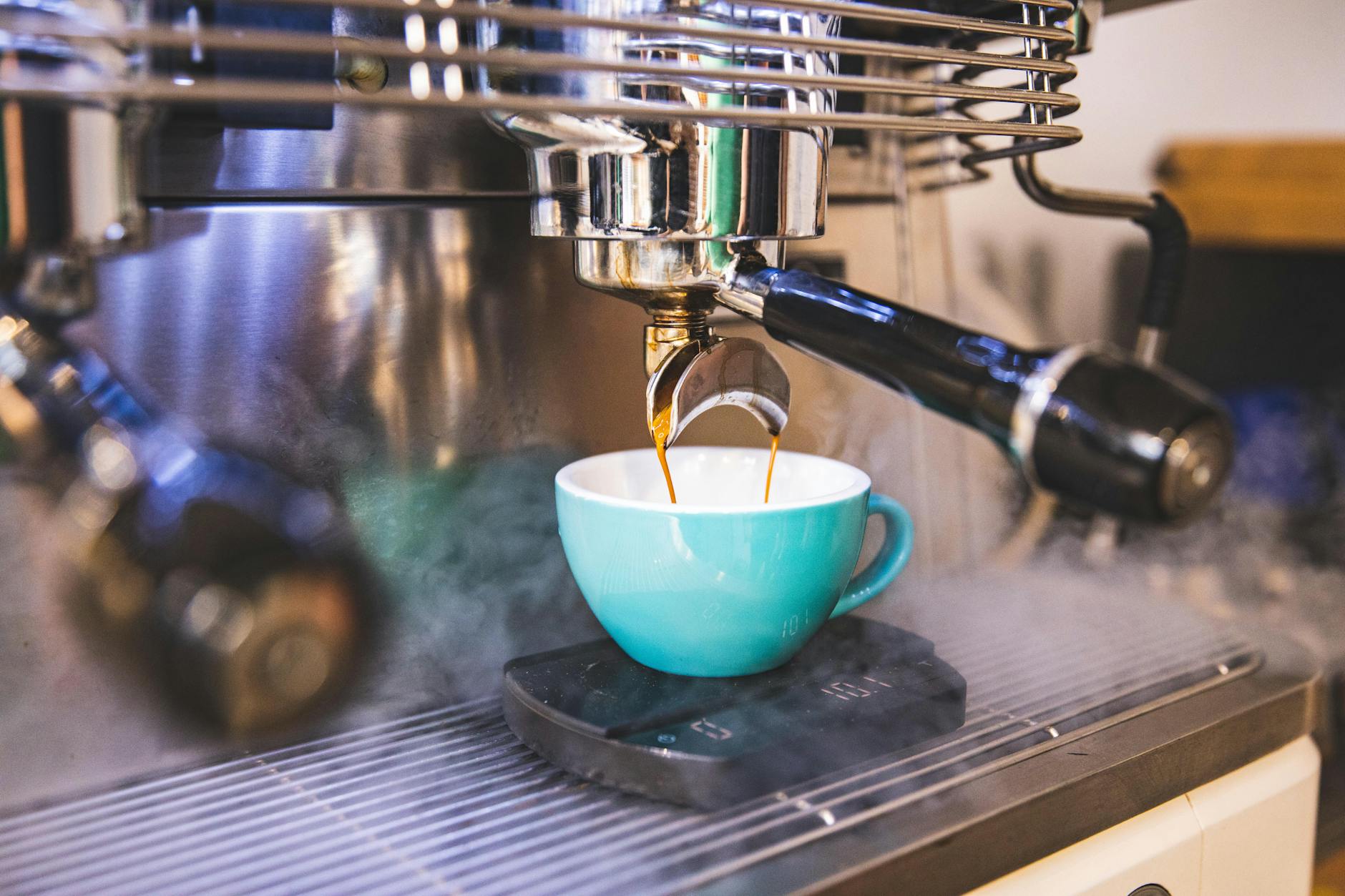
First and foremost is a digital coffee scale with 0.1-gram accuracy. This is the single most important tool for dialing in. You will use it for everything: measuring your dose of whole beans before grinding, verifying the weight of your ground coffee in the portafilter, and, most importantly, placing your cup on it to measure the liquid yield in real-time as the shot pulls. Without a scale, you are flying blind.
Next, you need a reliable timer. Many coffee scales have a built-in timer, which is ideal. If not, the stopwatch on your phone will work perfectly. You will start the timer the moment you flip the brew switch on your Gaggia, allowing you to monitor the extraction time accurately.
Finally, while not strictly necessary to start, tools for proper puck preparation are crucial for consistency. A Weiss Distribution Technique (WDT) tool helps break up clumps in the ground coffee for an even extraction, and a quality, calibrated tamper ensures you create a level and consistently compressed coffee bed. An uneven puck leads to channeling, where water finds pathways of least resistance, resulting in a shot that is simultaneously sour and bitter, making any ratio adjustments meaningless.
Dialing in your Gaggia classic pro: A step-by-step guide
With your theory and tools in place, it’s time for the practical application. This methodical process involves changing one variable at a time to understand its effect on the final taste. Let’s use a common starting point: a medium roast coffee.
Step 1: Establish your starting recipe.
Let’s begin with a standard 1:2 brew ratio.
- Dose: 18g
- Yield: 36g
- Target Time: 25-35 seconds
Step 2: Lock in your dose and adjust the grind.
For now, keep your 18g dose constant. The primary variable you will change to hit your target time is the grind size. Weigh out 18g of coffee, prepare your puck, and place your cup on the scale under the portafilter. Start your timer and the brew pump simultaneously. Stop the shot just before you hit 36g (the flow will continue for a gram or two). Now, look at your time.
- Was the shot too fast (e.g., 18 seconds)? Your grind is too coarse. Water is flowing through the coffee too easily. You need to adjust your grinder to a finer setting.
- Was the shot too slow (e.g., 45 seconds)? Your grind is too fine, and it’s restricting the water flow. You need to adjust your grinder to a coarser setting.
Repeat this process, making small adjustments to your grinder until you are consistently hitting your 36g yield in the 25-35 second window. This is your baseline shot.
Step 3: Taste and adjust the yield.
Now that your time is correct, it’s time to taste. The goal is balance.
- Is the shot overwhelmingly sour, acidic, or thin? This indicates under-extraction. To fix this, you need to extract more from the coffee. The easiest way is to increase your yield. Try pulling the next shot to 40g (a ~1:2.2 ratio) while keeping the 18g dose and the same grind setting. This will lengthen the shot time slightly and increase extraction.
- Is the shot excessively bitter, harsh, or drying? This is a sign of over-extraction. To fix this, you need to extract less. Decrease your yield. Aim for 32g (a ~1:1.8 ratio) on your next shot. This will shorten the contact time and reduce extraction.
By tweaking the yield based on taste, you are personalizing the brew ratio to suit that specific coffee bean and your palate.
Adjusting ratios for different roast levels
The 1:2 ratio is a versatile starting point, but it’s not a universal solution. Different coffees behave differently during extraction, largely due to their roast level. Understanding how to adapt your ratio will allow you to bring out the best in any bean.
Light Roasts: These beans are denser and less soluble than their darker counterparts. As a result, they are more resistant to extraction and can taste unpleasantly acidic if not brewed correctly. To counteract this, light roasts often benefit from longer brew ratios to increase extraction and develop their complex, fruity, and floral notes. A finer grind and a ratio of 1:2.5 or even 1:3 can turn a sour shot into a beautifully sweet and vibrant one.
Dark Roasts: These beans are more porous, brittle, and highly soluble. They give up their flavors very easily and can quickly become bitter and ashy if over-extracted. To highlight their rich, chocolatey, and nutty notes without the harshness, it’s often best to use a shorter brew ratio. By restricting the yield to 1:1.5 or 1:1.8, you capture the sweet spot of the extraction before the bitter compounds dominate.
Here is a simple table to use as a starting guide:
| Roast Level | Common Tasting Notes | Recommended Starting Ratio (Dose:Yield) | General Goal |
|---|---|---|---|
| Light | Fruity, Floral, High Acidity | 1:2.5 – 1:3 | Increase extraction to develop sweetness and balance acidity. |
| Medium | Balanced, Caramel, Chocolate | 1:2 – 1:2.5 | The classic, balanced starting point for most coffees. |
| Dark | Roasty, Dark Chocolate, Low Acidity | 1:1.5 – 1:2 | Decrease extraction to avoid bitterness and highlight richness. |
Remember, these are just starting points. Let your palate be the final judge as you fine-tune the yield gram by gram.
Mastering the dose and yield ratio is the most rewarding skill an aspiring home barista can learn. It elevates your Gaggia Classic Pro from a simple appliance to a precision instrument for crafting exceptional coffee. As we’ve seen, the process is a methodical balancing act between dose, yield, grind size, and time. By using a scale, starting with a 1:2 ratio, and adjusting based on taste, you create a repeatable recipe for success. Remember that every coffee is different, and the “perfect” shot is ultimately subjective. Trust your palate, embrace the process of experimentation, and don’t be afraid to deviate from standard recipes. With this knowledge, you are now equipped to diagnose your shots and consistently pull balanced, delicious espresso that rivals your favorite cafe.


 No products in the cart.