

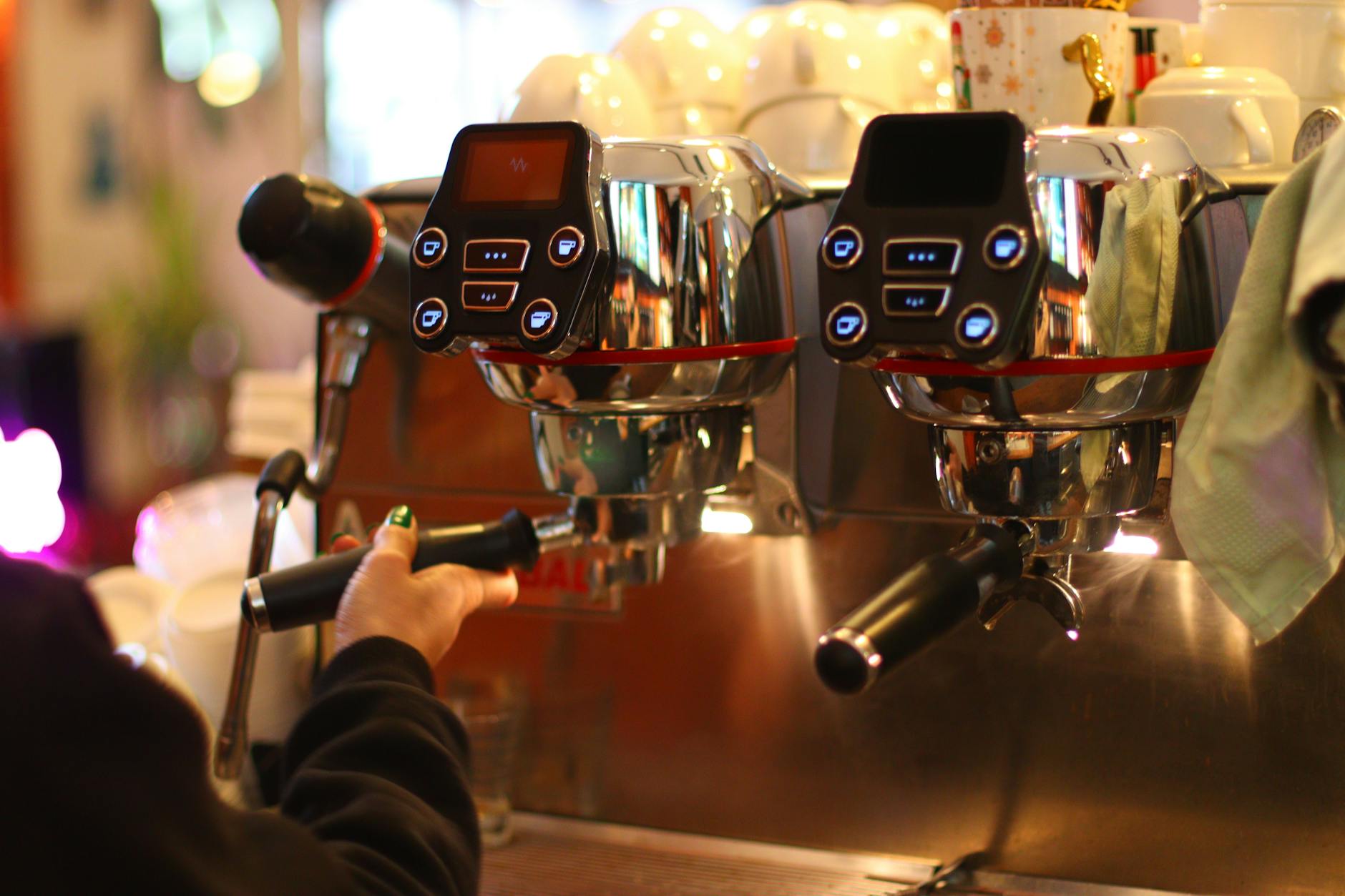
Master your Gaggia Classic Pro: diagnosing espresso shots with a bottomless portafilter
The Gaggia Classic Pro is a titan in the world of home espresso, beloved for its powerful performance and no-frills approach. However, that power can be unforgiving, and many new owners struggle to pull that perfect, syrupy shot they crave. The standard spouted portafilter hides the magic—and the mistakes—happening inside the basket. This is where the bottomless portafilter, also known as a naked portafilter, becomes an indispensable tool. It strips away the mystery, providing a raw, unfiltered view of your extraction. This article will guide you through using this essential accessory to diagnose common extraction issues, refine your technique, and unlock the full potential of your Gaggia Classic Pro.
What is a bottomless portafilter and why you need one
A bottomless portafilter is exactly what it sounds like: a standard portafilter that has had its bottom and spouts completely removed. This exposes the underside of the filter basket, giving you a front-row seat to the espresso extraction process. While a traditional spouted portafilter funnels the coffee into one or two streams, it also conceals critical information about how evenly the water is passing through your coffee grounds, or “puck”.
For a Gaggia Classic Pro user, this tool is less of an accessory and more of an essential piece of diagnostic equipment. Here’s why:
- It reveals your mistakes: The Gaggia operates at a high pressure. Any imperfections in your puck preparation, such as uneven coffee distribution or an unlevel tamp, will be instantly revealed as water violently finds the path of least resistance. The bottomless portafilter shows you exactly where and why your shot is going wrong.
- It improves your technique: By providing immediate visual feedback, it forces you to become better. You’ll learn to distribute and tamp your grounds with more care and precision, leading to a more consistent and delicious espresso. The goal is to eliminate flaws you can now see.
- It results in better tasting espresso: By fixing the issues you can see, you achieve a more even extraction. This means you are extracting all the desirable sweet and complex flavors from the coffee grounds, rather than getting a mix of sour (under-extracted) and bitter (over-extracted) flavors that result from channeling.
Ultimately, a bottomless portafilter transforms a frustrating guessing game into a clear, actionable learning process. You stop wondering why your espresso tastes bad and start seeing the reasons firsthand.
Reading the signs: identifying common extraction problems
Once you switch to a bottomless portafilter, your first few shots might be messy. Don’t be discouraged. This mess is data. The key is learning to interpret what you see. An ideal extraction should begin with a few dark drips forming across the basket, which then coalesce into a single, steady stream in the center. The flow should look viscous, like warm honey, and feature beautiful “tiger striping” of dark and reddish-brown crema.
Here are the common problems you’ll likely see instead:
Channeling
This is the most common issue. You’ll see one or more tiny, high-velocity jets of water squirting out from the basket. It often creates a mess and is a clear sign that water has punched a hole, or “channel,” through a weak spot in your coffee puck. Instead of saturating the grounds evenly, water bypasses most of the coffee, leading to a shot that is simultaneously bitter and sour.
Uneven extraction
This fault appears when the espresso begins to flow from one side of the basket significantly earlier than the other. The final stream will be off-center. This indicates that your coffee puck is not level, likely due to uneven distribution of the grounds or tamping at an angle. The side where extraction begins first will be over-extracted, while the other side remains under-extracted.
Early blonding
A good shot should maintain a rich, dark color for the majority of the pull. If your stream quickly turns from a deep brown to a pale, watery yellow, it’s “blonding” too early. This indicates that water is flowing through the puck too quickly. It’s often a symptom of a grind that is too coarse, an insufficient dose of coffee, or severe channeling that exhausts the puck prematurely.
Puck prep perfection: the key to a clean extraction
The problems revealed by your bottomless portafilter almost always point back to one thing: flawed puck preparation. Dialing in your prep routine is the solution to 90% of extraction issues. The goal is to create a coffee puck of uniform density so that water flows through it evenly.
Focus on these four key steps:
- Grind consistently: Your Gaggia Classic Pro needs a fine, consistent espresso grind. A quality burr grinder is non-negotiable. Blade grinders create dust and boulders, which are a guaranteed recipe for channeling.
- Dose accurately: Use a coffee scale with 0.1g accuracy to weigh your dose. Consistency is key. A typical dose for a standard double basket is between 16-18 grams. Using the same amount of coffee every time removes a major variable.
- Distribute evenly: This is arguably the most critical step. After grinding into your portafilter, the grounds will be clumpy and unevenly distributed. Use a distribution technique to fix this. The most effective is the Weiss Distribution Technique (WDT), which involves using a tool with fine needles to stir the grounds and break up all clumps, leaving a fluffy, even bed.
- Tamp levelly: Once your grounds are distributed, the final step is tamping. The focus here is not on brute force but on being perfectly level. An unlevel tamp creates areas of high and low density, inviting channels. Press down firmly until the coffee bed stops compressing. A self-leveling or calibrated tamper can be a great investment for ensuring consistency.
By mastering these steps, you create the ideal conditions for a beautiful, even extraction. The channeling and spurting will disappear, replaced by that single, syrupy stream you’re aiming for.
A practical troubleshooting guide
To help you connect the problem with the solution, here is a quick-reference table for diagnosing your Gaggia Classic Pro shots with a bottomless portafilter.
| Visual cue (The problem) | Potential cause(s) | How to fix it |
|---|---|---|
| Spurting jets (channeling) | – Clumpy grounds – Uneven distribution – Unlevel tamping |
– Use a WDT tool to break up all clumps. – Gently tap the portafilter on the counter to settle grounds. – Ensure a firm, perfectly level tamp. |
| Extraction starts on one side | – Coffee puck is not level – Tamping at an angle – Machine is not on a level surface |
– Improve distribution with WDT or a distribution tool. – Focus on tamping straight down. – Check if your counter is level. |
| Flow is too fast and pale | – Grind is too coarse – Coffee dose is too low |
– Adjust your grinder to a finer setting. – Increase your coffee dose by 0.5g-1g. |
| Flow is choking or dripping very slowly | – Grind is too fine – Coffee dose is too high |
– Adjust your grinder to a coarser setting. – Decrease your coffee dose by 0.5g-1g. |
| Multiple streams that never join together | – Poor distribution – Grind is too coarse |
– Focus heavily on your WDT technique. – Grind finer to increase resistance and help the flow coalesce. |
Conclusion
The bottomless portafilter is far more than just a tool for creating beautiful videos for social media; it is the single best investment you can make for your Gaggia Classic Pro. It transforms the invisible, complex process of espresso extraction into a clear and understandable visual story. By exposing issues like channeling, uneven flow, and incorrect grind size, it empowers you to make targeted adjustments. As we’ve seen, the solution almost always lies in perfecting your puck preparation—from accurate dosing and thorough distribution to a firm, level tamp. While the initial mess can be disheartening, stick with it. With the feedback from your bottomless portafilter, you will quickly build the skills and intuition needed to pull consistently delicious, cafe-quality espresso at home.

 No products in the cart.