

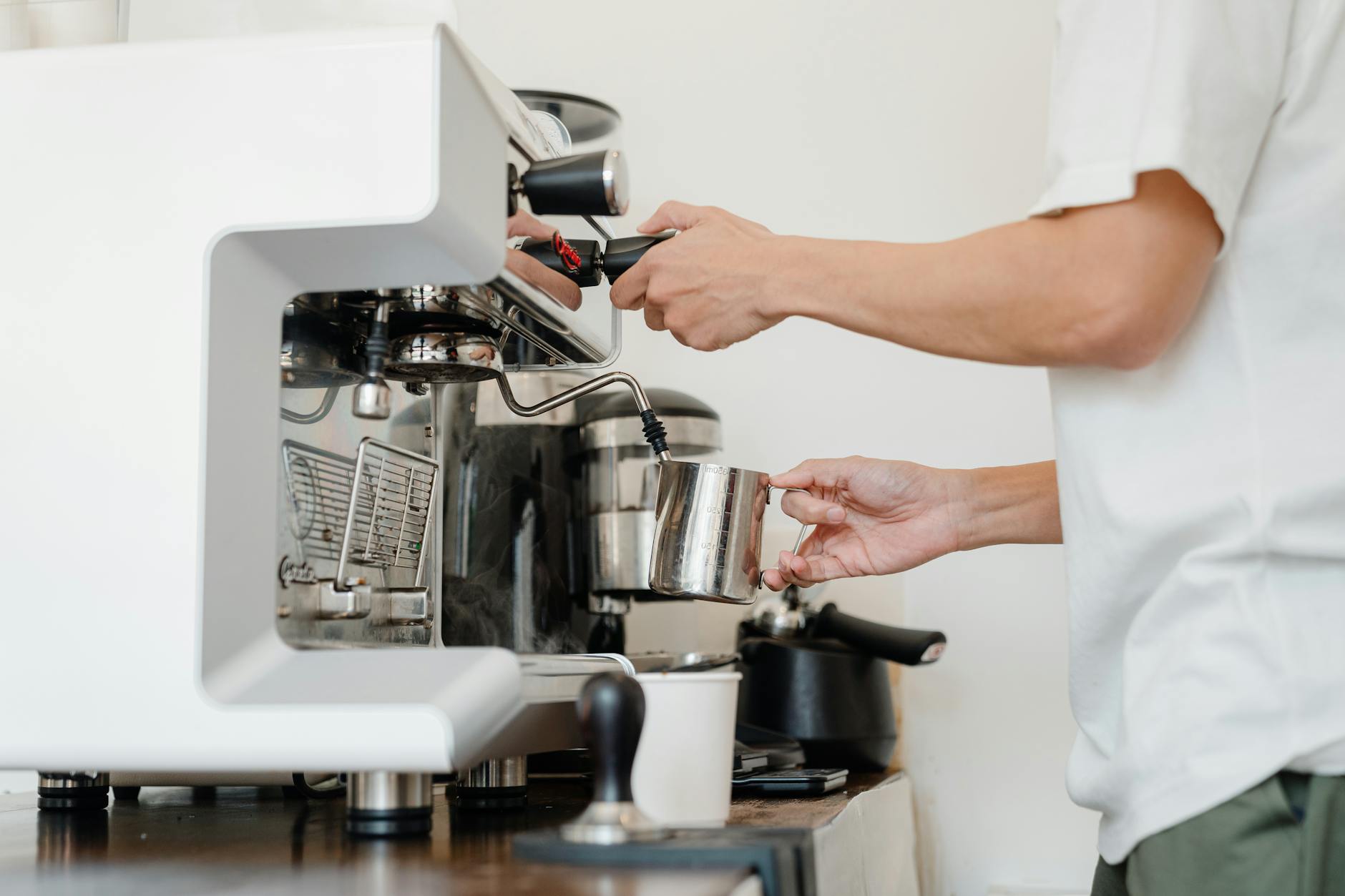
The De’Longhi ECP3420 is a fantastic gateway into the world of home espresso. It’s affordable, reliable, and capable of pulling a genuinely tasty shot. However, for many aspiring home baristas, the journey toward a perfect latte or cappuccino hits a snag at the milk-steaming stage. The culprit? The stock Panarello steam wand. While designed to be user-friendly, this plastic attachment is the single biggest barrier between you and silky, café-quality microfoam. This article will explore why the Panarello wand limits your potential, the significant benefits of removing it to reveal the traditional wand underneath, and how you can make this simple, free modification to completely transform your milk-based espresso drinks at home.
What is a panarello wand and why does it hold you back?
On the surface, the Panarello wand seems like a helpful feature. It’s a plastic or metal sheath that fits over the machine’s core steam wand. Its design incorporates a small air intake hole near the top. When you start steaming, this hole automatically sucks air into the milk, rapidly creating a large volume of thick, bubbly foam. For a complete beginner, this is great; it guarantees you’ll get some kind of foam every time without much technique.
However, this ease of use comes at a significant cost: control. The Panarello’s automated process creates what baristas often call “macrofoam” or “soap suds.” The bubbles are large, the texture is stiff and dry, and the foam separates from the heated milk almost immediately. This type of foam sits on top of your espresso like a fluffy hat rather than integrating into it. It lacks the velvety texture and perceived sweetness of properly steamed milk, and it makes pouring latte art completely impossible. In essence, the Panarello is a set of training wheels that, while helpful for your first few tries, ultimately prevents you from learning to ride properly.
Uncovering the potential: The traditional wand underneath
The best-kept secret of the ECP3420 and similar entry-level machines is that underneath the Panarello sheath lies a slender, single-hole metal steam wand. This is a simplified version of the wands you see on professional, multi-thousand-dollar café machines. By simply pulling off the plastic Panarello, you unlock your machine’s true potential. A traditional wand does not automatically inject air. Instead, it gives you full control over the two key phases of milk steaming: stretching and texturing.
- Stretching: This is the phase where you introduce air. By keeping the wand’s tip just below the surface of the milk, you create a gentle “tss-tss-tss” sound, incorporating fine air bubbles and increasing the milk’s volume.
- Texturing: Once you’ve added enough air, you submerge the wand deeper into the milk pitcher. This creates a swirling vortex that breaks down large bubbles and integrates the air evenly, resulting in a smooth, glossy microfoam with the consistency of wet paint.
This level of control is what allows you to create true microfoam, which enhances the drink’s flavor, improves its mouthfeel, and is the essential ingredient for pouring latte art.
How to remove the wand and start steaming like a pro
Making this upgrade is incredibly simple and completely reversible. First, ensure your espresso machine is turned off and completely cool. The steam wand can get very hot, so this is a crucial safety step. Next, get a firm grip on the plastic Panarello sheath and pull it straight down, away from the machine. It might be on tight, so a firm, steady wiggle and pull may be necessary. That’s it! You have now revealed the traditional steam wand.
Steaming with this wand requires a bit of practice, but the learning curve is rewarding. Follow these steps for your first attempt:
- Fill a cold milk pitcher with cold milk, just to the bottom of the spout.
- Purge the steam wand for a few seconds to clear out any condensed water.
- Submerge the wand’s tip into the milk and turn the steam on full power.
- Immediately lower the pitcher so the tip is just at the surface. You should hear a soft hissing or ripping sound. Keep it here until the milk volume increases by about 20-30%.
- Raise the pitcher to submerge the wand deeper, positioning it off-center to create a swirling vortex in the milk.
- Heat the milk until the pitcher is just too hot to comfortably hold for more than a second (around 140-150°F or 60-65°C).
- Turn off the steam before removing the wand from the milk.
- Wipe the wand immediately with a damp cloth. Tap the pitcher on the counter to pop any large bubbles and give it a swirl to create a glossy sheen.
Comparing the results: Panarello vs. traditional wand
The difference in the final product is night and day. While the Panarello offers simplicity, the traditional wand offers quality across the board. The learning process requires patience, but the results are far superior, elevating a simple homemade coffee into a genuine café-quality beverage. Here is a direct comparison of the results you can expect from each method.
| Feature | Panarello Wand | Traditional Wand (Uncovered) |
|---|---|---|
| Foam Texture | Stiff, dry, large bubbles. Separates easily from milk. | Silky, velvety, and glossy microfoam. Fully integrated with milk. |
| User Control | Very low. The wand automates the aeration process. | Full control over air incorporation and texturing. |
| Latte Art Capability | None. The foam is too thick and clumpy to pour designs. | Excellent. The primary method for creating latte art. |
| Learning Curve | Very easy. Almost no technique required. | Moderate. Requires practice to master positioning and timing. |
| Taste & Mouthfeel | Can taste airy and dry. Creates a distinct layered effect. | Tastes sweeter and creamier. Provides a smooth, unified texture. |
In summary, the Panarello wand is a crutch. It helps you stand, but you’ll never be able to run. Taking it off and learning to use the traditional wand underneath is like taking the first step toward mastering the craft of espresso. The process might involve a few failed attempts and some wasted milk, but the moment you pour your first silky, integrated flat white or a simple heart on your cappuccino, you’ll know it was worth the effort. This single, free modification is arguably the most impactful upgrade you can make to your De’Longhi ECP3420. It costs nothing but a little patience and will completely redefine what you thought was possible with your home espresso setup.

 No products in the cart.