

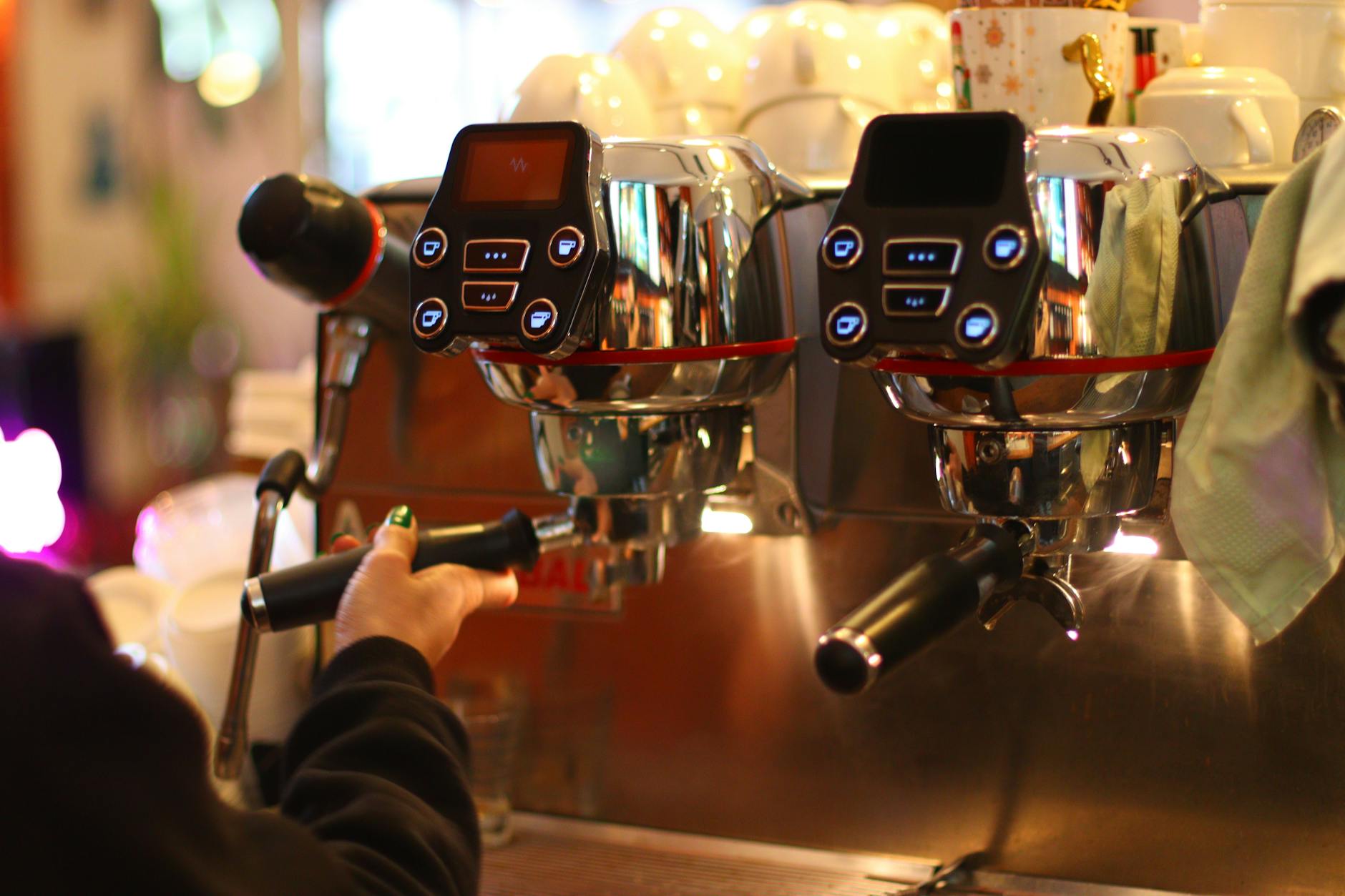
The Gaggia Classic is a legend in the home espresso world. For decades, it has served as a gateway for countless enthusiasts, offering a taste of true espresso without the prosumer price tag. However, anyone who has owned one knows its Achilles’ heel: temperature instability. One shot might be beautifully balanced, while the next is a sour or bitter disappointment. This frustrating inconsistency stems from its simple thermostat. This article will explore how installing a PID (Proportional-Integral-Derivative) controller is the single most effective upgrade for the Gaggia Classic. We will delve into why the machine is inconsistent, what a PID is, how it solves the problem, and the tangible benefits you’ll taste in every single cup.
Understanding the Gaggia Classic’s temperature problem
To appreciate the solution, we must first understand the problem. The stock Gaggia Classic uses a simple bimetallic thermostat to control the boiler’s temperature. Think of it as a basic on/off switch, like the one in an old furnace. When the boiler cools to a certain point, the thermostat clicks on, sending full power to the heating element. It continues heating until it reaches an upper limit, at which point it clicks off. This creates a wide temperature swing, often as much as 10-15°C (18-27°F). Since espresso extraction is highly sensitive to temperature, this swing is the direct cause of inconsistent shots.
To combat this, users developed a technique called temperature surfing. This involves a ritual of purging water through the group head to trick the thermostat into turning the heating element on, then waiting a specific number of seconds before pulling the shot, hoping to “catch” the temperature on its way up or down at the ideal point. While it can help, it’s an inexact, wasteful, and frustrating process. You are essentially guessing, and a few seconds of mis-timing can ruin the shot. This inherent design limitation means that without modification, the Gaggia Classic can never achieve true consistency.
What is a PID and how does it create stability?
A PID controller is a small digital computer that replaces the machine’s crude thermostat with an intelligent, proactive system. Instead of a simple on/off mechanism, a PID continuously monitors the boiler temperature via a precise sensor (a thermocouple) and makes constant, tiny adjustments to the power going to the heating element. It works using a sophisticated algorithm with three components:
- Proportional (P): This part reacts to the current difference between the actual temperature and your set target. The further away it is, the more power it applies.
- Integral (I): This component looks at the accumulated past error. It works to eliminate the small, steady-state errors that the proportional control might miss, ensuring the boiler reaches the exact target temperature over time.
- Derivative (D): This is the predictive element. It analyzes the rate of temperature change. As the boiler approaches your target temperature, the derivative action slows down the heating to prevent overshooting the mark.
Together, these three actions allow the PID to learn the thermal properties of your Gaggia’s boiler and hold the water temperature with incredible precision, often within 0.5°C of your set point. It effectively eliminates the temperature swings that plague the stock machine.
The tangible benefits of a PID-controlled Gaggia
Installing a PID transforms the Gaggia Classic from a capable-but-fickle machine into a precise brewing instrument. The most immediate benefit is shot-to-shot consistency. Every espresso you pull will be brewed at the exact same temperature, removing a major variable and allowing you to focus on other factors like grind size and puck prep. The frustrating “sink shots” become a thing of the past.
Beyond consistency, a PID unlocks the ability to explore your coffee. Different coffees extract best at different temperatures. With a PID, you can set the temperature to 95°C to bring out the bright, floral notes of a light-roasted Ethiopian bean, then drop it to 90°C for a dark-roasted blend to maximize its chocolatey, nutty flavors. This level of control is typically reserved for machines costing three or four times as much. Your workflow also improves dramatically; there’s no more temperature surfing, which means less time and less water wasted. The machine is simply ready when you are.
| Feature | Gaggia Classic (Stock) | Gaggia Classic (with PID) |
|---|---|---|
| Temperature Control | Bimetallic Thermostat (On/Off) | Digital PID Controller (Algorithmic) |
| Temp Stability | ± 5-8°C Swing | ± 0.5°C Stability |
| Workflow | Requires “temperature surfing” | Set and forget; always ready |
| Extraction Control | Limited and based on timing/luck | Precise control to suit different beans |
| Shot Consistency | Low; varies from shot to shot | Very High; repeatable results |
The installation process: What to expect
Upgrading your Gaggia Classic with a PID is a DIY project, but it has become very accessible thanks to pre-wired kits available from companies like Auber Instruments and Shades of Coffee. These kits come with detailed, step-by-step instructions specific to the Gaggia Classic, minimizing the guesswork. While it involves opening the machine and working with its wiring, you don’t need to be an electrical engineer to succeed. The general process involves unplugging the machine, removing its casing, disconnecting the old brew and steam thermostats, and mounting the new components. You will install a new temperature sensor (thermocouple) onto the boiler, mount the PID display, and connect everything via a Solid State Relay (SSR), which acts as the PID’s silent, ultra-fast switch for the heating element. With a good kit and a few hours of focused work, the process is very manageable.
To conclude, the Gaggia Classic is a fantastic machine held back by a single, critical flaw: its primitive temperature control. This leads to inconsistent shots and a frustrating user experience that masks the machine’s true potential. By installing a PID controller, you are not just adding a gadget; you are fundamentally changing the machine’s core functionality. You replace a system of guesswork and wide temperature swings with digital precision and rock-solid stability. The result is unparalleled consistency, the freedom to tailor your brew temperature to any coffee bean, and a simplified workflow. It is, without a doubt, the single most impactful upgrade you can make, elevating the humble Gaggia Classic to a level of performance that rivals far more expensive espresso machines.

 No products in the cart.