

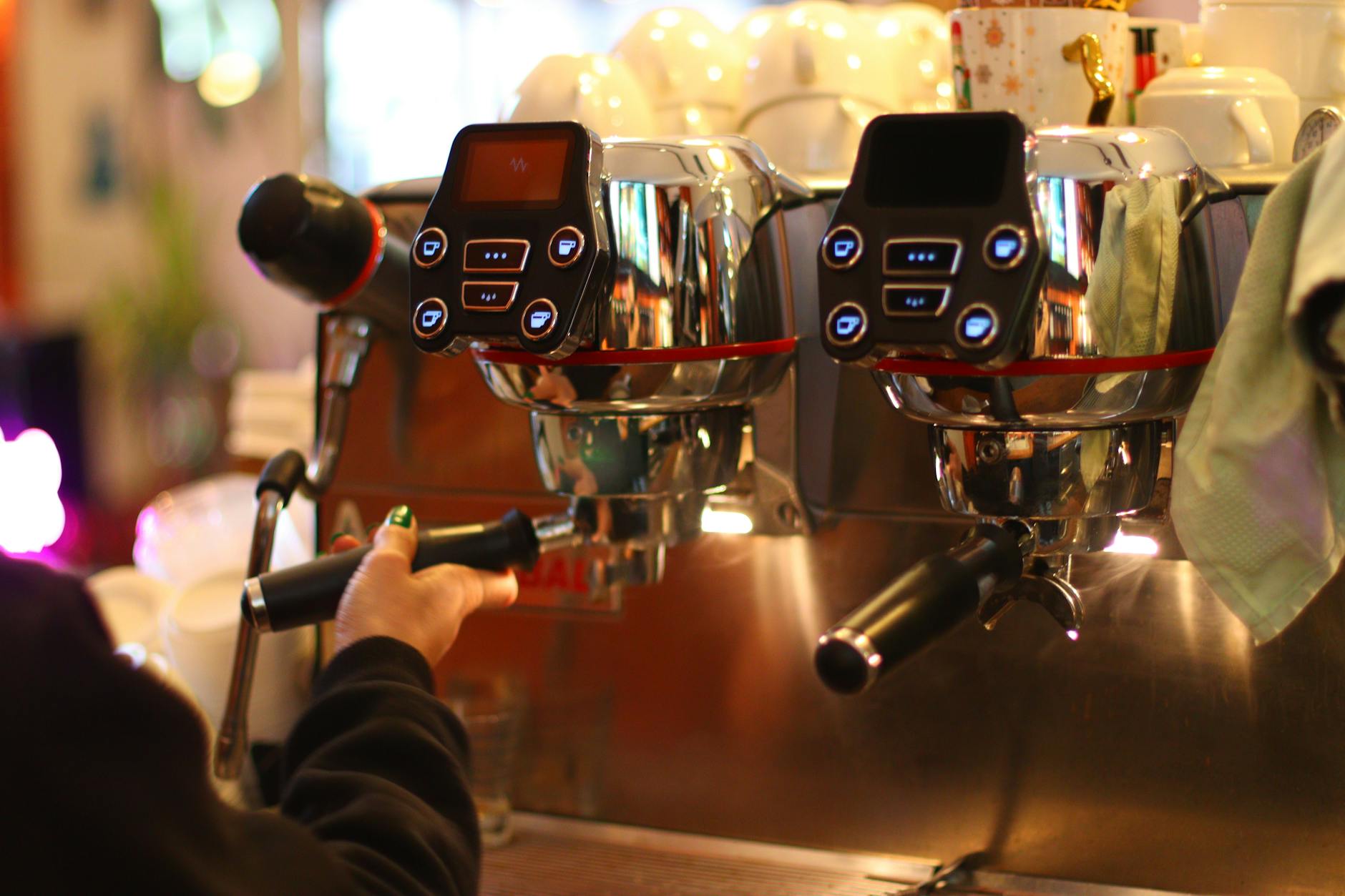
The Gaggia Classic has earned its legendary status in the home espresso community for good reason. It’s a robust, capable machine that serves as the perfect entry point into the world of authentic espresso. However, in its stock form, it has certain quirks that can make achieving consistently great shots a frustrating endeavor. This article is your guide to unlocking its true potential. We will explore a series of essential modifications designed to transform your Gaggia Classic from a good machine into a great one. By addressing key variables like pressure, temperature, and puck preparation, these upgrades will streamline your workflow, eliminate guesswork, and empower you to pull cafe-quality espresso shots with remarkable consistency right in your own kitchen.
Mastering pressure with the OPV spring mod
The first and arguably most crucial modification for any Gaggia Classic owner is taming its brew pressure. Out of the box, most Gaggia Classics are set to a very high pressure, often between 12 and 15 bars. While this might sound powerful, it’s actually detrimental to espresso extraction. This excessive pressure can easily blast through the coffee puck, causing channeling—where water finds pathways of least resistance—leading to an uneven, bitter, and sour shot. The industry standard for optimal espresso extraction is around 9 bars.
This is where the Over-Pressure Valve (OPV) modification comes in. The OPV’s job is to divert excess water pressure away from the group head. The modification itself is surprisingly simple and affordable: you just replace the stock spring inside the OPV with one rated for a lower pressure. Kits are widely available online with springs for 9, 6.5, and 5 bars. For traditional espresso, the 9-bar spring is the gold standard.
By installing a 9-bar spring, you immediately make your machine more forgiving. Puck preparation becomes less critical, and the risk of channeling is significantly reduced. The result is a more balanced, sweeter, and fuller-bodied shot. This single change provides the stable foundation upon which all other improvements are built, making it the non-negotiable first step in your modification journey.
Achieving thermal stability with a PID controller
With pressure now under control, the next major variable to tackle is temperature. The Gaggia Classic uses a simple bimetallic thermostat to regulate the boiler temperature. This system works like a basic thermostat in a home, leading to large temperature swings. The boiler heats up, turns off, cools down significantly, and then turns back on. This fluctuation, often as much as 10-15°C, makes consistency impossible without a tedious process known as “temperature surfing.”
Installing a PID (Proportional-Integral-Derivative) controller completely solves this problem. A PID is a small digital brain that you connect to your machine’s electronics. It constantly reads the boiler’s temperature via a thermocouple and makes tiny, precise adjustments to the heating element to keep the water at your desired temperature, typically with an accuracy of +/- 1°C. This eliminates temperature surfing and gives you absolute control.
The benefits are immense:
- Shot-to-shot consistency: Every shot is pulled at the exact same temperature, removing a huge variable from your process.
- Flavor profiling: Different coffees extract best at different temperatures. A PID allows you to experiment, perhaps using a lower temperature for a dark roast to reduce bitterness or a higher one for a light roast to bring out acidity.
- Improved workflow: No more guessing or timing your shots. You simply set your temperature and pull the shot when the PID indicates it’s ready.
Pairing a PID with the OPV mod gives you a machine that can control the two most critical variables in espresso—pressure and temperature—with a precision that rivals machines costing several times more.
| Modification | Purpose | Impact on workflow | Approximate cost |
|---|---|---|---|
| OPV spring kit | Lowers brew pressure to the optimal 9 bars. | Reduces channeling and makes puck prep more forgiving. Eliminates a major cause of bitter/sour shots. | Low ($10 – $25) |
| PID controller kit | Provides precise, stable brew water temperature. | Eliminates temperature surfing and allows for repeatable, consistent shots. | Medium ($150 – $200) |
| Bottomless portafilter | Provides visual feedback on extraction quality. | Helps diagnose and fix channeling, tamping, and distribution issues. A crucial learning tool. | Low-Medium ($30 – $60) |
Upgrading your tools for better puck preparation
Once your machine is delivering stable pressure and temperature, the focus shifts to the final piece of the puzzle: the coffee puck itself. The tools you use to prepare your coffee for extraction are just as important as the machine. The stock accessories that come with the Gaggia Classic are a starting point, but upgrading them will lead to significant improvements.
A bottomless portafilter is an essential diagnostic tool. By removing the spouts, you can see the extraction as it happens. A perfect shot will show beautiful, even “tiger striping” as a single stream forms in the center. If you see jets of water spraying out (channeling) or dead spots, you have immediate feedback that your distribution or tamp needs work. This is the fastest way to improve your technique.
Next, consider a precision filter basket from brands like IMS or VST. These baskets have precisely drilled, uniformly shaped holes, unlike the stamped holes of the stock basket. This ensures a much more even flow of water through the coffee, leading to a higher, more even extraction and greater clarity of flavor in the cup. Pair this with a correctly sized 58.5mm tamper. The stock plastic tamper is inadequate; a heavy, properly fitting tamper helps you apply even pressure for a level bed of coffee.
Finally, incorporate a Weiss Distribution Technique (WDT) tool into your routine. This simple tool, which looks like a handle with several fine needles, is used to break up clumps in the ground coffee and distribute it evenly in the basket before tamping. This single step dramatically reduces the likelihood of channeling and is a cornerstone of modern espresso preparation.
Enhancing the user experience and steaming
With the core performance aspects addressed, the final modifications focus on quality-of-life improvements that make the daily use of your Gaggia Classic more enjoyable and efficient.
For latte and cappuccino lovers, upgrading the steam wand is a must on older models equipped with a Panarello frothing aid. Swapping it for a Rancilio Silvia steam wand (a classic, well-documented mod) gives you a proper single-hole tip. This provides the power and control needed to create silky microfoam perfect for latte art, a feat impossible with the stock Panarello.
A simple but transformative upgrade is a low-profile drip tray. The stock tray leaves very little clearance, making it impossible to fit a scale and a mug under the portafilter at the same time. A slimmer, often 3D-printed or custom-made, tray solves this problem. This allows you to pull your shots by weight directly onto a scale—the most accurate way to measure your yield—vastly improving your workflow and consistency.
Lastly, an upgraded IMS shower screen can provide a final touch of refinement. These screens are designed with a pattern of smaller, more numerous holes than the stock screen. This helps to distribute water more gently and evenly over the surface of the coffee puck, reducing the chance of the water disrupting the bed and causing early-onset channeling. It’s a subtle but effective way to ensure your perfectly prepared puck gets the gentle start it deserves.
In conclusion, the Gaggia Classic is far more than just an entry-level machine; it is a platform for growth and perfection. By systematically addressing its stock limitations, you can elevate its performance to incredible heights. Starting with the foundational OPV spring mod to control pressure and the PID controller for thermal stability, you establish a consistent and reliable base. From there, upgrading your preparation tools like the portafilter, basket, and tamper allows you to perfect your technique. Finally, quality-of-life enhancements such as a professional steam wand and a low-profile drip tray refine the daily workflow, making the entire process more seamless and enjoyable. Each modification builds upon the last, transforming your Gaggia Classic into a precision instrument capable of producing truly exceptional espresso.
 No products in the cart.