

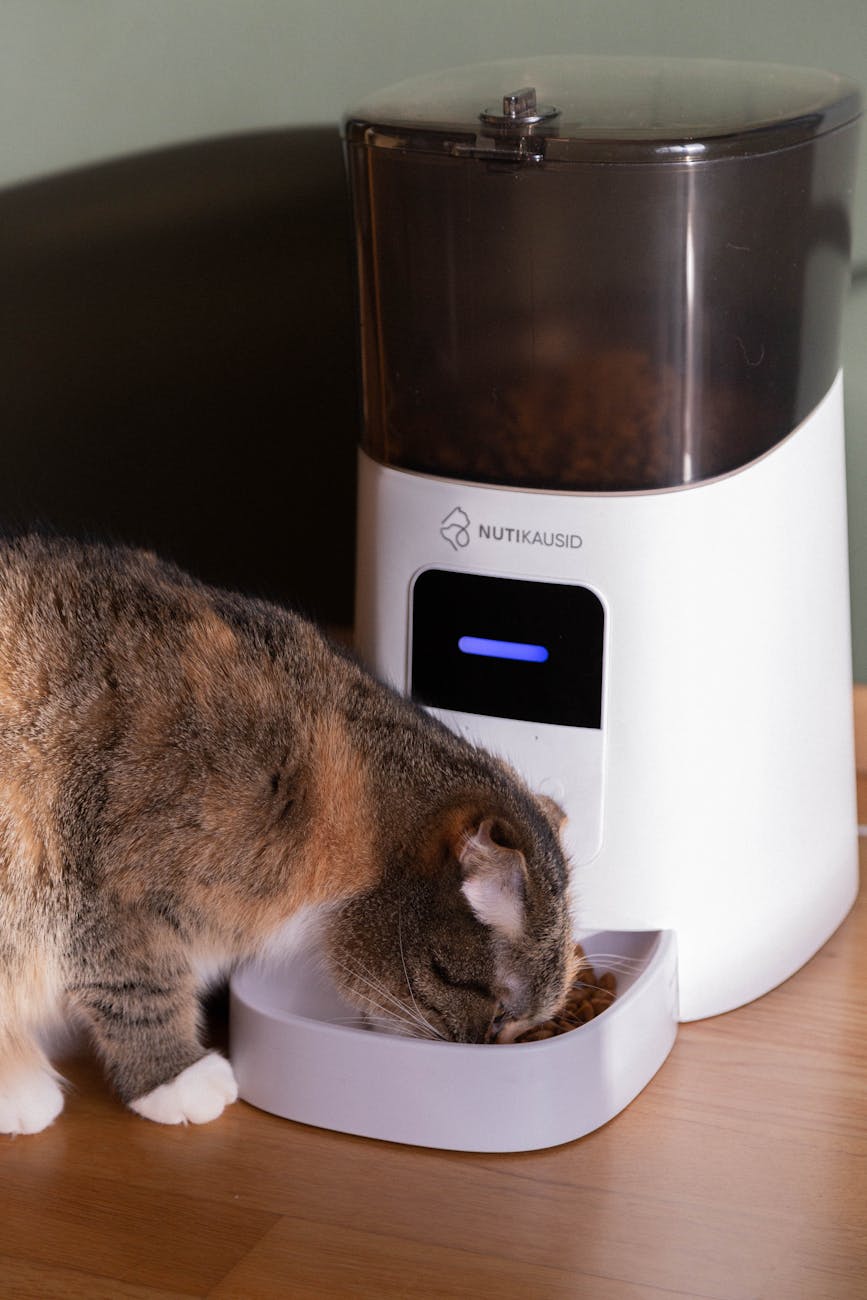
Does your pet devour their meal in thirty seconds flat, only to look at you for more or, worse, suffer from indigestion and vomiting? You’re not alone. Fast eating is a common issue among pets, often leading to health problems like bloat, discomfort, and obesity. Slow feeding solutions, from puzzle bowls to snuffle mats, offer a fantastic remedy. But with so many options available, how do you know which one is truly the best for your pet? The answer lies in a simple but powerful technique used by marketers and scientists: A/B testing. This article will guide you, the dedicated pet owner, on how to conduct your own A/B test at home to find the perfect slow feeding technique for your furry friend.
Understanding why slow feeding and A/B testing matter
Before diving into the “how,” it’s essential to understand the “why.” Slow feeding isn’t just a trend; it’s a practice rooted in improving your pet’s physical and mental health. When a dog or cat eats too quickly, they swallow large amounts of air along with their unchewed food. This can lead to serious conditions like Gastric Dilatation-Volvulus (GDV), or bloat, which is a life-threatening emergency, especially in deep-chested dog breeds. On a less severe but still uncomfortable level, it can cause regurgitation and general digestive upset.
Beyond physical health, slow feeding provides crucial mental stimulation. It turns mealtime from a mindless 30-second gulp into an engaging puzzle, combating boredom and satisfying their natural foraging instincts. This enrichment can lead to a calmer, happier pet.
So, where does A/B testing fit in? Simply buying a slow feeder and hoping for the best is a shot in the dark. A/B testing replaces guesswork with data. In this context, you are comparing two options:
- Method A (The Control): Your pet’s current feeding method, likely a standard bowl.
- Method B (The Variable): A new slow feeding technique you want to try.
By systematically comparing the two, you can definitively see which one better achieves your goals, whether it’s extending mealtime, reducing vomiting, or simply increasing your pet’s enjoyment.
Setting up your home A/B test
A successful test begins with a solid plan. Rushing into it without clear goals and metrics will only lead to confusing results. Follow these simple steps to set up your experiment for success.
First, define your primary goal. What specific problem are you trying to solve? Be as precise as possible. For example, your goal might be: “To increase my dog’s eating time from 45 seconds to over 4 minutes to prevent post-meal regurgitation.” Or perhaps: “To find an enrichment feeder that keeps my cat engaged without causing frustration.”
Next, choose your variables. Your control (Method A) is already established: your pet’s regular bowl. Now, select one new slow feeder to test as your variable (Method B). Don’t try to test multiple new feeders at once. Some popular options include:
- Slow feeder bowls: These have built-in mazes and obstacles.
- Snuffle mats: Made of fleece strips, perfect for hiding dry kibble.
- Puzzle toys: Dispensers that require your pet to roll, paw, or nudge them to release food.
- Lick mats: Textured surfaces ideal for wet food, yogurt, or paté, promoting calming licking behavior.
Finally, establish your metrics. How will you measure if Method B is better than Method A? You need both quantitative (numerical) and qualitative (observational) data.
- Quantitative metrics: Time the meal duration with a stopwatch, count the number of vomiting incidents per week, or measure the amount of food left uneaten.
- Qualitative metrics: Observe your pet’s behavior. Are they engaged and focused, or do they show signs of stress like whining, barking, or giving up on the feeder entirely? Also, consider practical factors like how easy the feeder is to clean for you.
Running the test and collecting data
With your plan in place, it’s time to start the experiment. The single most important rule during this phase is consistency. To get reliable data, you must keep all other factors the same, so the only difference is the feeding method. This means using the same type and amount of food for every meal, feeding at the same time each day, and in the same quiet location.
Instead of alternating between bowls at every meal, which can be confusing, stick to a schedule. A good approach is to run Method A (the control) for 3-5 consecutive days, carefully recording your metrics. Then, switch to Method B (the new feeder) for the next 3-5 days and do the same. This gives your pet time to adjust to the new method and provides you with a more accurate average for each.
Documenting your findings is crucial. A simple notebook or a spreadsheet on your computer works perfectly. Create a log to track your metrics for every single meal. Below is an example of how you could structure your data log.
| Date | Feeder Type | Meal Duration (min:sec) | Vomiting (Yes/No) | Behavioral Notes |
|---|---|---|---|---|
| Oct 1 | A (Regular Bowl) | 0:35 | Yes | Ate everything, seemed fine. |
| Oct 2 | A (Regular Bowl) | 0:32 | No | – |
| Oct 3 | A (Regular Bowl) | 0:40 | Yes | – |
| Oct 4 | B (Maze Bowl) | 4:15 | No | Very engaged, tail wagging. |
| Oct 5 | B (Maze Bowl) | 3:50 | No | A little whining at the start. |
| Oct 6 | B (Maze Bowl) | 3:45 | No | Figured it out quickly. |
Analyzing your results and making a decision
Once your testing period is complete, it’s time to be a data scientist. Sit down with your log and compare the results of Method A and Method B. Look at the averages. In the example table above, the average mealtime for the regular bowl was 35 seconds, with a 66% chance of vomiting. The maze bowl averaged around 4 minutes, with a 0% chance of vomiting. The quantitative data clearly shows that Method B is superior for achieving the goal of slowing down eating and preventing regurgitation.
However, don’t ignore the qualitative data. Did your notes for Method B say things like, “gave up after 2 minutes and walked away,” or “barked in frustration and tried to flip the bowl”? If so, even if the mealtime was longer, the solution isn’t a good fit. The ideal slow feeder is one that is both effective and enjoyable for your pet. A win is a combination of hitting your numerical goals and seeing a happy, engaged animal.
Based on your analysis, you can make an informed decision. If Method B was a clear winner, great! You’ve found your new feeding solution. If it was an improvement but not perfect, don’t be discouraged. The process is iterative. Method B can now become your new control (the new “A”), and you can introduce a different slow feeder (e.g., a snuffle mat) as your next variable (“B”) to see if you can improve the results even further.
In conclusion, finding the perfect slow feeding solution for your pet doesn’t have to be a matter of luck. By adopting a simple A/B testing framework, you can transform from a hopeful pet owner into a proactive problem-solver. This methodical approach allows you to use real data from your own home to make the best choice. Remember the key steps: define a clear goal, choose your control and a single variable, consistently measure both quantitative and qualitative metrics, and analyze the results honestly. This process takes the guesswork out of improving your pet’s mealtime, ensuring you land on a solution that boosts not only their physical health by preventing bloat and indigestion, but also their mental well-being through positive enrichment.


 No products in the cart.