

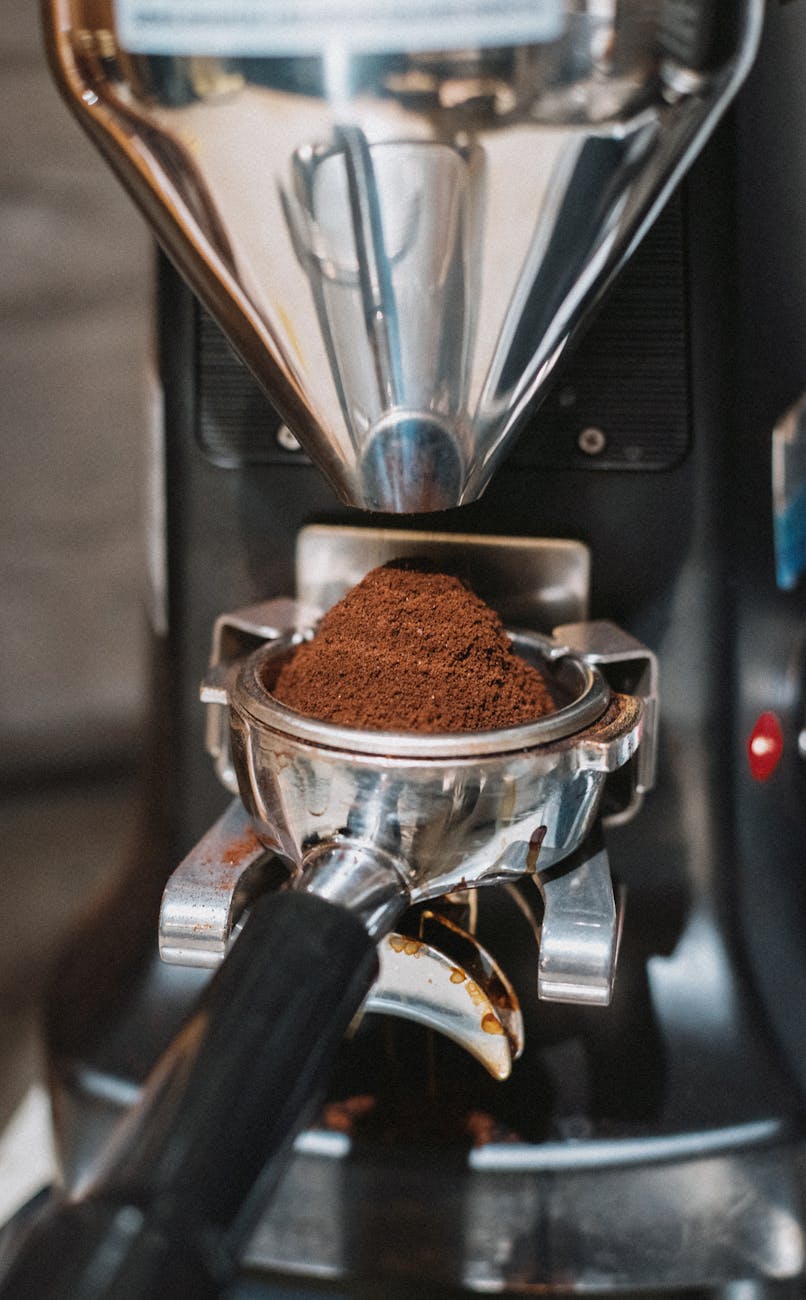
The Aeropress has earned a devoted following for its versatility, portability, and unique ability to create a rich, concentrated brew often dubbed “Aeropress espresso.” It’s a fantastic brewer, but many users struggle to achieve that café-quality shot, often ending up with a cup that’s either disappointingly sour or unpleasantly bitter. While beans, water temperature, and technique all play a role, there is one foundational element that trumps them all: grind uniformity. An inconsistent coffee grind, full of both large “boulders” and powdery “fines,” is the number one culprit behind a bad brew. This article will explore why a uniform grind isn’t just a recommendation for coffee snobs—it’s the single most important variable for unlocking a truly delicious Aeropress espresso shot.
Understanding extraction: The key to flavor
To understand why grind uniformity matters, we first need to grasp the basics of coffee extraction. When hot water meets coffee grounds, it begins to dissolve soluble compounds. This process is a race against time to pull out the good stuff before the bad stuff takes over.
- Under-extraction: This happens when the water doesn’t have enough time or surface area to work with. It primarily extracts the fast-dissolving, bright, and fruity acids, resulting in a coffee that tastes sour, thin, and underdeveloped.
- Over-extraction: This occurs when the water has too much contact time or surface area. After extracting the desirable sugars and acids, it starts pulling out the bitter, astringent, and heavy compounds, leading to a harsh, dry, and hollow-tasting cup.
- Ideal extraction: The goal is to hit the sweet spot right in the middle. A well-extracted coffee is balanced, sweet, and complex, showcasing the full flavor potential of the bean.
Grind size is the primary lever we use to control this process. A finer grind increases the total surface area of the coffee, speeding up extraction. A coarser grind reduces it, slowing extraction down. The problem arises when you don’t have one consistent size, but a chaotic mix of many.
The chaos of an uneven grind
Imagine you’re trying to cook a stew with giant chunks of carrot and finely minced carrot, all in the same pot for the same amount of time. By the time the large chunks are barely cooked, the minced pieces have turned to complete mush. This is exactly what happens in your Aeropress with an inconsistent grind. You are attempting to brew boulders and fines simultaneously, forcing a compromise that satisfies neither.
The fine particles, or “fines,” have a massive amount of surface area. They extract almost instantly, quickly moving past the sweet spot and into the realm of over-extraction, releasing bitter and astringent flavors into your cup. Meanwhile, the large particles, or “boulders,” have very little relative surface area. In the short brew time of an Aeropress espresso recipe, the water can’t penetrate them effectively. They remain under-extracted, contributing sour, grassy, and weak flavors. The final result is a muddled, confusing cup that is somehow both sour and bitter at the same time, lacking any clarity, sweetness, or satisfying finish.
Why the Aeropress is uniquely sensitive to grind quality
While an uneven grind is bad for any brew method, the specific dynamics of an Aeropress espresso shot magnify the problem significantly. This style of brewing relies on a fine grind, a concentrated coffee-to-water ratio, and a short brew time followed by pressure from the plunger. This combination creates a perfect storm for inconsistent grounds.
First, the excessive fines produced by a low-quality grinder can clog the paper or metal filter. This leads to extreme difficulty when plunging—sometimes it can feel like pushing against a brick wall. This resistance can also cause “channeling,” where the water is forced through weaker points in the coffee bed, over-extracting those areas while completely ignoring others. Furthermore, a significant amount of these micro-fines can pass through the filter, resulting in a gritty, silty texture in the final cup, often referred to as “sludge.” The short brew time simply isn’t long enough to properly extract the boulders, guaranteeing their sour contribution to the final, unbalanced taste.
Your toolkit for a uniform grind
So, how do you achieve the grind uniformity needed for a great Aeropress shot? The answer lies in your grinder. Not all grinders are created equal, and the mechanism they use to break down coffee beans makes all the difference.
Blade grinders, which are often cheaper, use a spinning blade to smash beans into pieces, much like a blender. This violent chopping action creates a huge diversity of particle sizes, from large chunks to fine powder. They are the primary source of the problems we’ve discussed.
Burr grinders, on the other hand, are the solution. They use two revolving abrasive surfaces (burrs) to crush and mill the beans into a consistent size. By adjusting the distance between the burrs, you can precisely control the final grind size, producing a much more uniform result. A quality manual burr grinder can often outperform a cheap electric burr grinder, making it a fantastic and affordable investment for any Aeropress user.
| Feature | Blade Grinder | Burr Grinder |
|---|---|---|
| Mechanism | Chopping/Smashing | Milling/Crushing |
| Grind Uniformity | Very Low (Inconsistent) | High (Consistent) |
| Control | Minimal (timed) | Precise (adjustable settings) |
| Result for Aeropress | Bitter, sour, and gritty shots | Balanced, sweet, and clean shots |
When dialing in your grind, start with a setting that feels like fine table salt. From there, adjust based on taste. If your shot is too sour, grind a little finer. If it’s too bitter or harsh, grind a little coarser. This simple process, enabled by a good grinder, will put you in complete control of your extraction.
In the world of coffee, consistency is king, and it all begins with the grind. We’ve seen how ideal extraction is a delicate balance and how an inconsistent grind completely shatters that balance, creating a brew that is a chaotic mix of sour and bitter notes. For the Aeropress espresso method, with its fine grind and high pressure, this issue is only amplified, leading to clogged filters and muddy, unpleasant cups. While it can be tempting to focus on fancy recipes or expensive beans, the truth is that a quality burr grinder is the single most impactful upgrade you can make to your coffee setup. It provides the foundation of uniformity upon which a truly delicious, rich, and repeatable shot of Aeropress espresso is built.


 No products in the cart.