

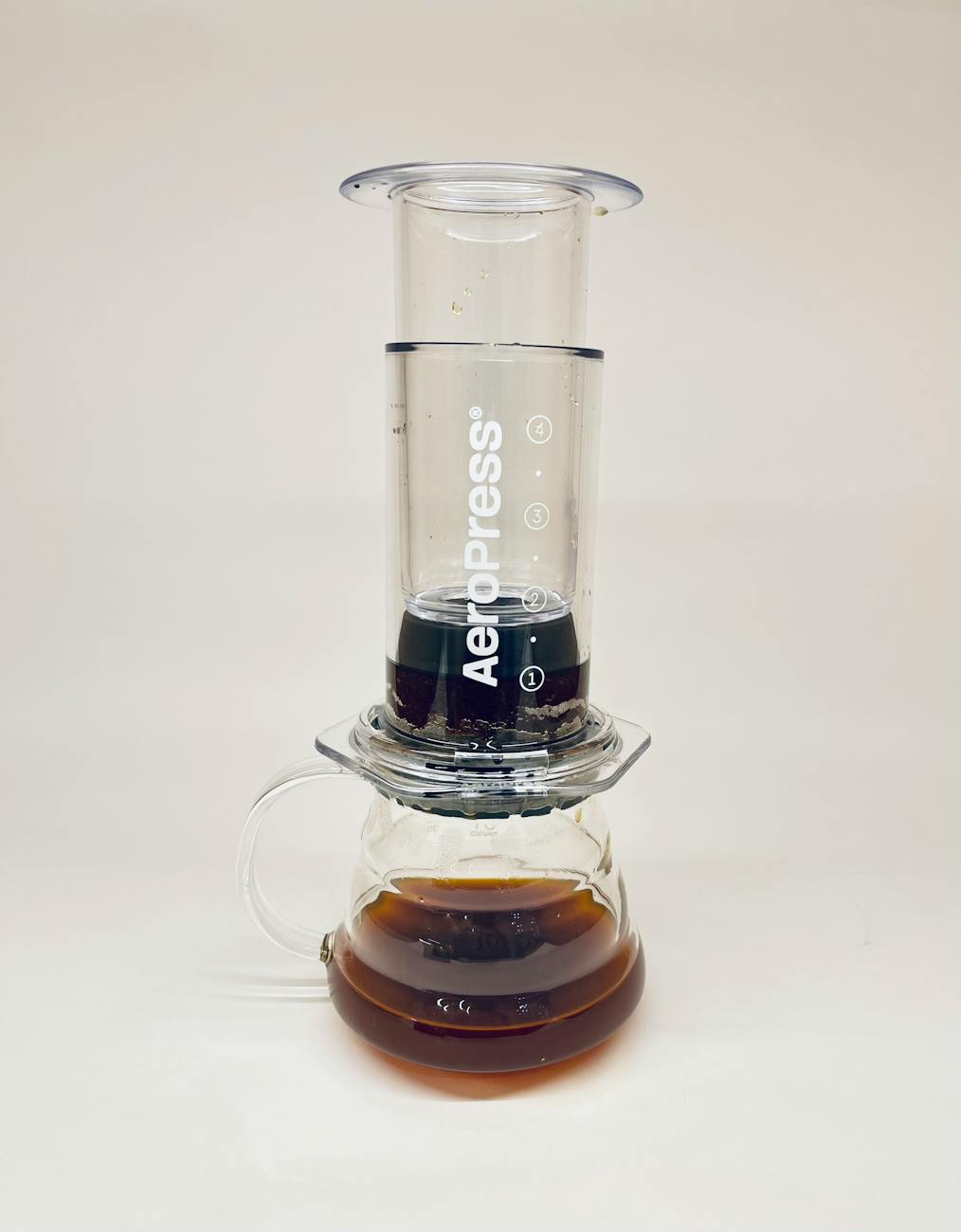
The AeroPress is celebrated worldwide for its versatility and its ability to produce an exceptionally clean and bright cup of coffee. This clarity is largely thanks to its standard paper micro-filters, which excel at trapping coffee oils and fine sediment. But what if you crave a coffee with more weight, texture, and a richer mouthfeel? For many coffee lovers, a full-bodied brew is the ultimate goal. This is where metal filters come in. Swapping the paper for a reusable metal filter is one of the simplest and most effective ways to fundamentally change your AeroPress brew. This article will guide you through how to use metal filters to increase your AeroPress coffee’s body, transforming it into a richer, more complex experience.
What is coffee body and why do filters matter?
Before we dive into the hardware, it’s important to understand what “body” means in the context of coffee. Body, or mouthfeel, refers to the texture, weight, and richness of the coffee on your palate. A coffee with a light body might feel thin and tea-like, while a full-bodied coffee feels heavier, creamier, and more viscous. This texture is primarily created by two things that standard paper filters are designed to remove: coffee oils and insoluble solids (or “fines”).
Here’s the fundamental difference:
- Paper filters: These are highly absorbent and have a very fine pore structure. They trap the vast majority of coffee oils and microscopic coffee particles. The result is a cup with high clarity, clean flavors, and a light body.
- Metal filters: Made from stainless steel, these filters are not absorbent and have larger openings than paper. They are designed to hold back the main coffee grounds while allowing precious oils and some fine particles to pass through into your cup. These suspended elements are what create that fuller, richer body you’re looking for.
By simply switching from paper to metal, you change the filtration dynamic entirely. You are consciously choosing to allow more of the coffee’s natural substance into the final brew, directly boosting its body.
Choosing the right metal filter for your preference
Not all metal filters are created equal. They generally fall into a few categories, each offering a slightly different result. The filter you choose will depend on how much body you want to add and your tolerance for sediment in the cup. Thinner filters with finer holes will provide a modest boost in body with good clarity, while thicker filters with larger holes will produce a much heavier, more textured brew.
Let’s compare some common types of metal filters available for the AeroPress:
| Filter Type | Typical Design | Resulting Body | Clarity & Sediment |
|---|---|---|---|
| Fine Perforated Disc | A thin, solid sheet of steel with very small, chemically-etched holes (e.g., Able DISK Fine). | Medium Body | Good clarity with minimal sediment. A great starting point. |
| Standard Perforated Disc | A slightly thicker disc with larger holes than the fine version (e.g., Able DISK Standard). | Full Body | Lower clarity with some noticeable fine sediment, similar to a French press. |
| Woven Mesh Filter | A filter made from a fine, woven stainless steel mesh, often with a reinforced rim. | Medium-Full Body | Allows a good amount of oil through but can be better at trapping fines than perforated discs. |
| Pressure-Actuated Valve | An integrated system with a metal filter (e.g., Fellow Prismo). Stops dripping and builds pressure. | Full Body | Can produce an espresso-like crema and a heavy body, with some sediment depending on the grind. |
Your choice should align with your goal. If you’re coming from paper and want a gentle introduction to more body, a fine perforated or mesh filter is an excellent choice. If you love the heavy texture of a French press, a standard perforated disc will get you there.
How to adjust your recipe for a metal filter
You can’t just swap the filter and use the exact same recipe you used for paper. Metal filters require a few key adjustments to get the best results and avoid a cup that’s muddy or astringent. The most important variable to change is your grind size.
1. Coarsen your grind: This is the golden rule. Paper filters are forgiving with fine grinds, but a metal filter will allow too many of those micro-particles to pass through, resulting in sludge at the bottom of your cup and a gritty texture. Start with a grind that is slightly coarser than what you’d use for paper—think medium-fine, similar to a V60 or automatic drip brewer. This will reduce sediment while still allowing for proper extraction.
2. Be mindful of your plunge: With a coarser grind and larger filter holes, your plunging technique matters more. A fast, aggressive plunge will force water and excessive fines through the filter. Instead, apply slow, consistent pressure. Aim for a plunge time of around 30 seconds. If you feel too much resistance, your grind is likely too fine.
3. Experiment with the inverted method: While the standard method works, a metal filter can sometimes allow coffee to drip through before you’re ready to plunge. Using the inverted (upside-down) method gives you full control over the steep time without any premature dripping, which is especially helpful when dialing in your new recipe.
A starting recipe for a full-bodied brew
Ready to try it out? Here is a great starting point for a balanced, full-bodied cup using a metal filter.
- Filter: Your choice of metal filter
- Coffee: 17 grams
- Grind: Medium-fine
- Water: 240 grams at 94°C (201°F)
- Method: Inverted
Instructions: Assemble your AeroPress in the inverted position and place it on a scale. Add your ground coffee. Start a timer and pour all 240g of water over the grounds. Gently stir for 10 seconds to ensure all grounds are saturated. At the 1:30 mark, screw on the cap with the metal filter, carefully flip the AeroPress onto your mug, and begin to plunge slowly and steadily. Finish plunging around the 2:00 mark. Enjoy your rich, full-bodied coffee!
Switching to a metal filter is a fantastic way to unlock a completely new dimension of your AeroPress. As we’ve seen, the key lies in understanding how filtration affects body by allowing coffee oils and fines into the cup. By choosing the right type of metal filter for your taste—whether it’s a fine disc for a subtle boost or a standard one for a truly heavy brew—you can tailor the texture of your coffee. Remember that adjusting your technique, particularly by using a coarser grind and a gentler plunge, is crucial for avoiding a gritty result. Ultimately, the metal filter transforms the AeroPress from a specialist in clean coffee to an all-around brewer capable of producing the rich, satisfying body many of us crave.



 No products in the cart.