

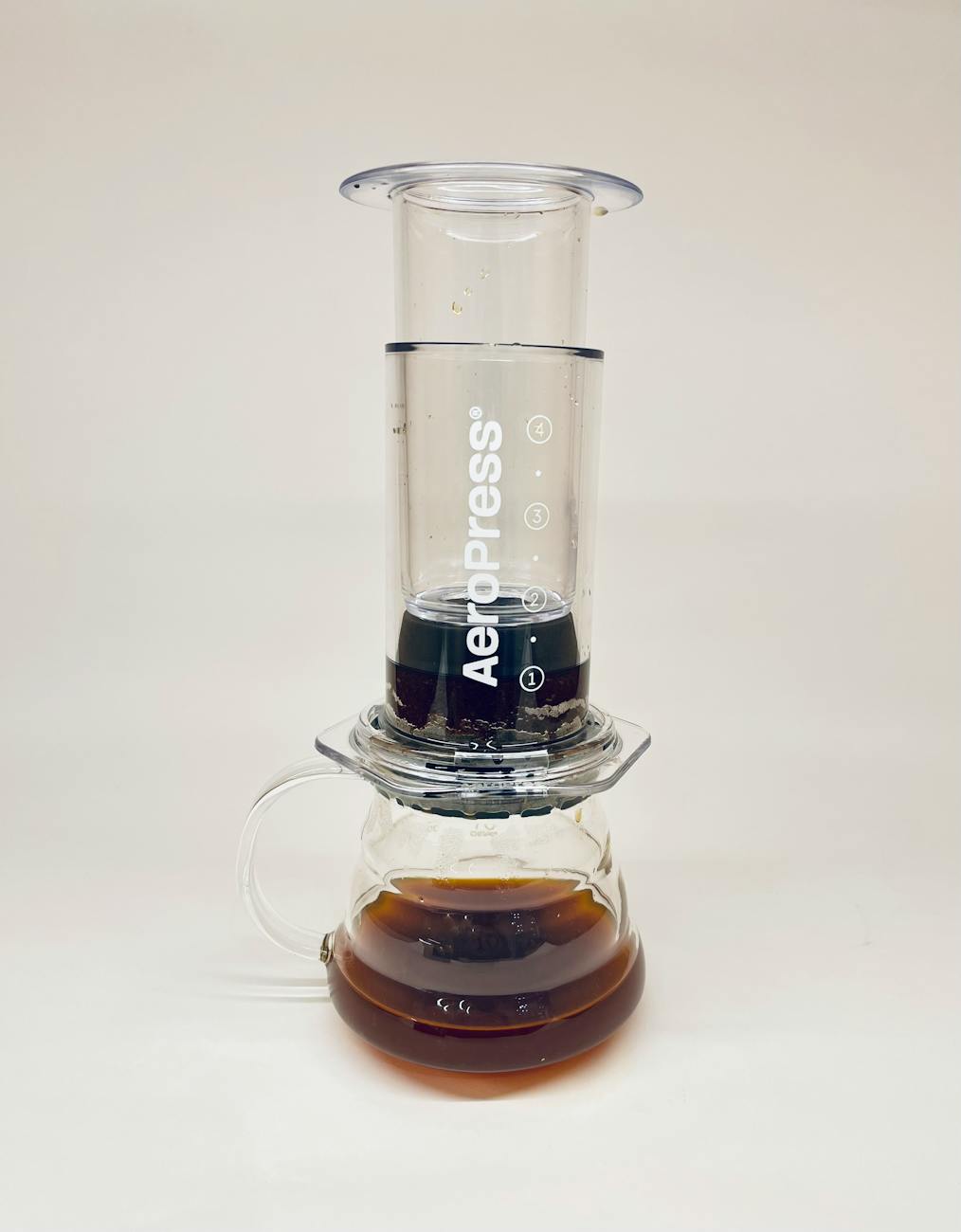
The AeroPress has earned a devoted following for its versatility, portability, and ability to brew an exceptional cup of coffee. For newcomers and veterans alike, a fundamental question often arises: should you use the standard method or the popular inverted method? While countless debates focus on taste, a crucial factor for a daily coffee routine is workflow efficiency. Which method gets you a great cup of coffee with the least amount of fuss, time, and risk of a morning mishap? This article delves into the AeroPress standard vs. inverted debate, not through the lens of flavor extraction, but through the practical perspective of workflow efficiency, helping you decide which technique best suits your daily grind.
Understanding the standard method: Simplicity by design
The standard, or upright, AeroPress method is brewing as its inventor, Alan Adler, intended. It’s a straightforward process that prioritizes simplicity and speed. You place the chamber directly on your mug, add a paper filter to the cap, twist it on, add your coffee grounds, and pour in hot water. From the moment the water hits the grounds, extraction begins, and a small amount of coffee starts to drip through the filter. After a brief stir, you insert the plunger and press gently. The entire process is linear and contained.
From a workflow perspective, its greatest strength is its low risk. There are no flips or precarious balancing acts. The sequence is logical and minimizes the chances of a spill, a critical factor during a hectic morning. The main drawback, however, is that initial drip-through. This means you don’t have absolute control over the steeping time, as some water bypasses the full immersion phase. For someone seeking a quick, reliable, and clean process, the standard method is the epitome of efficiency.
The case for the inverted method: Control over convention
The inverted method was born from the user community’s desire for total control. By assembling the AeroPress upside down—with the plunger inserted partway into the chamber from the start—you create a sealed vessel. You then add your coffee and water, allowing the grounds to steep for a precise duration without any premature drip-through. This is a full immersion brew, much like a French press. When you’re ready, you screw on the filter cap, carefully flip the entire assembly onto your mug, and then plunge as usual.
This technique’s efficiency lies in its repeatability and precision. By eliminating the variable of drip-through, you can perfectly replicate a recipe time and time again. For coffee aficionados looking to dial in the exact extraction, this control is invaluable. The workflow’s obvious weak point is “the flip.” This single moment introduces a significant risk of spills, which can instantly negate any time saved and create a frustrating mess. Mastering the flip is key to making the inverted method a truly efficient part of your routine.
A head-to-head comparison of workflow
When we break down the two methods into their core components, the differences in their workflow become clear. While both are fast, the nature of their efficiency differs. One prioritizes speed and safety, while the other prioritizes precision and control. The choice between them often depends on what a user values more in their daily brewing process. A spill during the inverted flip can cost you not only time but also your precious coffee, a major hit to morning efficiency.
Here is a direct comparison of the key workflow stages:
| Workflow Aspect | Standard Method | Inverted Method |
|---|---|---|
| Setup Complexity | Minimal. Place brewer on mug and go. | Slightly more complex. Requires inserting plunger and balancing. |
| Brewing Control | Less control due to immediate drip-through. | Full control over steep time; a true immersion brew. |
| Risk of Spills | Very low. Stable and contained throughout. | Moderate to high, especially for beginners during “the flip.” |
| Speed (Start to Finish) | Potentially faster due to a more direct, no-flip process. | Can be slower due to the careful setup and flip maneuver. |
| Consistency | Good, but can be affected by pour speed and drip rate. | Excellent once mastered, as it removes brewing variables. |
| Cleanup | Identical. Both methods end with popping out a coffee puck. | Identical. The easy cleanup is a universal AeroPress benefit. |
Which workflow is right for you?
Ultimately, the most efficient method is the one that best aligns with your personal priorities and comfort level. Your definition of “efficiency” is the deciding factor.
Choose the standard method if:
- You prioritize speed and a low risk of mess above all else.
- You are a beginner getting comfortable with the AeroPress.
- Your morning routine is rushed, and you can’t afford a potential cleanup.
- You want a great cup of coffee without overthinking the process.
Choose the inverted method if:
- You value precision and the ability to perfectly replicate a specific recipe.
- You enjoy experimenting with different steep times and grind sizes.
- You are confident in your dexterity and have mastered “the flip.”
- Your goal is crafting the most refined cup possible, and you’re willing to add an extra step to achieve it.
In essence, the standard method’s workflow is efficient because it’s foolproof. The inverted method’s workflow is efficient because it’s precise. It’s a classic trade-off between simplicity and control.
In the debate of inverted AeroPress versus standard, the crown for workflow efficiency isn’t clear-cut. It’s a subjective title awarded based on personal preference. For pure, unadulterated speed and safety, the standard method wins. It is a direct, uncomplicated path from coffee grounds to coffee cup, minimizing potential points of failure and making it ideal for a frantic morning or a travel brewing setup. However, for those who define efficiency as perfect, repeatable results, the inverted method is the champion. By offering complete control over the brew, it ensures you can consistently produce your ideal cup. The best approach is to try both and see which one seamlessly integrates into your daily life.

 No products in the cart.