

How to avoid bitterness in your Moccamaster coffee
The Technivorm Moccamaster is an icon in the world of coffee, celebrated for its ability to brew a superior cup with precision and consistency. Its SCAA certification is a testament to its engineering, particularly its capacity to maintain an optimal water temperature. Yet, even with the best equipment, a common frustration can arise: a bitter, unpleasant batch. If you’ve invested in a Moccamaster only to be disappointed by harsh flavors, don’t blame the machine. Bitterness is almost always a sign of over-extraction, a problem that is entirely fixable. This guide will walk you through the essential variables you can control, from the coffee you use to your brewing technique, to eliminate bitterness and unlock the rich, balanced flavors your Moccamaster is designed to deliver.
It all starts with the grind (and the beans)
The single most significant factor causing bitterness is an incorrect grind size. Bitterness occurs when water extracts too much from the coffee grounds, pulling out the undesirable, astringent compounds. This is known as over-extraction. A grind that is too fine creates a massive amount of surface area, allowing the hot water to dissolve these compounds too quickly. For a Moccamaster, you are looking for a medium to medium-coarse grind, similar in texture to coarse sand or kosher salt.
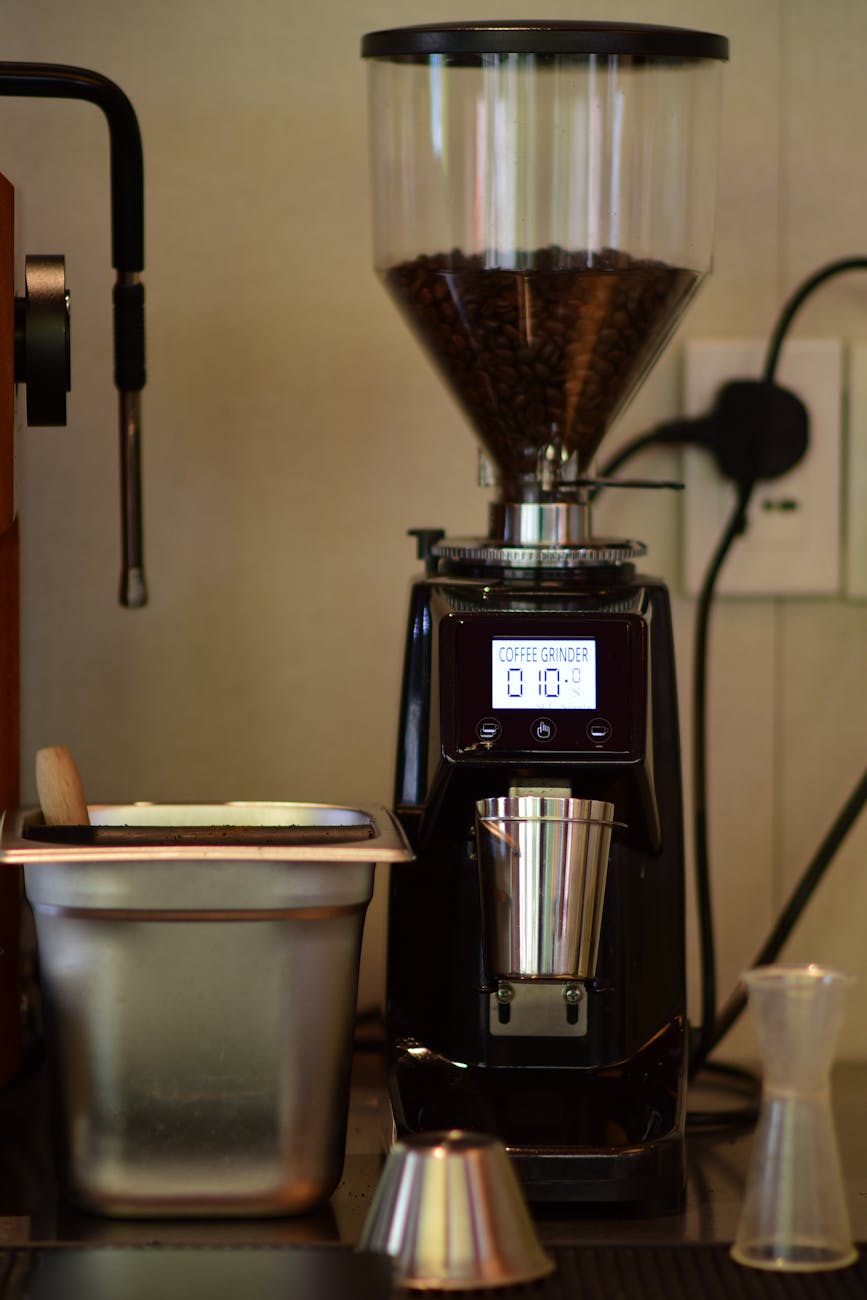
To achieve this, a quality burr grinder is non-negotiable. Here’s why:
- Burr grinders crush beans between two revolving abrasive surfaces, creating uniform and consistent particles. This consistency is key to an even extraction.
- Blade grinders, on the other hand, chop beans with a spinning blade, resulting in an inconsistent mix of fine dust and large chunks. The fine dust over-extracts (causing bitterness) while the large chunks under-extract (causing sourness), leading to a muddled and unbalanced cup.
Finally, always use fresh, high-quality beans. Coffee is a fresh product. Beans that are old or poorly roasted will have already lost their desirable flavors, making the bitter notes more prominent regardless of your technique.
Nailing the golden ratio
Once your grind is dialed in, the next step is ensuring you’re using the right amount of coffee for the amount of water. This is your coffee-to-water ratio. Brewing with too little coffee forces the water to work harder, pulling more and more from each ground and leading straight to over-extraction and bitterness. The industry standard, often called the “Golden Ratio,” is a great starting point, typically ranging from 1:15 to 1:17 (1 gram of coffee for every 15-17 grams of water).
Ditch the scoops. For accuracy, a simple digital kitchen scale is your best friend. Scoops are wildly inaccurate due to variations in bean density and grind size. Measuring by weight ensures you are consistent every single time. The Moccamaster’s water reservoir is marked in liters, which makes calculation easy (1 ml of water = 1 gram).
Here is a simple reference table for brewing with a 1:16 ratio:
| Water Volume | Recommended Coffee (grams) | Moccamaster Cup Line (approx.) |
|---|---|---|
| 500 ml (0.5 L) | 31 g | 4 cups |
| 750 ml (0.75 L) | 47 g | 6 cups |
| 1000 ml (1.0 L) | 63 g | 8 cups |
| 1250 ml (1.25 L) | 78 g | 10 cups |
Start with this table and adjust to your taste. If your coffee is still slightly bitter, try using a little more coffee (e.g., a 1:15 ratio) before you adjust your grind again.
Refining your brewing technique
With your grind and ratio perfected, a few small tweaks to your process can make a world of difference in promoting an even extraction. The goal is to ensure all coffee grounds are saturated evenly and at the same time. An uneven extraction, where some grounds are washed out while others are barely touched, is a direct path to bitterness.
Here are a few pro tips:
- Rinse your filter paper: Before adding your coffee, place the paper filter in the brew basket and rinse it thoroughly with hot water. This serves two purposes: it removes any papery taste that can transfer to your coffee and helps preheat your brew basket.
- Create an even coffee bed: After adding your ground coffee to the basket, give it a gentle shake to level the grounds. You want a flat, even bed. Avoid creating a mound in the middle or a divot, as water will channel through the path of least resistance, leading to uneven extraction.
- Give it a gentle stir: When the Moccamaster begins its brew cycle, the water initially comes out in a concentrated stream. After about 30-45 seconds, once the grounds are saturated, use a spoon to give the slurry a quick, gentle stir. This breaks up any dry clumps and ensures all the coffee is engaged in the brewing process from the start. This simple action mimics a manual “bloom” and is one of the most effective ways to improve your batch brew.
The hidden impact of water
The final piece of the puzzle is the water you use. After all, coffee is over 98% water, so its quality profoundly impacts the final taste. The Moccamaster brilliantly handles water temperature, keeping it within the ideal 196-205°F (92-96°C) range. However, it cannot control the water’s composition.
If your tap water is very hard (high in mineral content) or has a noticeable chlorine taste, it will negatively affect your coffee. Extremely hard water can make coffee taste dull and chalky, while soft water can lead to a hollow, thin taste. The chlorine used in municipal water treatment can create a harsh, chemical-like flavor.
The solution is simple: use filtered water. A basic carbon filter pitcher (like a Brita) or an under-sink filtration system can remove chlorine and balance mineral content, providing a clean, neutral base that allows the true flavors of your coffee beans to shine through. This step ensures that the only thing you taste in your cup is the delicious coffee you so carefully prepared.
Brewing a perfect, non-bitter cup of coffee with a Moccamaster is not a matter of luck but a result of controlling a few key variables. By moving beyond the machine’s factory settings and taking charge of your process, you can easily diagnose and solve the problem of bitterness. Start with a consistent, medium-coarse grind from a burr grinder and use fresh, quality beans. Weigh your coffee and water precisely using a scale to maintain a golden ratio of around 1:16. Refine your technique by rinsing your filter, leveling the coffee bed, and giving the slurry a gentle stir to encourage even extraction. Finally, use filtered water to provide a clean slate for all the delicate flavors. By mastering these elements, you transform your Moccamaster from a simple appliance into a tool for crafting consistently delicious, sweet, and balanced coffee every single day.


 No products in the cart.