

Understanding the difference between flat and ripple tamper bases
For any espresso enthusiast, the quest for the perfect shot is a journey of precision and nuance. Every step, from grinding the beans to the final pour, plays a critical role. One of the most vital yet often debated steps is tamping. The goal is to create a compact and level coffee puck for an even extraction. At the heart of this process is the tamper, and its base design can significantly influence the outcome. The two dominant designs are the flat base and the ripple base. While they might seem like a minor detail, their differences spark considerable discussion among baristas. This article will delve into the mechanics, benefits, and drawbacks of each design, helping you understand which tamper base is the right choice for your espresso routine.
The foundational role of tamping in espresso
Before comparing tamper bases, it’s essential to understand why we tamp. When you place loose coffee grounds in a portafilter basket, there are countless air pockets and an uneven density. If you were to brew this directly, the pressurized water from the espresso machine would exploit the path of least resistance. This phenomenon, known as channeling, results in water rushing through some parts of the coffee bed while neglecting others. The result is a disastrous shot of espresso that is simultaneously under-extracted (sour, weak) and over-extracted (bitter, harsh).
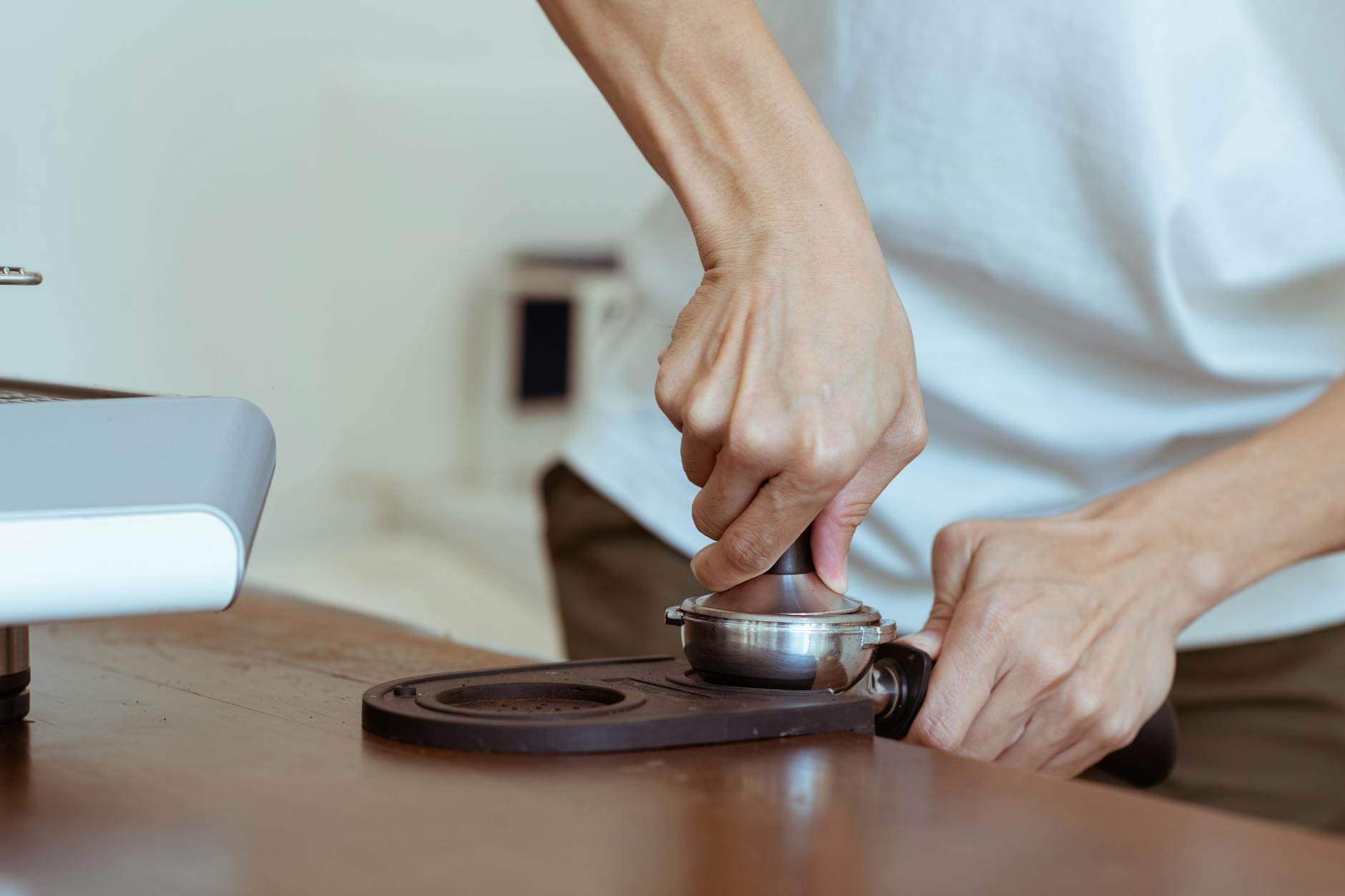
Tamping solves this by applying pressure to create a uniformly dense and level puck of coffee. A proper tamp accomplishes two things:
- It removes air pockets and compacts the grounds, forcing the water to flow evenly through the entire coffee bed.
- It creates a flat, level surface, ensuring that water saturation begins uniformly across the top of the puck.
A successful tamp is the foundation for a balanced and delicious extraction. This is where the design of the tamper base comes into play, as it is the direct point of contact with the coffee grounds and dictates the final structure of the puck.
The industry standard: The flat tamper base
The flat tamper base is exactly what it sounds like: a perfectly smooth, flat surface. It is the most common and widely accepted design in the specialty coffee industry, used by the vast majority of professional baristas and in barista competitions worldwide. Its popularity stems from its simplicity and effectiveness in achieving the primary goal of tamping.
The main advantage of a flat base is its ability to create a perfectly even and level surface on the coffee puck. This predictability is paramount for achieving a consistent extraction shot after shot. With a flat surface, the water from the shower screen of the espresso machine is distributed equally, encouraging a uniform saturation of the grounds. This minimizes the risk of channeling caused by an uneven puck surface.
However, the effectiveness of a flat tamper is highly dependent on the user’s technique. A barista must apply pressure perfectly vertically to avoid creating a sloped puck. Any slight angle can lead to one side of the puck being more compressed than the other, which ironically can induce channeling. For this reason, while it is the standard, it demands a degree of skill and mindfulness to use correctly.
An alternative approach: The ripple tamper base
The ripple tamper, also known as a ridged or concentric tamper, features a series of rings etched into its base. The theory behind this design is multi-faceted and aims to address perceived shortcomings of the flat base. Proponents of the ripple design argue that the concentric rings offer several benefits.
One primary claim is that the ripples increase the surface area of the coffee puck, which could potentially improve water adhesion and distribution during the initial pre-infusion phase of extraction. Another popular theory is that the ridges help to “lock” the outer edge of the puck against the basket wall, creating a better seal and reducing the likelihood of side-channeling. Some users also feel that the ripples help guide a more centered and level tamp, acting as a visual and tactile aid.
Despite these claims, the ripple tamper is a source of considerable debate. Critics argue that the ridges create an unevenly dense puck; the coffee directly under the peaks of the rings will be more compressed than the coffee in the troughs. This variation in density could create micro-channels, undermining the entire purpose of tamping. Furthermore, the small crevices can trap coffee fines, making them more difficult to keep clean and potentially introducing old, stale grounds into your fresh shot.
Head-to-head comparison: Which is right for you?
Ultimately, the choice between a flat and ripple tamper comes down to balancing proven consistency against theoretical benefits. The flat tamper is a known quantity that, with proper technique, delivers a repeatable and reliable foundation for great espresso. The ripple tamper introduces variables that are difficult to measure and whose benefits are largely anecdotal and unproven in professional settings.
Let’s break down the key differences in a table for a clearer comparison:
| Feature | Flat Tamper Base | Ripple Tamper Base |
|---|---|---|
| Puck Surface | Creates a perfectly smooth and level surface. | Creates a surface with concentric rings. |
| Density Distribution | Promotes uniform density across the puck (with good technique). | Potentially creates uneven density between ridges and troughs. |
| Consistency | Very high potential for consistency; the industry standard. | Lower potential for consistency due to more variables. |
| Channeling Risk | Low risk with proper, level tamping technique. | Debated. Claims to reduce side-channeling but may cause micro-channeling. |
| Ease of Cleaning | Very easy to wipe clean. | More difficult; grounds can get stuck in the ridges. |
| Professional Use | Overwhelmingly preferred by specialty coffee shops and competitors. | Rarely seen in professional or competitive environments. |
The overwhelming consensus in the specialty coffee world leans heavily in favor of the flat tamper. Its ability to produce a simple, level, and uniformly dense puck provides the most reliable canvas for a great extraction. It removes variables rather than adding them.
Conclusion: Simplicity and consistency win
In the intricate dance of making espresso, controlling variables is key to success. This review of flat and ripple tampers highlights a fundamental divide in philosophy. The ripple tamper introduces a complex design with theoretical benefits that remain largely unproven and debated within the coffee community. Its potential to create an unevenly dense coffee bed is a significant risk that could compromise extraction quality. In contrast, the flat tamper champions simplicity and precision. It focuses on the primary goal of tamping: creating a compact, uniformly dense, and perfectly level coffee puck. This provides the most consistent and reliable foundation for forcing water to extract flavor evenly from the coffee grounds.
For beginners learning the craft and for seasoned professionals seeking repeatability, the flat tamper is the clear and recommended choice. It is the tool that best supports the development of good technique and provides the control needed to pull consistently delicious shots of espresso. While experimentation is always encouraged in coffee, the flat tamper remains the trusted industry standard for a reason.


 No products in the cart.