

The Gaggia Classic is more than just an espresso machine; it’s an institution. For decades, it has been the gateway for countless home baristas into the world of authentic espresso. Its robust build and simple mechanics are legendary, but its potential for longevity isn’t guaranteed by default. It requires consistent, mindful care. This guide provides a comprehensive maintenance schedule designed to keep your Gaggia Classic pulling perfect shots not just for the next few months, but well into 2026 and beyond. By breaking down maintenance into daily, weekly, monthly, and quarterly tasks, we will demystify the process and empower you to protect your investment and, more importantly, your daily coffee ritual.
Daily and weekly rituals for peak performance
The foundation of a long lasting espresso machine is built on small, consistent habits. These daily and weekly tasks take only a few moments but are the first line of defense against the buildup of coffee oils and residue, which can quickly turn your espresso bitter and harm your machine’s components.
Every day you use your machine:
- Purge the group head: Before pulling your first shot and after your last, run a small amount of water through the group head (without the portafilter attached). This flushes out any stray grounds from the previous session and helps stabilize the temperature.
- Clean the portafilter and basket: After every shot, knock out the used coffee puck and immediately rinse the portafilter and basket with hot water. Use a cloth to wipe them dry. Letting wet grounds sit in the basket will cause oils to build up and can even corrode the metal over time.
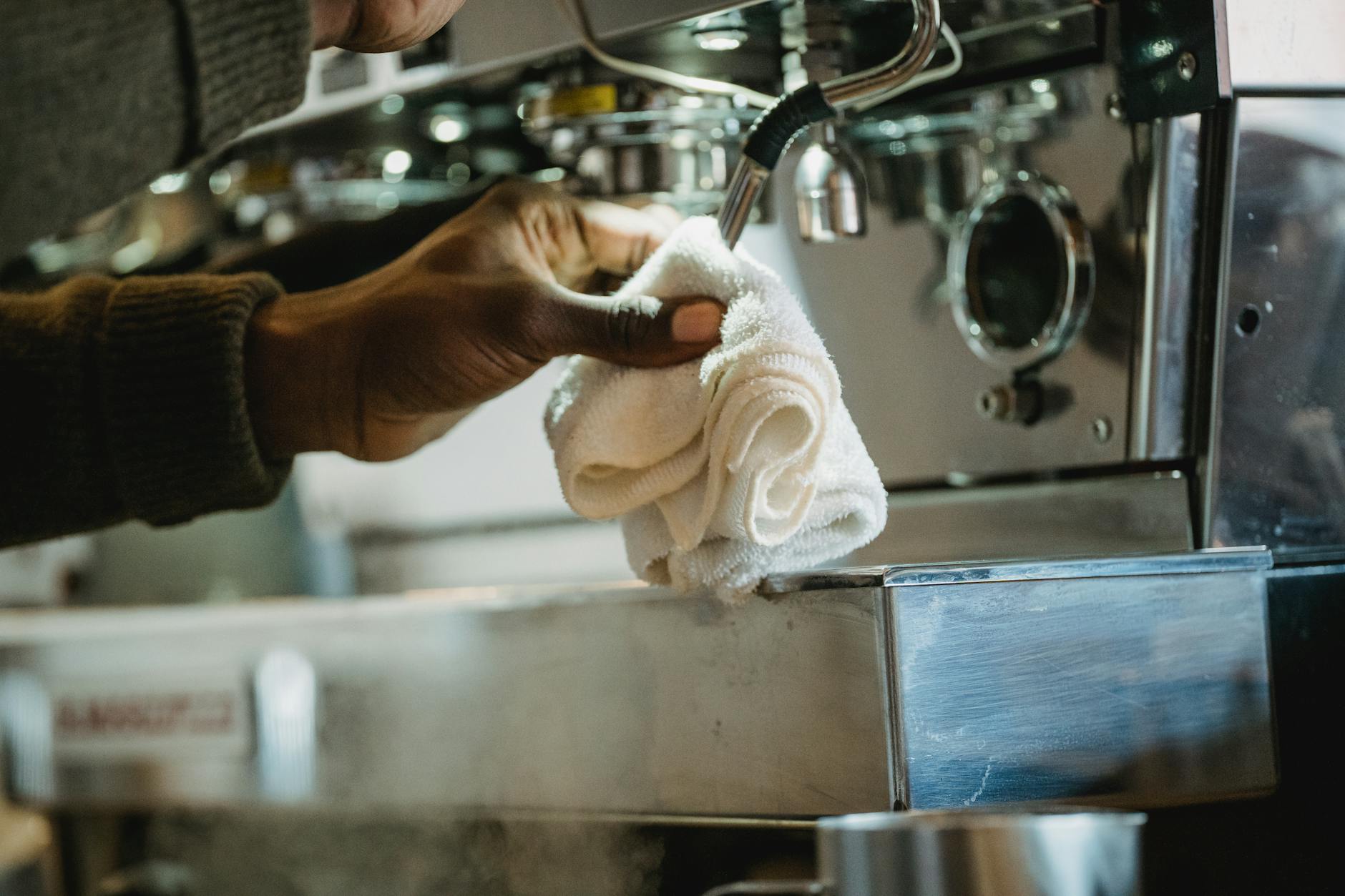
- Wipe the steam wand: If you steam milk, this is non-negotiable. Wipe the wand with a damp cloth immediately after use. Then, point it towards the drip tray and purge it for a second or two to clear any milk from inside the tip. Dried milk is difficult to clean and a breeding ground for bacteria.
Once a week:
- Brush the group head: With a group head cleaning brush, gently scrub around the shower screen and up into the gasket to dislodge any trapped coffee grounds that the daily purge might miss.
- Perform a water backflush: This is a simple but effective clean. Insert a blind basket (a basket with no holes) into your portafilter. Lock it in and run the brew pump for 5-10 seconds. You’ll see water discharge into the drip tray when you stop the pump. Repeat this 4-5 times. This process cleans the three-way solenoid valve and the internal pathways of the group head.
- Clean the drip tray: Don’t just empty it. Take the drip tray out and wash it with warm, soapy water to prevent mold and stale odors.
The monthly deep clean: backflushing and group head care
While weekly water backflushing keeps things clear, a monthly deep clean is necessary to dissolve stubborn, rancid coffee oils that water alone cannot remove. This is where a dedicated espresso machine detergent comes into play. These oils are the primary culprit behind bitter, off-tasting shots and can eventually clog the machine’s fine-tuned components.
The key task for this monthly session is a chemical backflush. This process is similar to the weekly water backflush but with the addition of a specialized cleaning powder like Cafiza or Puly Caff. Add a small amount (about half a teaspoon) of the cleaner into your blind basket and follow this cycle:
- Lock the portafilter into the group head.
- Run the pump for 10 seconds, then stop it for 10 seconds.
- Repeat this cycle five times.
- Remove the portafilter and rinse it thoroughly.
- Re-insert the portafilter (still with the blind basket) and perform a water-only backflush cycle (run for 5 seconds, stop for 5 seconds, repeat 5 times) to rinse any remaining detergent from the system.
- Finally, run water through the group head to ensure it’s completely clean.
While the machine is off and cool, this is also the perfect time to give the shower screen and the metal dispersion plate behind it a proper cleaning. Unscrew the central screw, remove both parts, and soak them in a hot water and espresso cleaner solution for about 30 minutes. Scrub them clean, rinse thoroughly, and reassemble. This ensures an even flow of water over your coffee puck.
Essential quarterly maintenance: descaling and gasket checks
Every three months or so, it’s time to tackle the biggest internal threat to your Gaggia Classic: limescale. If you live in a hard water area, you may need to do this more frequently. Scale buildup from mineral deposits in your water can clog the boiler, pipes, and valves, leading to reduced heating efficiency, low pressure, and eventually, catastrophic failure. Using filtered or softened water is the best prevention, but periodic descaling is still an essential insurance policy.
Always use a descaling solution specifically designed for espresso machines; avoid vinegar, as its acidity can be too harsh on the aluminum boiler and rubber components. The process is straightforward:
- Dissolve the descaling solution in a full tank of water according to the product’s instructions.
- Turn the machine on and run about half of the solution through the group head, pausing every few minutes.
- Next, run the remaining half of the solution through the steam wand.
- Turn the machine off and let it sit for 20-30 minutes to allow the solution to work.
- Finally, rinse the system thoroughly by running at least two full tanks of fresh, clean water through both the group head and steam wand to flush out all traces of the descaler.
This is also the ideal time to inspect your group head gasket. This is the black rubber ring that creates the seal with your portafilter. Over time, it becomes hard, brittle, and less effective. If you notice water leaking from around the portafilter during a shot, or if you have to wrench the handle extremely tight to get a seal, it’s time for a replacement. It’s an inexpensive part that is simple to replace and is vital for maintaining proper brew pressure.
The Gaggia Classic maintenance schedule at a glance
To keep things simple, here is a consolidated schedule of all the maintenance tasks. Following this table is the surest way to ensure your Gaggia Classic remains a reliable coffee companion for years to come.
| Frequency | Task | Why it’s important |
|---|---|---|
| Daily | Purge group head, clean portafilter, wipe steam wand. | Prevents buildup of old grounds and rancid coffee oils, ensuring fresh flavor. |
| Weekly | Brush group screen, water backflush, clean drip tray. | Maintains a clean water path and prevents mold and stale odors. |
| Monthly | Chemical backflush, soak shower screen and dispersion plate. | Deep cleans the three-way solenoid and group head, removing stubborn oils that cause bitterness. |
| Quarterly | Descale the machine, inspect group head gasket. | Prevents catastrophic damage from limescale buildup and ensures proper brew pressure. |
| As needed | Replace group head gasket. | Prevents leaks and maintains the seal required for a perfect extraction. |
By committing to this schedule, you are moving from reactive repairs to proactive care. The Gaggia Classic is a machine that rewards its owner’s diligence. A few minutes of cleaning each day and a more focused session each month will pay massive dividends in both the quality of your espresso and the trouble-free operation of your machine. This structured approach is your roadmap to enjoying that rich, flavorful espresso in 2026, brewed on the very same machine you’re caring for today.
In conclusion, the legendary durability of the Gaggia Classic is not a myth, but it is conditional. It depends entirely on a consistent and thoughtful maintenance routine. We’ve outlined a clear, tiered schedule that progresses from simple daily habits like purging the group head to essential quarterly procedures like descaling. Each step builds upon the last, collectively preventing the buildup of coffee oils and damaging limescale that are the primary enemies of any espresso machine. By embracing this schedule, you are not just cleaning a machine; you are preserving a high-performance tool. This small investment of time is the secret to ensuring your Gaggia Classic continues to be the heart of your coffee bar, performing flawlessly well into 2026 and for many years after.
 No products in the cart.