

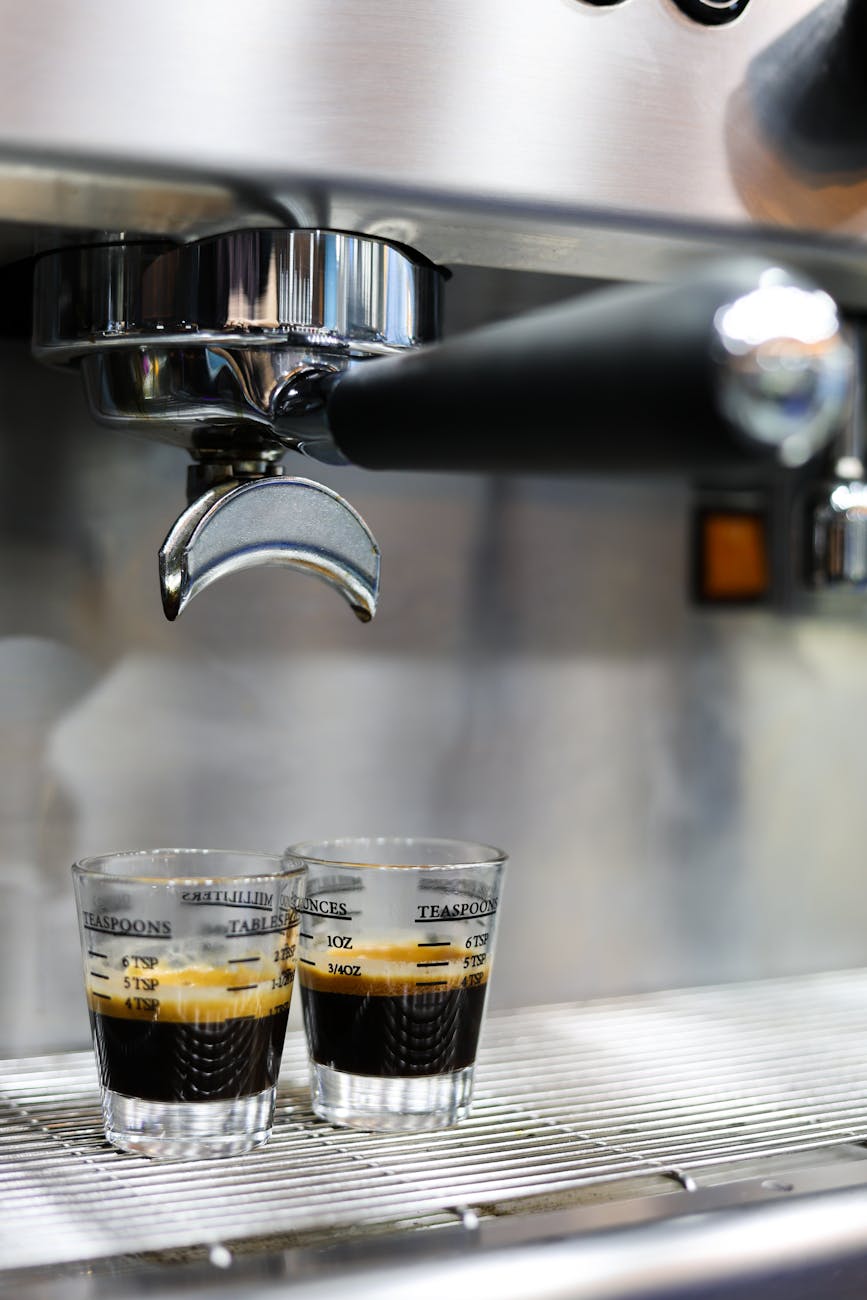
That perfect espresso shot. It’s the goal of every home barista. You’ve dialed in your grinder, perfected your puck prep, and timed your shot, yet you’re still met with a cup that tastes disappointingly sour, bitter, or both. The likely culprit is channeling, where water blasts through weak spots in your coffee puck, leading to an uneven extraction. While technique is crucial, a often-overlooked component plays a massive role: the filter basket. For Gaggia owners, the debate often comes down to one key upgrade. Is the stock basket holding you back? This article will explore the critical differences between the standard Gaggia basket and its high-performance counterpart, the precision basket, to see which one truly solves the persistent problem of channeling.
Understanding channeling and its culprits
Before we can fix a problem, we need to understand it. In espresso, channeling is the process where water finds a path of least resistance through the puck of coffee grounds instead of flowing evenly through the entire bed. Imagine a river finding a crack in a dam; it will force its way through that single point, ignoring the rest of the structure. This is exactly what happens inside your portafilter. Instead of saturating all the coffee grounds uniformly, the water exploits a weak spot, leading to a disastrously uneven extraction.
The signs of channeling can be visual and sensory:
- Visual Cues: When using a bottomless portafilter, you might see tiny, fast-flowing “spurts” of espresso shooting out, or sections of the basket that stay dark while others turn blonde far too quickly.
- Taste Profile: The resulting shot is often a confusing mix of flavors. The grounds along the channel are over-extracted, contributing bitter and harsh notes. The grounds that were ignored by the water are under-extracted, lending a sharp, sour taste. The shot has no balance or sweetness.
While poor puck preparation—like clumpy grounds from the grinder, an uneven distribution of coffee in the basket, or a crooked tamp—is a primary cause, the basket itself can be an unwilling accomplice. The physical characteristics of your filter basket can either help prevent these channels or create an environment where they are more likely to form.
The stock Gaggia basket: A closer look
The basket that comes with your Gaggia machine is designed to be functional and cost-effective. It’s a workhorse, but it’s not an instrument of precision. These baskets are typically manufactured through a stamping process. A sheet of metal is pressed by a machine to create the holes. While this is efficient for mass production, it lacks finesse and creates several inherent issues that can contribute to channeling.
The main problem with stamped baskets is inconsistency. The holes are often not perfectly round, can have jagged edges, and vary in size. Some holes may even be partially clogged with metal debris from the stamping process itself. This lack of uniformity means that water flow will not be even across the bed of the puck from the very start. Water will naturally flow faster through the larger, clearer holes, initiating channels before your puck prep technique even comes into play. You could have a perfectly distributed and tamped puck, but if the basket itself promotes uneven flow, you are always fighting an uphill battle.
Enter the precision basket: What’s the difference?
This is where precision baskets, from manufacturers like IMS or VST, change the game. Unlike their stamped counterparts, these baskets are products of advanced engineering. Their creation focuses on one primary goal: creating perfectly uniform conditions for water to pass through the coffee. This is achieved through a few key technological advancements.
First, the holes are not stamped. They are created using a high-precision method, often laser-cutting or micro-drilling, that ensures every single hole is identical in size and perfectly circular. Second, the placement of these holes is deliberate and calculated to promote an even distribution of water across the entire surface area. Finally, many precision baskets undergo an electro-polishing process. This creates an incredibly smooth, mirror-like surface that reduces friction and helps prevent coffee oils and fine particles from clogging the holes, ensuring consistent performance over time. This meticulous manufacturing process eliminates the basket as a variable, allowing you to focus purely on your coffee and technique.
Precision vs stock: A head-to-head comparison
When you place a stock basket and a precision basket side by side, the difference in quality is immediately apparent. But how do these physical differences translate to the real world of making espresso? The upgrade is about gaining control and consistency.
A precision basket provides a foundation for even extraction. Because every hole is the same, there are no built-in “easy paths” for the water. This forces the water to saturate the puck more evenly, leading to a richer, more balanced, and sweeter shot of espresso. It raises the potential quality ceiling of your Gaggia machine significantly.
However, there’s an important caveat: precision baskets are less forgiving of poor technique. A stock basket’s random imperfections can sometimes mask minor flaws in your distribution or tamping. A precision basket, with its perfectly even flow, will ruthlessly expose any weak spots in your puck. If your distribution is uneven, a channel will form. This means that tools like a Weiss Distribution Technique (WDT) tool become less of a luxury and more of a necessity. But for the barista willing to refine their process, the reward is unparalleled consistency.
| Feature | Stock Gaggia basket | Precision basket (IMS/VST) |
|---|---|---|
| Manufacturing | Stamped metal | Laser-cut or micro-drilled |
| Hole uniformity | Inconsistent size and shape, some blocked | Perfectly circular and identical in size |
| Flow rate | Uneven and unpredictable | Consistent and uniform across the puck |
| Puck prep demands | More forgiving of minor errors | Requires meticulous puck prep (WDT, etc.) |
| Taste potential | Good, but prone to channeling and imbalance | Excellent, promotes sweetness and clarity |
Ultimately, upgrading to a precision basket is about removing a variable of inconsistency from your brewing process. It ensures that the limitations of your equipment are no longer holding back the potential of your coffee.
Conclusion
In the quest to conquer channeling, both technique and technology matter. The stock Gaggia basket is a capable starting point, but its inherent manufacturing inconsistencies make it a frequent contributor to the very problem you’re trying to solve. It creates an uneven playing field before the shot even begins. A precision basket, by contrast, is engineered for perfection. Its perfectly uniform holes provide the ideal foundation for a balanced and even extraction, allowing the true flavors of your coffee to shine through. While it demands a higher level of care in your puck preparation, it also unlocks a higher level of quality and consistency. For the Gaggia owner serious about moving beyond frustrating shots and achieving café-quality results, the upgrade to a precision basket is one of the most impactful and cost-effective investments you can make.
 No products in the cart.