

The secret to perfect Turkish coffee: How your heat source affects consistency
Turkish coffee is more than just a beverage; it is a cultural ritual, a UNESCO Intangible Cultural Heritage, and an art form defined by its unique brewing process. Unlike filtered coffee, this method involves simmering very finely ground beans with water in a special pot called a cezve or ibrik. The result is a strong, rich coffee with a velvety foam, known as kaymak, on top. The quality of this foam, along with the overall flavor and body, is the hallmark of a well-made Turkish coffee. What many aspiring brewers don’t realize is that the secret to achieving that perfect consistency lies not just in the ingredients, but critically, in the heat source. This article will explore the profound effect different heat sources have on the final cup.
The crucial role of heat in Turkish coffee extraction
The magic of Turkish coffee happens in a very short time frame, and heat management is the conductor of this delicate orchestra. The goal is not to simply boil the coffee, but to bring it to a near boil, allowing a thick foam to build and rise. This process needs to be slow and controlled. A gradual increase in temperature allows the coffee grounds to release their soluble flavors and aromatic oils evenly, integrating them into the water. This slow extraction is what creates the beverage’s characteristic full body and complex taste profile. At the same time, the gentle heating helps form the coveted foam by trapping carbon dioxide gas released from the coffee grounds. If the heat is too aggressive or uneven, the coffee will boil over violently, destroying the foam and resulting in a bitter, over-extracted brew with a gritty texture.
A comparison of common heat sources
The brewer’s choice of heat source directly dictates their level of control over the brewing process. Each method interacts with the cezve differently, leading to distinct outcomes in foam quality, flavor, and texture.
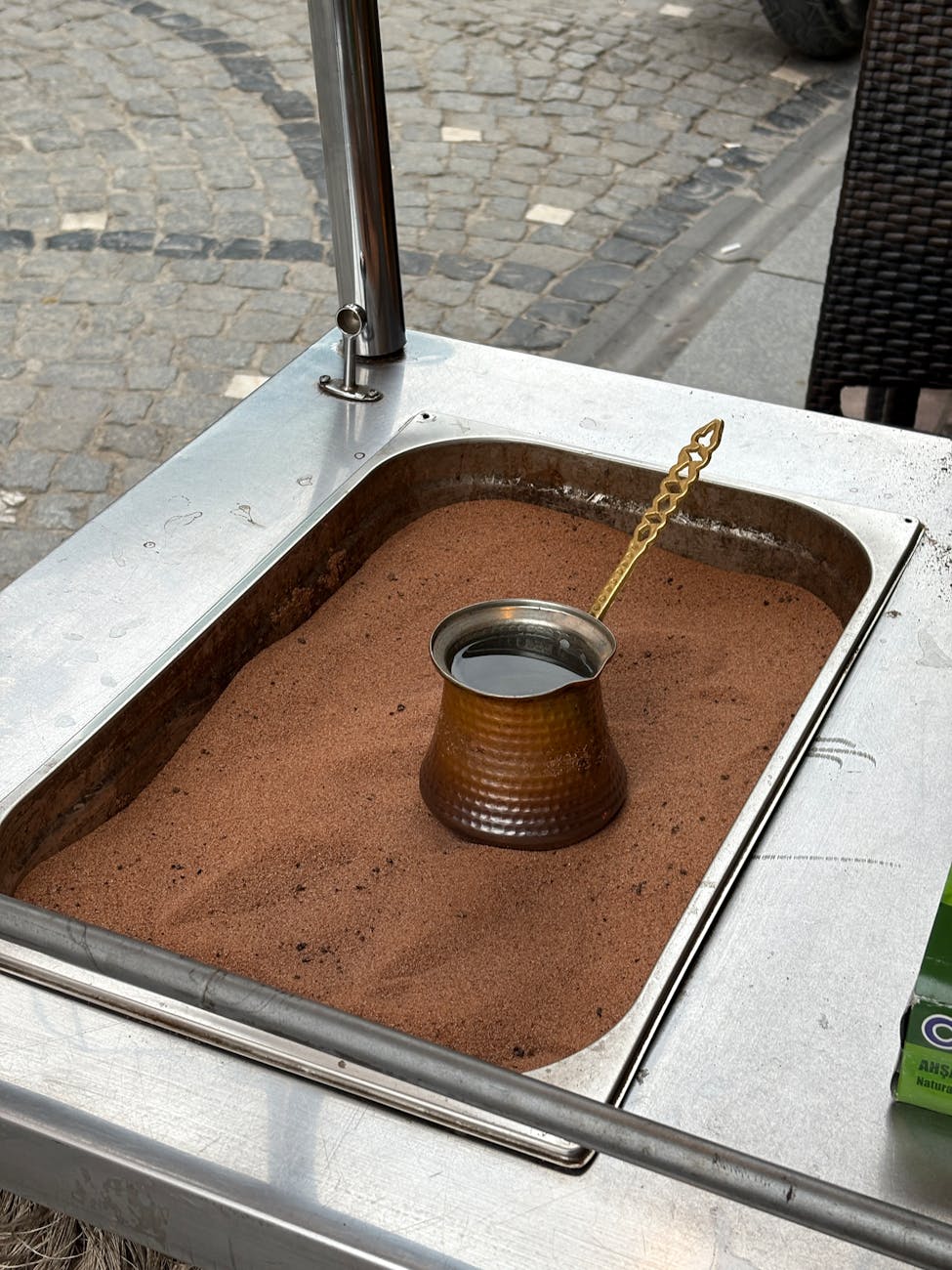
- Hot sand (Hovoli): This is the most traditional and revered method. The cezve is nestled into a bed of heated sand, which provides an incredibly gentle, even, and enveloping heat. This allows the brewer to have maximum control, slowly raising the temperature to build a thick, stable foam. The sand method is unparalleled for creating a velvety consistency and a rich, nuanced flavor without any bitterness.
- Gas stove: The most common household method, a gas stove offers good responsiveness. You can adjust the flame instantly. However, the heat is concentrated at the base of the cezve, which can create hot spots and burn the coffee if not managed carefully. To succeed, one must use the smallest burner on the lowest setting and often move the cezve around to ensure more even heat distribution.
- Electric stove (Coil or Glass-top): While convenient, electric stoves present a significant challenge. They are slow to heat up and, more importantly, slow to cool down. This lack of responsiveness makes it very difficult to stop the brewing process at the precise moment. The residual heat can easily cause the coffee to boil over even after it’s been moved, ruining the foam and the flavor.
The impact on the final cup: A detailed breakdown
Understanding how each heat source affects the final product is key to mastering the art. The difference is not subtle; it is felt in the texture, seen in the foam, and tasted in every sip. The foam, or kaymak, acts as a lid, trapping the coffee’s delicate aromas. Gentle heat allows this foam to develop slowly and become dense. Aggressive, direct heat from a gas or electric stove can cause large bubbles to form and collapse, leading to a thin or nonexistent foam. This directly impacts the flavor, as an over-heated brew will taste burnt and astringent, masking the coffee’s true character. The ideal consistency is smooth and slightly thick, which is achieved when the fine grounds are perfectly suspended through controlled heating.
| Heat source | Heat control | Foam quality | Flavor profile |
|---|---|---|---|
| Hot Sand | Excellent (Even, gentle, precise) | Thick, creamy, stable | Rich, complex, balanced, no bitterness |
| Gas Stove | Good (Responsive but direct) | Good, but requires skill | Can be well-balanced or slightly bitter |
| Electric Stove | Poor (Slow to respond, residual heat) | Often thin or nonexistent | Prone to being bitter and over-extracted |
Tips for brewing on modern stovetops
While sand offers the best results, you can still make excellent Turkish coffee at home with a little technique. If you are using a gas stove, always use the smallest burner and set it to the lowest possible flame. Do not place the cezve directly in the center of the flame; hold it so the edge of the flame heats the side of the pot, and rotate it gently. For an electric stove, patience is key. Use a low to medium heat setting and watch it constantly. The moment you see the foam begin to rise, remove the cezve from the heat entirely. Remember that the element is still hot, so you must act quickly. Regardless of your stove, using a high-quality copper cezve will also help, as copper is an excellent conductor and distributes heat more evenly than other materials.
In conclusion, the journey to a perfect cup of Turkish coffee is a lesson in heat management. The consistency, defined by its signature thick foam and rich body, is directly tied to the brewing method. While the traditional hot sand technique remains the gold standard for its gentle and even heat distribution, it is not the only path to success. A gas stove, with careful handling and a low flame, can yield excellent results. Even an electric stove can be tamed with patience and attentiveness. The fundamental principle remains the same across all methods: a slow, controlled temperature increase is essential for proper extraction and foam formation. By understanding how your heat source works, you can adjust your technique and unlock the rich flavors and velvety texture that make Turkish coffee a truly special experience.



 No products in the cart.