

Managing the boiling point: How to avoid scorching Turkish coffee
Turkish coffee is more than just a beverage; it is a cultural ritual, celebrated for its intense aroma, rich flavor, and velvety foam. This ancient brewing method, prepared in a traditional pot called a cezve, produces a uniquely unfiltered and potent cup. However, its preparation is a delicate art. The line between a perfect, aromatic brew and a bitter, scorched disappointment is incredibly fine. The most common mistake is overheating the coffee, bringing it to a full boil which completely ruins the taste. This guide will delve into the essential techniques of heat management, helping you master the process and avoid the dreaded scorch, ensuring every cup you brew is a testament to this time-honored tradition.
The foundation: Your cezve and the perfect grind
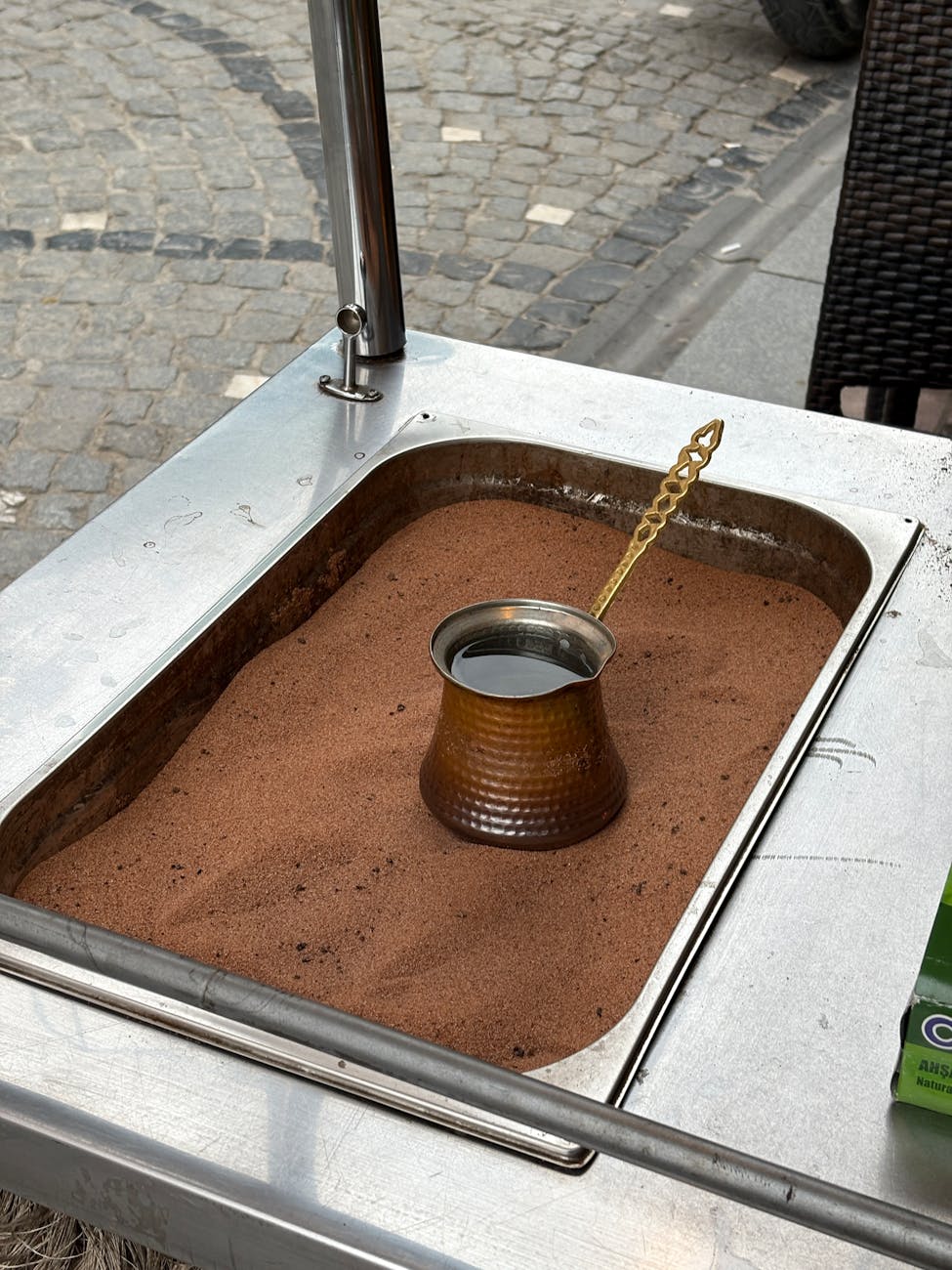
Before you even think about turning on the heat, your success begins with two fundamental elements: your equipment and your coffee. The pot, known as a cezve (or ibrik), is specifically designed for this method. Traditionally made of copper or brass, these materials are excellent heat conductors, allowing for even and responsive temperature control. Its shape—a wide base, a narrow neck, and a long handle—is engineered to encourage the formation of the thick foam, or köpük, which is the hallmark of a great Turkish coffee. A poor-quality pot that heats unevenly will create hot spots, making it almost impossible to avoid scorching the delicate grounds.
Equally crucial is the grind. Turkish coffee requires the finest grind possible, a consistency akin to powdered sugar or flour. This is significantly finer than an espresso grind. This powdery texture is non-negotiable because it allows for a rapid extraction of flavor in the short brewing time. Using a coarser grind will result in a weak, under-extracted coffee, and you’ll be tempted to use higher heat for longer to compensate, which leads directly to a burnt and bitter taste. The super-fine grounds are what become suspended in the water to create the coffee’s signature body and help build that essential layer of foam.
Mastering the heat: The slow and steady approach
Here lies the heart of the matter: Turkish coffee is never, ever brought to a rolling boil. The term “boiling point” in the context of this coffee is a misnomer; the goal is to bring the mixture to the point just before it boils over. The process must be slow and deliberate. Start with cold, preferably filtered, water. After adding your coffee powder (and sugar, if desired), give it a gentle stir to combine, then place the cezve on low to medium heat. Do not stir it again, as this will disturb the formation of the foam.
You must watch the pot with undivided attention. First, the grounds will sink. Soon, a dark ring will form around the surface’s edge. This is the precursor to the main event. As the water heats, it will begin to rise, pushing the fine grounds and dissolved gases upward to form a thick, creamy foam that slowly climbs the narrow neck of the cezve. This is the critical moment. The ideal temperature for this “rise” is around 90°C (194°F), well below the 100°C (212°F) boiling point. Letting it go past this stage to a full, bubbling boil will instantly scorch the coffee, destroying the delicate aromatic compounds and replacing them with an acrid, burnt flavor.
Decoding the foam: Your key to a perfect brew
The foam, or köpük, is not just for aesthetics; it is your primary visual guide to the coffee’s temperature and the guardian of its flavor. A thick, even layer of foam indicates a successful brew, trapping the most volatile and delicious aromas within the cup until the very first sip. When you see this foam begin to rise and swell like a small dome, you have reached the perfect extraction point. This is your signal to immediately pull the cezve off the heat. If you let it boil, the foam will collapse and disintegrate, releasing all those precious aromas into the air and over-cooking the grounds suspended in the water.
Many traditional techniques involve a “double rise” to build an even richer foam. After the first rise, you lift the pot from the heat. You can spoon a little of this first foam into each serving cup. Then, you return the cezve to the heat for a second, brief rise. Again, the key is to remove it from the heat the instant the foam begins to swell. This technique requires practice and a feel for the heat, but it reinforces the core principle: the foam tells you everything. A destroyed foam means a scorched coffee.
Your step-by-step brewing guide to success
Combining all these principles, here is a clear, actionable guide to brewing unscorched Turkish coffee. Patience and observation are your most valuable tools. By following these steps and understanding the “why” behind them, you can consistently produce a delicious and authentic cup.
- Measure: Use your demitasse cup to measure one cup of cold, filtered water per person and pour it into the cezve.
- Combine: Add one heaping teaspoon of powder-fine Turkish coffee per cup. Add sugar to taste at this stage, if desired. Stir gently just until the grounds are submerged.
- Heat: Place the cezve on a low to medium heat source. Do not walk away.
- Watch: Observe the coffee intently. Do not stir. Wait for the foam to begin forming and slowly rising.
- Lift: The moment the foam swells and starts to climb the neck of the cezve, remove it from the heat. Do not let it boil over.
- Serve: You can briefly rest the coffee or gently agitate it to settle the foam. Pour slowly into your demitasse cups, ensuring each gets a share of the precious köpük.
- Settle: Allow the coffee to rest for about a minute before drinking. This lets the grounds settle at the bottom of the cup.
This table summarizes the key factors in preventing a scorched brew:
| Parameter | Ideal Condition | Why it Matters |
|---|---|---|
| Water Temperature | Cold, filtered | Allows for gradual heating and even extraction. |
| Coffee Grind | Powder-fine | Ensures quick extraction and helps build the foam. |
| Heat Level | Low to Medium | Prevents a rapid, uncontrolled boil and scorching the grounds. |
| Peak Temperature | ~90°C / 194°F (as foam rises) | Extracts full flavor without bitterness and protects the foam. |
| Boiling? | Never a full, rolling boil | A full boil destroys the foam and creates a burnt, scorched taste. |
In conclusion, mastering Turkish coffee is a rewarding journey into the art of precise temperature control. The secret to avoiding a scorched, bitter brew lies not in complex techniques but in careful observation and understanding the fundamentals. It begins with the right foundation: a quality cezve and a powder-fine grind. The brewing process itself is a slow dance with heat, always aiming for the gentle rise of the foam rather than a destructive, rolling boil. This foam is your most important indicator, the guardian of aroma and the sign of a job well done. By following these steps and learning to read the visual cues your coffee provides, you can confidently leave scorched cups in the past and consistently enjoy this rich, aromatic, and deeply satisfying beverage just as it was intended.


 No products in the cart.