

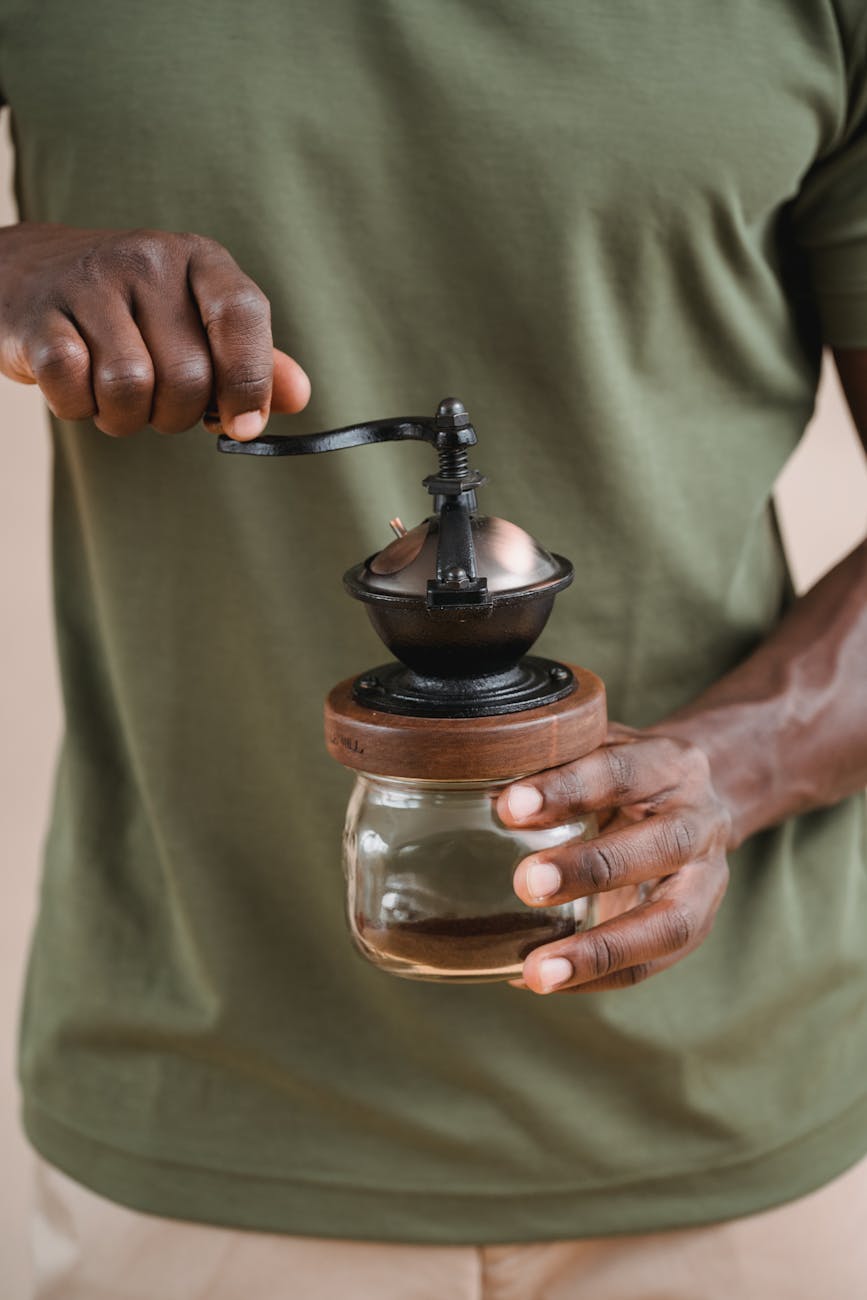
Why your choice of grinder determines your espresso brewing success
The allure of pulling a perfect, cafe-quality espresso shot at home has led many coffee enthusiasts to invest in shiny, impressive espresso machines. Yet, a common story of disappointment follows: the shots are sour, bitter, or pull too fast, never quite matching the richness and complexity of their favorite coffee shop. The culprit is often an overlooked, yet fundamentally crucial, piece of equipment: the coffee grinder. Many see it as a simple accessory for turning beans into powder, but in the world of espresso, the grinder is not just part of the team; it’s the most valuable player. It dictates the potential of every bean and holds the key to unlocking a truly balanced and delicious extraction. This article will delve into why your choice of grinder is the single most important factor in your espresso journey.
The science of a perfect extraction
To understand why the grinder is so critical, we first need to understand what happens during an espresso extraction. Espresso is a method of brewing coffee by forcing hot water, under high pressure (typically around 9 bars), through a tightly packed puck of finely-ground coffee. The entire process lasts only about 25 to 30 seconds.
In this short window, the water needs to extract the perfect balance of oils, acids, and sugars from the coffee grounds. This is a delicate dance governed by one primary factor: surface area. Finer grounds present a larger total surface area to the water, allowing for a rapid and efficient extraction. However, if the extraction is not uniform across all the coffee particles, the final taste will be a muddled mess. This is where the concept of even extraction comes into play. For a balanced shot, every single coffee particle in the puck must give up its delicious compounds at roughly the same rate. An uneven extraction results in a cup where some grounds have been over-extracted (giving bitter, harsh flavors) while others have been under-extracted (contributing sour, acidic notes).
Consistency is king: The battle of boulders and fines
The primary job of a great espresso grinder is to produce coffee grounds that are incredibly consistent in size. Imagine your coffee puck as a bed of gravel. If the gravel is all of the same size, water will flow through it evenly and at a predictable rate. This is the ideal scenario for espresso.
A poor-quality grinder, however, produces a chaotic mix of particle sizes. Coffee experts refer to these as “boulders” (large particles) and “fines” (dust-like particles). This inconsistency wreaks havoc on your extraction:
- Fines are so small that they extract almost instantly, releasing bitter compounds into your shot. They also tend to migrate downwards and clog the tiny holes in your filter basket, choking the flow of water and dramatically slowing down your shot time.
- Boulders are too large for the water to properly penetrate in 25 seconds. They under-extract, contributing a sharp, sour taste to the cup. Water also finds it easier to flow around these large particles, creating channels in the coffee puck and leading to an even more uneven extraction.
A high-quality grinder minimizes this chaos, producing a uniform, fluffy mound of coffee grounds. This creates a coffee bed with consistent density and resistance, forcing the water to flow through the entire puck evenly and ensuring every particle contributes positively to the final flavor.
Burr grinders vs. blade grinders: Not all grinders are created equal
The mechanics of a grinder directly impact its ability to produce a consistent grind. Broadly, grinders fall into two categories: blade grinders and burr grinders. For espresso, the choice is not a matter of preference; it’s a necessity.
Blade grinders work like a blender, using a spinning blade to smash and shatter coffee beans. The result is a highly inconsistent mix of dust and large chunks, making them completely unsuitable for espresso. The high speed of the blade also generates significant heat, which can scorch the coffee grounds before you even begin brewing, damaging their delicate aromatic compounds.
Burr grinders are the industry standard for quality coffee. They use two abrasive surfaces, or burrs, to crush beans into a uniform size. The distance between these burrs is precisely adjustable, giving the user control over the final grind size. There are two main types of burrs:
- Conical burrs feature a cone-shaped inner burr that sits inside a ring-shaped outer burr. They typically spin at a lower speed, which generates less heat and noise. They are known for producing excellent, consistent grounds that are perfect for espresso.
- Flat burrs consist of two parallel, ring-shaped burrs that lie flat against each other. They often require a higher speed to operate but are capable of producing exceptionally uniform particles, which can highlight clarity and flavor separation in the final cup.
| Grinder type | Grind consistency | Heat generation | Espresso suitability |
|---|---|---|---|
| Blade grinder | Very poor (boulders and fines) | High | Not recommended |
| Conical burr grinder | Very good to excellent | Low | Highly recommended |
| Flat burr grinder | Excellent | Low to medium | Highly recommended |
The power of micro-adjustments: Dialing in your shot
Beyond producing consistent grounds, a great espresso grinder must offer precise control. The process of “dialing in” an espresso shot involves making tiny adjustments to the grind size to control how quickly the water flows through the coffee. A change of just a few microns in grind size can alter the shot time by several seconds.
This is why espresso-specific grinders feature either stepless adjustments (allowing for infinite settings between the finest and coarsest) or micro-stepped adjustments (offering a very large number of small, discrete settings). This level of precision is non-negotiable. A basic grinder with only 10 or 20 settings might be adequate for a French press, but for espresso, you’ll find that one setting chokes the machine while the very next one produces a gusher. The sweet spot lies in between those two clicks, a place that only a dedicated espresso grinder can reach. This fine control empowers you to adapt to different beans, changing humidity, and the age of your coffee, ensuring you can always pull a perfect shot.
Your journey into home espresso should begin not with the machine, but with the grinder. While the espresso machine handles the pressure and temperature, it is the grinder that prepares the coffee and sets the absolute ceiling for quality. A great machine can never fix a bad grind. By prioritizing a quality burr grinder that offers consistency and precise micro-adjustments, you are investing in the foundation of good espresso. It transforms the brewing process from a game of chance into a craft you can control and perfect. Ultimately, understanding that the grinder does the most important work is the first and most critical step toward brewing espresso that is not just drinkable, but truly exceptional.
 No products in the cart.