

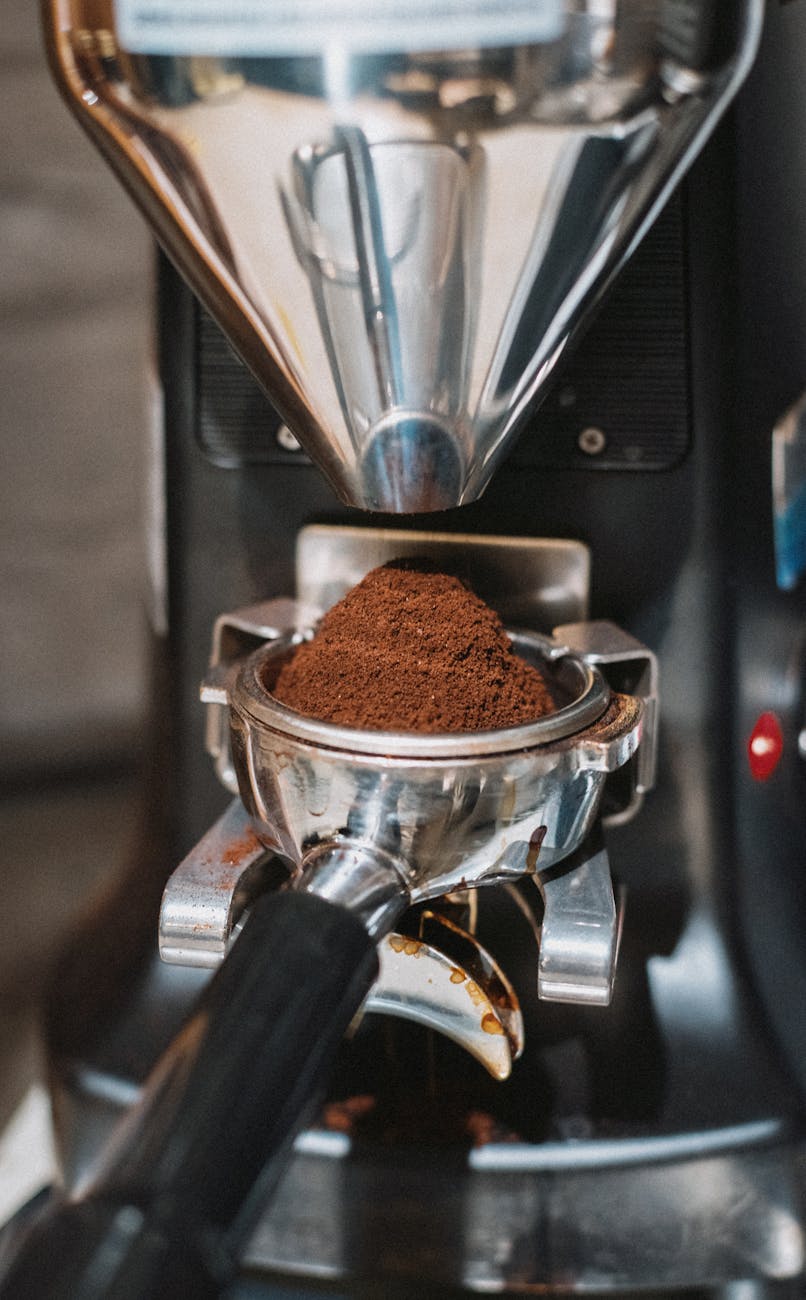
The quest for the perfect espresso shot is a journey many coffee lovers embark on. We meticulously select our beans, invest in high-quality espresso machines, and refine our puck preparation techniques. Yet, a frequently overlooked element can sabotage all our efforts: the coffee grinder. It’s not just about having a good grinder; it’s about ensuring it performs at its absolute peak. At the heart of that performance lies a crucial concept known as grinder alignment. This single factor can be the difference between a muddled, disappointing shot and one that is sweet, balanced, and bursting with flavor. In this article, we’ll explore why precise burr alignment is not just a minor tweak but a fundamental requirement for achieving high-extraction espresso.
What is grinder alignment?
At its core, grinder alignment refers to the physical orientation of the two grinding burrs relative to each other. In an ideal world, the surfaces of the two burrs—whether they are flat or conical—should be perfectly parallel. Imagine two discs spinning against each other; for a uniform result, the gap between them must be exactly the same at every single point. When a grinder is perfectly aligned, every coffee bean passing through is subjected to the same cutting and crushing forces, resulting in a consistent and uniform particle size.
Misalignment occurs when the burrs are tilted, even by a few microns. This means that on one side, the burrs are closer together, while on the other, they are farther apart. This seemingly tiny imperfection creates a chaotic grinding environment, completely undermining the grinder’s primary function of producing a uniform bed of coffee grounds.
The domino effect of bad alignment on grind consistency
The first and most significant casualty of misaligned burrs is grind consistency. A grinder’s main job is to produce a predictable particle size distribution (PSD). A great espresso grinder creates a large number of particles of the target size, with very few extremely large particles (boulders) and very few extremely small, dust-like particles (fines).
When burrs are misaligned, this ideal is shattered. The wider part of the gap allows large, chunky “boulders” to pass through without being properly ground. Simultaneously, the narrow part where the burrs are nearly touching chews up beans, creating an excessive amount of “fines”. The result is a messy, bimodal distribution of coffee grounds: a mixture of very coarse and very fine particles, with not enough in the target range. This inconsistent grind is the root cause of nearly all subsequent extraction problems.
From uneven grounds to flawed extraction
Once you have an inconsistent grind, achieving a balanced extraction becomes nearly impossible. Extraction is the process of water dissolving the flavorful solids from coffee grounds. Different particle sizes extract at vastly different rates.
- Fines have a massive surface area and extract very quickly. They tend to give up their soluble material almost instantly, leading to over-extraction, which tastes bitter, dry, and astringent.
- Boulders have a small surface area and extract very slowly. Water struggles to penetrate these large chunks, leading to under-extraction, which tastes sour and weak.
This mix of particle sizes also wreaks havoc on the integrity of the coffee puck. Water under pressure is lazy; it will always seek the path of least resistance. The fines compact and choke the water flow in some areas, while the boulders create weak spots in others. This forces the water to “channel” through the less dense parts of the puck, aggressively over-extracting those areas while completely ignoring others. Channeling is the enemy of good espresso, and it is an almost guaranteed outcome of a poorly aligned grinder.
The flavor of alignment: high extraction vs. inconsistency
Ultimately, it all comes down to taste. A “high-extraction” shot, made possible by an even grind from aligned burrs, is one where you have successfully dissolved a high percentage of the coffee’s desirable flavor compounds without also pulling out the undesirable ones. The flavor is characterized by sweetness, clarity, a vibrant but pleasant acidity, and a complex, lingering finish. It’s a complete and balanced representation of the coffee bean’s potential.
In contrast, a shot pulled from the grounds of a misaligned grinder is often a confusing and unpleasant mess. You get the worst of both worlds in a single sip: the sourness from the under-extracted boulders clashes with the harsh bitterness from the over-extracted fines. The shot lacks body, clarity, and sweetness, leaving a muddled and often dry feeling on the palate. The table below illustrates the stark difference.
| Metric | Aligned Burrs | Misaligned Burrs |
|---|---|---|
| Grind Consistency | Uniform particle size (unimodal) | Mix of fines and boulders (bimodal) |
| Puck Integrity | Even density, resists channeling | Prone to cracks and channeling |
| Extraction | Even and controlled | Simultaneously over and under-extracted |
| Flavor Profile | Sweet, balanced, clear, complex | Sour, bitter, astringent, muddled |
In conclusion, grinder alignment is not a minor detail for obsessive espresso hobbyists; it is a cornerstone of quality coffee. The logical chain is undeniable: misaligned burrs create an inconsistent grind, which leads directly to uneven extraction and channeling, resulting in a fundamentally flawed-tasting espresso shot. No amount of careful puck prep or advanced machine technology can fully compensate for a bad grind. By taking the time to check and, if necessary, correct your grinder’s burr alignment, you are ensuring your equipment can do its job properly. This single adjustment can unlock a new level of sweetness, clarity, and consistency in your espresso, allowing you to finally taste the true potential hidden inside your coffee beans.

 No products in the cart.