

The ultimate guide to cleaning stainless steel espresso tools without damage
Your stainless steel espresso tools are the heart of your coffee station. That gleaming portafilter, perfectly weighted tamper, and pristine milk pitcher aren’t just functional; they represent a commitment to quality coffee. But daily use takes its toll. stubborn coffee oils, dried milk residue, and hard water spots can quickly tarnish their shine, and more importantly, ruin the taste of your espresso. Damaging these tools with harsh cleaning methods is a common and costly mistake. This guide will walk you through the proper techniques and products to keep your stainless steel gear in immaculate condition, ensuring every shot you pull is pure and your equipment lasts a lifetime. We will cover everything from daily maintenance to deep cleaning routines, all without causing a single scratch.
Understanding your tools and their enemies
There’s a reason professionals and enthusiasts prefer stainless steel for espresso accessories. It’s incredibly durable, non-porous (so it doesn’t absorb flavors), and has excellent thermal stability. However, its biggest enemy in the coffee world is buildup. The primary culprits are caffeol, the sticky, aromatic oil responsible for coffee’s flavor and aroma, and mineral deposits from hard water. When caffeol is left on a portafilter or filter basket, it quickly turns rancid, imparting a bitter, acrid taste to your fresh espresso. Similarly, milk residue left in a frothing pitcher contains proteins and fats that not only harbor bacteria but also affect the texture of your steamed milk. Ignoring this buildup doesn’t just make your tools look dirty; it actively degrades the quality of your coffee and can eventually damage the tools themselves.
The essential cleaning toolkit: choosing the right supplies
To clean effectively without causing damage, you need the right toolkit. The goal is to remove residue without scratching the protective chromium oxide layer that gives stainless steel its “stainless” quality. Aggressive scrubbing or harsh chemicals can create micro-abrasions, which can trap more grime and even lead to rust over time. Forget the steel wool and abrasive powders; your best friends are gentle but effective.
Here’s what you should have on hand:
- Specialized Espresso Cleaner: Products like Cafiza are specifically formulated to break down coffee oils without being corrosive. A small amount goes a long way.
- Mild Dish Soap: For daily cleaning of milk pitchers and less-oily tools, a simple, unscented dish soap is perfect.
- Baking Soda and White Vinegar: These household staples are excellent for creating a gentle abrasive paste for tough stains or for a descaling solution.
- Soft Tools: Always use microfiber cloths, non-abrasive sponges, and soft-bristled brushes. An old toothbrush can be great for getting into the crevices of a portafilter spout.
Crucially, you must avoid anything that can scratch the surface. This includes chlorine bleach, ammonia-based cleaners, abrasive scouring pads, and wire brushes. These items will permanently damage the finish of your tools, making them look dull and more susceptible to future staining.
Step-by-step cleaning guides for common tools
With the right supplies, cleaning becomes a simple and satisfying process. The key is consistency and tailoring the method to the specific tool and the type of grime you’re tackling. This naturally flows from understanding what needs to be cleaned and having the right toolkit ready.
For Portafilters and Baskets:
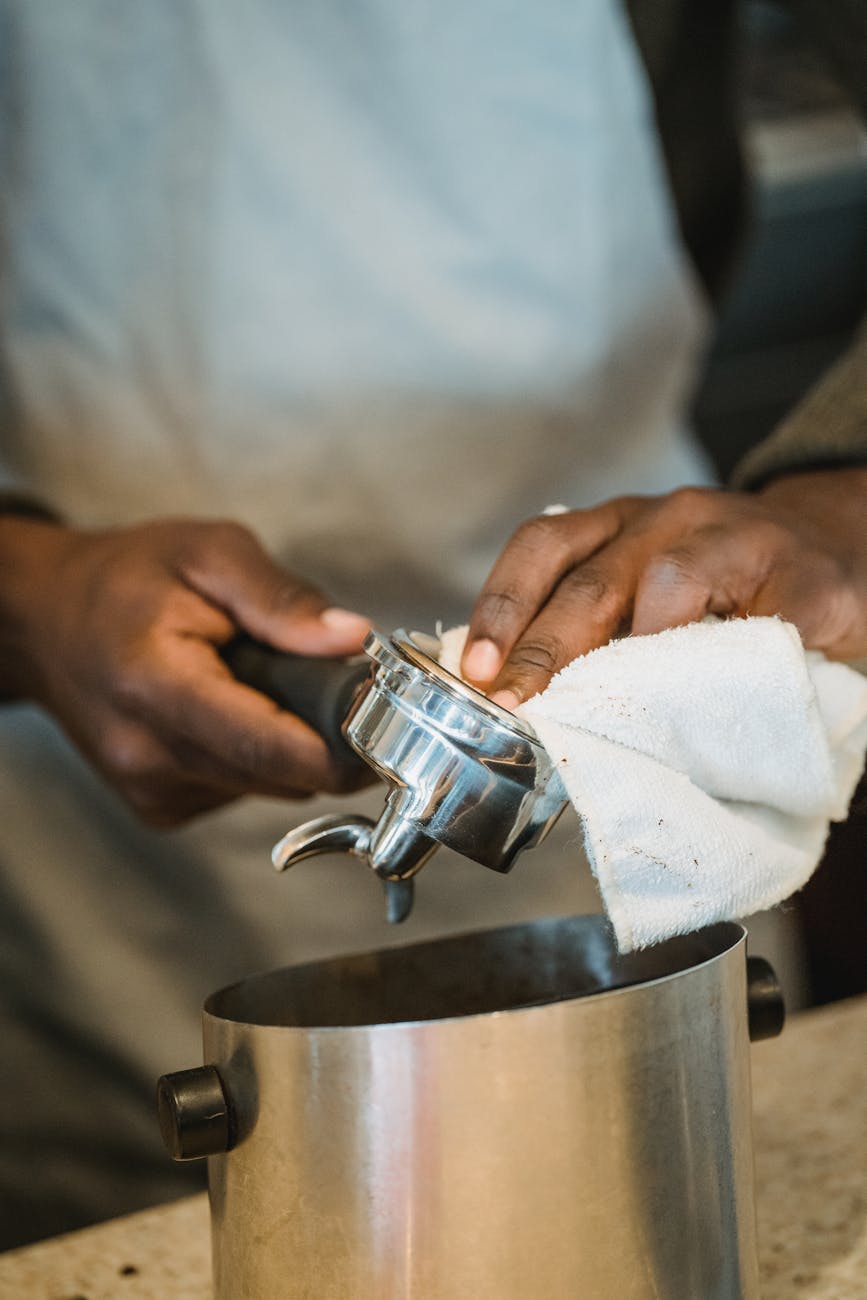
This is where the most stubborn coffee oils accumulate. For a deep clean, first, remove the filter basket from the portafilter. If your portafilter handle is made of wood, never submerge it in water. Dissolve a teaspoon of espresso machine cleaning powder in a container of hot water and soak the metal portafilter head and the basket for about 20-30 minutes. You’ll see the water turn a dark brown as the oils dissolve. Afterward, use a soft brush to scrub any remaining residue from the spouts and crevices, then rinse everything thoroughly with fresh water. Dry immediately with a microfiber cloth to prevent water spots.
For Milk Frothing Pitchers:
The golden rule for milk pitchers is to rinse immediately after every use. A quick swirl of hot water is often enough. For any dried-on milk, fill the pitcher with warm, soapy water and let it sit for a few minutes before wiping with a soft cloth. If a stubborn film remains, a paste made from baking soda and a little water can be gently rubbed on the inside to remove it without scratching the metal.
Creating a maintenance routine for lasting shine
Occasional deep cleans are important, but a consistent routine is what truly preserves your equipment. Integrating simple habits into your coffee-making process will prevent heavy buildup and make deep cleaning much easier. Think of it as a small investment of time that pays huge dividends in both coffee quality and the longevity of your tools. A structured approach ensures nothing gets overlooked, from the daily wipe-down to the more intensive monthly soak. This routine is the culmination of everything we’ve discussed, putting the knowledge of buildup, tools, and techniques into a practical, repeatable schedule.
| Frequency | Task | Tools Needed |
|---|---|---|
| Daily (After each session) | Wipe tamper and distribution tool. Rinse portafilter head and milk pitcher with hot water. Dry all tools with a microfiber cloth. | Hot water, microfiber cloth |
| Weekly | Soak portafilter head and filter baskets in espresso cleaner solution. Scrub milk pitcher with soapy water or baking soda paste if needed. | Espresso cleaner, soft brush, mild dish soap |
| Monthly or as needed | Check for limescale buildup (if you have hard water). Polish tools with a food-safe stainless steel polish to restore luster. | White vinegar or descaler, stainless steel polish |
Conclusion: clean tools for perfect coffee
Maintaining your stainless steel espresso tools isn’t just about aesthetics; it’s a fundamental part of brewing exceptional coffee. By understanding the nature of coffee oil and milk residue, you can see why proper cleaning is so vital. The key takeaways are simple: be consistent, be gentle, and use the right supplies. Avoid harsh chemicals and abrasive scrubbers at all costs. Instead, rely on specialized espresso cleaners, soft cloths, and simple household items like baking soda. By adopting a simple daily, weekly, and monthly routine, you prevent the buildup that leads to bitter coffee and damaged equipment. Your reward will be a beautiful, gleaming coffee station and, more importantly, a consistently delicious and pure-tasting cup of espresso every single time.


 No products in the cart.