

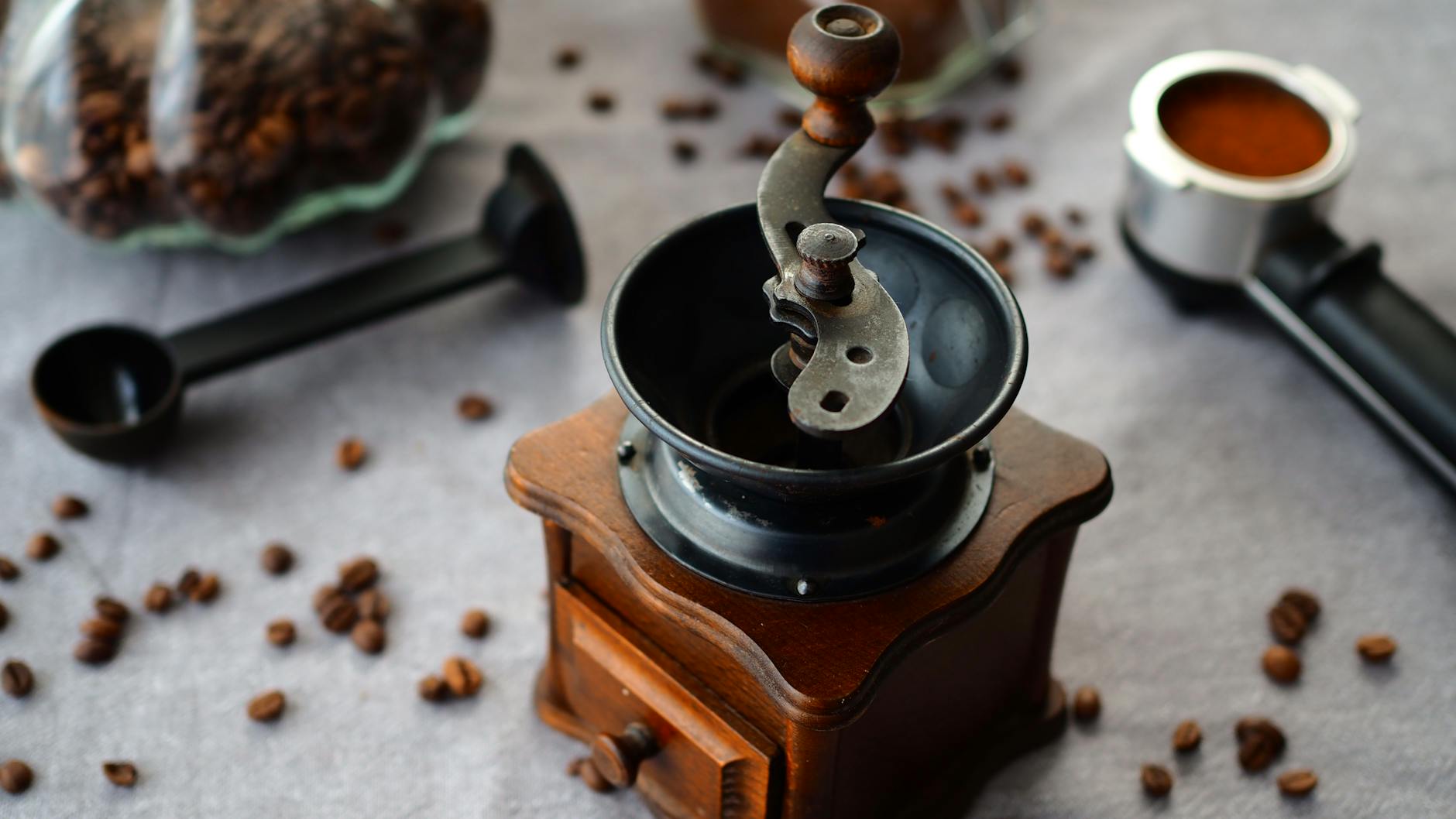
Mastering your Eureka Mignon: The best way to dial in a new bag of beans
There’s nothing quite like the excitement of opening a brand-new bag of specialty coffee beans. The aroma fills the air, and you can already imagine that perfect, delicious shot of espresso. But then comes the challenge: turning those beautiful beans into a balanced extraction. If you own a Eureka Mignon grinder, you have a powerful and precise tool at your disposal, but its sensitivity can be daunting. Getting from a gushing, sour mess or a choked, bitter drip to a syrupy, flavorful shot requires a methodical approach. This guide will walk you through the best way to dial in any new bag of beans with your Eureka Mignon, transforming potential frustration into a rewarding and repeatable process.
Understanding your Eureka Mignon’s unique design
Before we touch a single bean, it’s crucial to understand what makes your Eureka Mignon special. Unlike many other grinders, the Mignon series features a stepless micrometric adjustment system. This means there are no predefined “clicks” or steps between grind settings. You have an almost infinite range of adjustments, allowing for incredible precision. This is fantastic for getting the exact grind size you need, but it also means small turns of the dial have a significant impact.
Another key feature is that the adjustment knob moves the bottom burr, not the top one. Why does this matter? It means you can remove the top burr for cleaning without losing your grind setting. This is a huge convenience that many other grinders lack. When dialing in, remember this: turning the knob toward a smaller number makes the grind finer, and turning it toward a larger number makes it coarser. Understanding these fundamentals is the first step to mastering the machine.
The golden trio: Dose, yield, and time
Espresso is a science, and successful dialing in relies on controlling variables. To avoid chasing your tail, you need to lock in some parameters and only adjust one thing at a time. The most important variable you’ll change with your grinder is the grind size. However, to see how grind size affects the shot, we must first establish a consistent baseline for our other variables: dose, yield, and time.
- Dose: This is the weight of your ground coffee in grams. Consistency here is non-negotiable. Use a scale with 0.1g accuracy. A good starting point for most standard double baskets is 18 grams. For the entire dialing in process, do not change this number.
- Yield: This is the weight of the liquid espresso in your cup. We measure this in grams, not volume, for accuracy. A great starting point is a 1:2 brew ratio. So, for an 18g dose, you would aim for a 36g yield. For now, keep this target yield the same.
- Time: This is the duration of your extraction, from the moment you start the pump to the moment you stop it. Your target is generally between 25 and 35 seconds to achieve your target yield.
In short: you will fix your dose (18g) and your yield (36g). The only thing you will actively change is the grind size on your Mignon. Your goal is to adjust the grind size until your 18g dose produces a 36g yield in roughly 25-35 seconds.
A step-by-step guide to dialing in your beans
With our variables defined, it’s time for a practical, step-by-step process. This method will save you coffee, time, and frustration. Remember to purge a few grams of old coffee from your grinder if you’re switching beans.
- Find your starting point: With the grinder empty and running, slowly turn the adjustment knob toward a finer setting (smaller number) until you hear a faint “chirp” where the burrs just begin to touch. Immediately back it off by half or a full number. This is your “zero point” and a safe place to start grinding without damaging the burrs.
- Grind and prep your first shot: Weigh out your 18g dose of whole beans. Grind them, and then re-weigh the grounds in your portafilter to ensure you have 18g. Perform your usual puck preparation routine (WDT, distribution, and a level tamp) to ensure a consistent bed of coffee.
- Pull the shot and analyze: Place your cup on a scale under the portafilter and start a timer as soon as you engage the pump. Stop the shot as the scale reads your target yield (36g). Now, look at the timer.
- If the shot was too fast (e.g., 18 seconds): Your grind is too coarse. The water is flowing through the puck with little resistance.
- If the shot was too slow (e.g., 45 seconds): Your grind is too fine. The water is struggling to get through the tightly packed coffee.
- Adjust and repeat: This is the core of the process. If your shot was too fast, adjust your Mignon’s dial to a finer setting (a smaller number). Only make a small adjustment, perhaps moving the dial by a quarter or half a number. If the shot was too slow, adjust to a coarser setting (a larger number). Purge a tiny amount of coffee to account for the adjustment, then prepare and pull another shot using the exact same dose, yield, and prep method. Repeat this until you land within that 25-35 second window.
Fine-tuning for taste: Beyond the numbers
Hitting your target time is a huge milestone, but it’s not the final goal. The ultimate goal is delicious espresso. Now that you’re consistently pulling shots in the correct time range, it’s time to let your palate be the guide. Taste is the final and most important variable. Small adjustments to your grind, or even your yield, can unlock the best flavors from your beans.
Here’s a simple table to help you troubleshoot based on taste:
| Taste/Symptom | Likely Cause | Solution |
|---|---|---|
| Sour, overly acidic, thin, weak | Under-extraction | Grind slightly finer to increase the extraction time (e.g., aim for 32 seconds instead of 27). |
| Bitter, harsh, astringent (drying sensation) | Over-extraction | Grind slightly coarser to shorten the extraction time (e.g., aim for 26 seconds instead of 33). |
| Balanced, sweet, with clear flavors | Well-extracted | Congratulations! Take note of your grinder setting and enjoy your coffee. |
Remember that other factors like bean age and roast level also play a role. Very fresh beans may require a coarser grind, while older, drier beans often need a finer setting to slow the shot down. Similarly, light roasts are harder and may require a finer grind than brittle, oily dark roasts. Always be prepared to make small adjustments from one bag to the next, even if it’s the same coffee.
Conclusion
Dialing in a new bag of beans with your Eureka Mignon doesn’t have to be a game of chance. By adopting a systematic approach, you can take control of the process and achieve consistently delicious results. The key is to establish a foundation by fixing your dose and yield, then using the Mignon’s precise stepless adjustment to manipulate the grind size until you hit your target time. From there, it’s all about tasting and making small, informed tweaks to perfect the flavor profile. Embrace the process, be patient, and trust your palate. The reward for your efforts will be the satisfaction of pulling the perfect shot of espresso, unlocking the full potential of your beans and your high-quality grinder.
 No products in the cart.