


Optimizing your workflow: Timed dosing vs. weight-based grinding on the Mignon
The Eureka Mignon series has cemented its place on the countertops of discerning home baristas worldwide. Praised for its build quality, quiet operation, and exceptional grind consistency, it represents a significant step up into the world of prosumer espresso. However, owning a great grinder is only half the battle. Achieving consistently delicious espresso shots requires a repeatable and precise workflow. For Mignon owners, this often boils down to a fundamental choice: do you rely on the grinder’s built-in electronic timer for dosing, or do you adopt a weight-based, single-dosing method? Each approach has passionate advocates and presents distinct advantages and disadvantages. This article will delve into both workflows, helping you decide which method best suits your goals, lifestyle, and pursuit of the perfect shot.
Understanding the built-in timer
Out of the box, most electronic Mignon grinders are designed around a timed-dosing workflow. You fill the hopper with a bag of your favorite beans, and then program the single and double shot buttons to run the motor for a specific duration, for example, 3.5 seconds. The goal is to find the time that consistently dispenses your target dose, such as 18 grams.
The primary benefit of this method is speed and convenience. When making multiple coffees, especially milk-based drinks for family or guests, the ability to simply place your portafilter, press a button, and receive a dose in seconds is incredibly efficient. It creates a seamless, cafe-like experience where the focus is on speed and throughput.
However, this convenience comes at the cost of precision. The amount of coffee ground in a set time is not always constant. It can be affected by several variables:
- Hopper weight: A full hopper exerts more pressure on the beans entering the burrs, often resulting in more grounds being dispensed in the same amount of time compared to a near-empty hopper.
- Bean characteristics: Different beans have varying densities, sizes, and levels of oiliness depending on the origin and roast level. Switching beans almost always requires you to recalibrate your timer settings.
- Stale coffee: Keeping a full hopper means the beans at the top are exposed to air and light, causing them to go stale faster than if they were stored in an airtight container.
For these reasons, a timed-dosing workflow requires periodic checks with a scale to ensure your dose hasn’t drifted, slightly undermining its “set and forget” appeal.
The shift to weight-based single dosing
In response to the inconsistencies of timed dosing, many espresso enthusiasts have embraced weight-based grinding, often referred to as single dosing. This methodology completely removes time from the equation. Instead of filling the hopper, it remains empty, and the barista weighs out the precise dose of beans needed for a single shot before grinding.
The core advantage here is unwavering consistency. If you weigh out 18.0 grams of beans, you know that, accounting for minimal retention, you will get 18.0 grams of grounds in your portafilter. This eliminates dose as a variable in your espresso recipe, allowing you to focus solely on grind size adjustments to dial in your shot. This precision is the main reason single dosing is the gold standard for specialty coffee hobbyists.
This workflow also excels in other areas. It ensures maximum freshness, as beans are stored in an airtight container until the moment of grinding. It also makes switching between different coffees—a regular, a decaf, or a new single origin—effortless, with no need to empty a hopper or waste coffee purging the old beans.
Of course, this approach requires more steps and a few extra accessories, such as a high-precision coffee scale and a small cup or tray for weighing beans. The process is inherently slower, adding perhaps 30-60 seconds to the preparation of each drink.
Comparing the workflows head-to-head
To truly understand the difference, let’s visualize the step-by-step process for each method. Imagine you want to pull an 18-gram shot.
The timed dosing workflow:
- Check that the hopper is at least partially full.
- Place the portafilter into the holder.
- Press the pre-programmed “double shot” button. The grinder runs for a set time.
- Perform puck prep (WDT, distribute, tamp).
- (Optional but recommended) Periodically spot-check the dose with a scale to ensure it’s still accurate.
The weight-based single dosing workflow:
- Place a dosing cup on a scale and tare it.
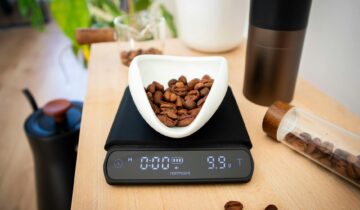
- Weigh out exactly 18.0 grams of beans.
- Pour the beans into the grinder’s empty hopper.
- Run the grinder until all beans are ground. Many users add a bellows to the top to pump air through and force out any retained grounds.
- Transfer the grounds from the dosing cup to the portafilter.
- Perform puck prep (WDT, distribute, tamp).
The difference is clear. Timed dosing prioritizes speed, while single dosing prioritizes absolute control. Neither is inherently superior; they simply serve different priorities. For the person rushing to make a latte before work, the timer is a fantastic tool. For the enthusiast chasing the perfect extraction from a rare coffee, weighing each dose is non-negotiable.
Which method is right for you? A summary table
Your choice will ultimately depend on what you value most in your coffee-making ritual. This table breaks down the core differences to help you decide.
| Feature | Timed Dosing | Weight-Based Grinding |
|---|---|---|
| Consistency | Good, but can vary by +/- 0.5g or more due to hopper level and bean type. | Exceptional. As accurate as your scale allows (typically +/- 0.1g). |
| Speed per shot | Very fast. Ideal for making multiple drinks back-to-back. | Slower. Involves extra steps of weighing and transferring beans. |
| Convenience | High. A simple push-button operation. | Lower. Requires more manual steps and focus. |
| Bean freshness | Lower. Beans stored in the hopper are exposed to air and light. | Maximum. Beans are kept in a sealed container until use. |
| Switching coffees | Difficult. Requires emptying the hopper and purging old grounds. | Effortless. Just weigh out the new beans for the next shot. |
| Best for… | Users who value speed, make several drinks at once, and use the same beans consistently. | Hobbyists seeking ultimate precision, experimenting with different beans, and prioritizing shot quality over speed. |
The great thing about the Eureka Mignon is its versatility. You are not locked into one method. You can use the timer for your daily morning cappuccino and switch to single dosing on the weekend when you have more time to savor the process of dialing in a new single-origin espresso.
Conclusion: Crafting your ideal workflow
The debate between timed dosing and weight-based grinding on the Mignon isn’t about finding a single “correct” answer, but rather about aligning your equipment’s capabilities with your personal coffee philosophy. Timed dosing offers a streamlined, efficient workflow that is perfect for those who prioritize speed and convenience without a significant sacrifice in quality. It excels in busy environments where consistency within a reasonable margin is sufficient. On the other hand, weight-based single dosing represents a commitment to precision. It systematically eliminates a key variable, granting the home barista ultimate control over their extraction and unlocking the full potential of their coffee and equipment. Ultimately, the best workflow is the one you enjoy and can perform consistently day after day.
 No products in the cart.