

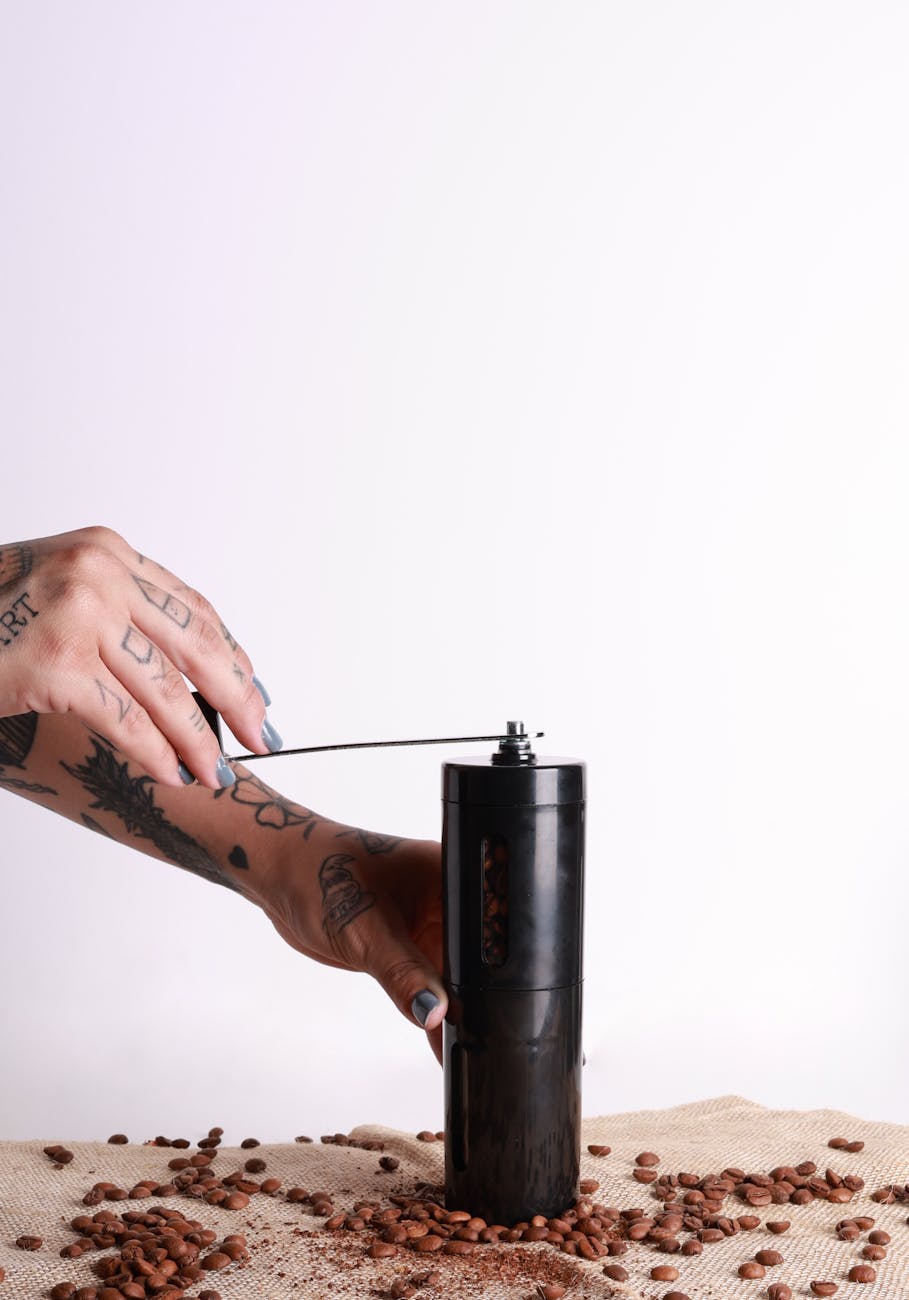
Choosing a coffee grinder is one of the most critical decisions for any home barista, and the Eureka Mignon series is a frequent top contender. Renowned for its quality and performance, the Mignon line offers a surprising amount of internal variation, centered primarily on its most crucial component: the burrs. While all Mignons use flat burrs, not all are created equal. The debate often boils down to Eureka’s standard hardened steel burrs versus their advanced options featuring specialized geometries and treatments. This article will delve deep into these differences, exploring how the burr’s design, material, and coating impact everything from grind consistency and workflow to the final flavor profile in your cup. We’ll demystify the technology to help you choose the perfect Mignon for your coffee journey.
The foundation: Eureka’s standard flat burrs
At the heart of many beloved Eureka Mignon models, like the Manuale and Silenzio, lie the standard hardened steel flat burrs. These are the bedrock of the Mignon experience and set a high bar for grind quality, particularly for espresso. A flat burr set consists of two rings with sharp, angled teeth that face each other. As the motor spins one burr against the stationary other, coffee beans are pulled from the center, crushed, and then ground as they travel outwards through the increasingly narrow gap. This mechanism is prized for its ability to produce a highly uniform and consistent particle size distribution.
This uniformity is crucial for espresso, as it ensures an even water flow through the coffee puck, leading to a balanced extraction. The result is often a classic espresso shot profile: rich, full-bodied, with a thick, persistent crema. These burrs excel at blending flavors, creating a harmonious and forgiving shot that highlights chocolatey, nutty, and caramelized notes. Made from durable hardened steel, these burrs offer a respectable lifespan for the average home user, making them a fantastic and cost-effective entry point into high-quality grinding.
The evolution: Specialized burr geometries and treatments
Building upon the solid foundation of their standard burrs, Eureka has developed specialized options designed to enhance either durability or versatility. It’s important to note that these are still flat burrs, but they feature significant upgrades in their material treatment or cutting geometry.
Two prominent technologies stand out:
- Diamond inside treatment: This is not a different geometry but a patented cryogenic treatment process. The steel burrs are cooled to -193°C, which fundamentally alters their crystal structure, increasing their hardness and wear resistance. The primary benefit of Diamond Inside (DI) burrs, found in models like the Specialita, is an incredible lifespan—often lasting two to three times longer than standard burrs. This means they maintain their sharpness and grind consistency for a much longer period, making them ideal for high-volume environments or for users who value longevity and want to minimize maintenance.
- Specialty (brew) geometry: Other Mignon models, such as the Oro series or the Filtro, feature burrs with a distinct cutting geometry. While still excellent for espresso, these burrs are engineered to produce fewer “fines” (tiny coffee dust particles) at coarser settings. This unique design provides a cleaner particle distribution for brew methods like pour-over, Aeropress, or French press. This improved performance for manual brewing is the key differentiator, offering greater versatility for the enthusiast who enjoys exploring a wide range of coffee preparations beyond just espresso.
These advancements show a clear evolution from a one-size-fits-all approach to a more tailored grinding experience, catering to specific user needs.
Grind consistency and flavor impact
The subtle differences in burr design and treatment translate directly into tangible differences in the final cup. Moving from standard burrs to specialized options can significantly alter the flavor profile and texture of your coffee. Standard hardened steel burrs, with their reliable and uniform grind, create a very traditional espresso. The particle distribution is excellent for building pressure and extracting a rich, syrupy shot with a heavy body. The flavor profile is often comforting and blended, perfect for milk drinks or for those who enjoy a classic, robust espresso.
Specialty or brew-focused burrs, by contrast, are designed for clarity. By minimizing fines, especially in coarser grinds, they prevent the over-extraction that can lead to bitterness or a “muddy” flavor in brewed coffee. This allows for the more delicate, acidic, and fruity notes of single-origin beans to shine through. In espresso, this can result in a brighter, more complex shot with a lighter body, often preferred for modern, third-wave coffee profiles. The Diamond Inside burrs primarily impact flavor through consistency over time. While a brand-new DI burr and a brand-new standard burr will produce a similar taste, the DI burr will maintain that peak performance for far longer, staving off the flavor degradation that comes with dulling burrs.
Making the right choice: Which burr is for you?
Choosing the right burr type ultimately depends on your brewing habits, your budget, and your long-term goals. There is no single “best” burr, only the one that best aligns with your personal needs. For the dedicated espresso drinker who values a classic, full-bodied shot and is working within a budget, the standard steel burrs are more than capable and offer incredible value. They are the workhorses of the Mignon lineup.
If you are a heavy user, a small café owner, or simply someone who wants to invest in a component that will last for years with minimal fuss, the Diamond Inside treatment is a worthy upgrade. The added cost is offset by its extreme longevity. Finally, for the true coffee generalist—the person who pulls a shot of espresso in the morning and makes a V60 pour-over in the afternoon—the specialty brew geometry is the clear winner. Its ability to perform exceptionally well at both ends of the grind spectrum provides a level of versatility that is unmatched by the other options.
| Burr type | Best for | Key characteristics | Common models |
|---|---|---|---|
| Standard hardened steel | Espresso purists, budget-conscious buyers | Excellent espresso uniformity, classic body, great value | Mignon Manuale, Silenzio |
| Diamond inside | High-volume users, longevity seekers | Extreme durability, maintains sharpness, long-term consistency | Mignon Specialita, Oro XL |
| Specialty/Brew geometry | All-around coffee lovers (Espresso & Brew) | High clarity for brewing, fewer fines, flavor separation | Mignon Filtro, Oro Single Dose |
Ultimately, your choice is a reflection of your relationship with coffee. By understanding the technology behind each burr set, you can make an informed decision that elevates your home coffee bar.
Conclusion
In the world of Eureka Mignon grinders, the journey from a standard flat burr to one with a specialized geometry or treatment is a journey toward precision and purpose. We’ve seen that standard hardened steel burrs provide a fantastic foundation, delivering the uniform grind needed for classic, full-bodied espresso. Moving up, the Diamond Inside treatment offers a massive leap in durability, ensuring that peak performance is maintained for years, making it an investment in long-term consistency. Finally, burrs with a specialty geometry cater to the versatile coffee enthusiast, engineered to enhance clarity and reduce fines for superior brewed coffee without sacrificing espresso capability. The choice is not about which burr is superior overall, but which is perfectly suited to your specific brewing rituals and flavor preferences.

 No products in the cart.