

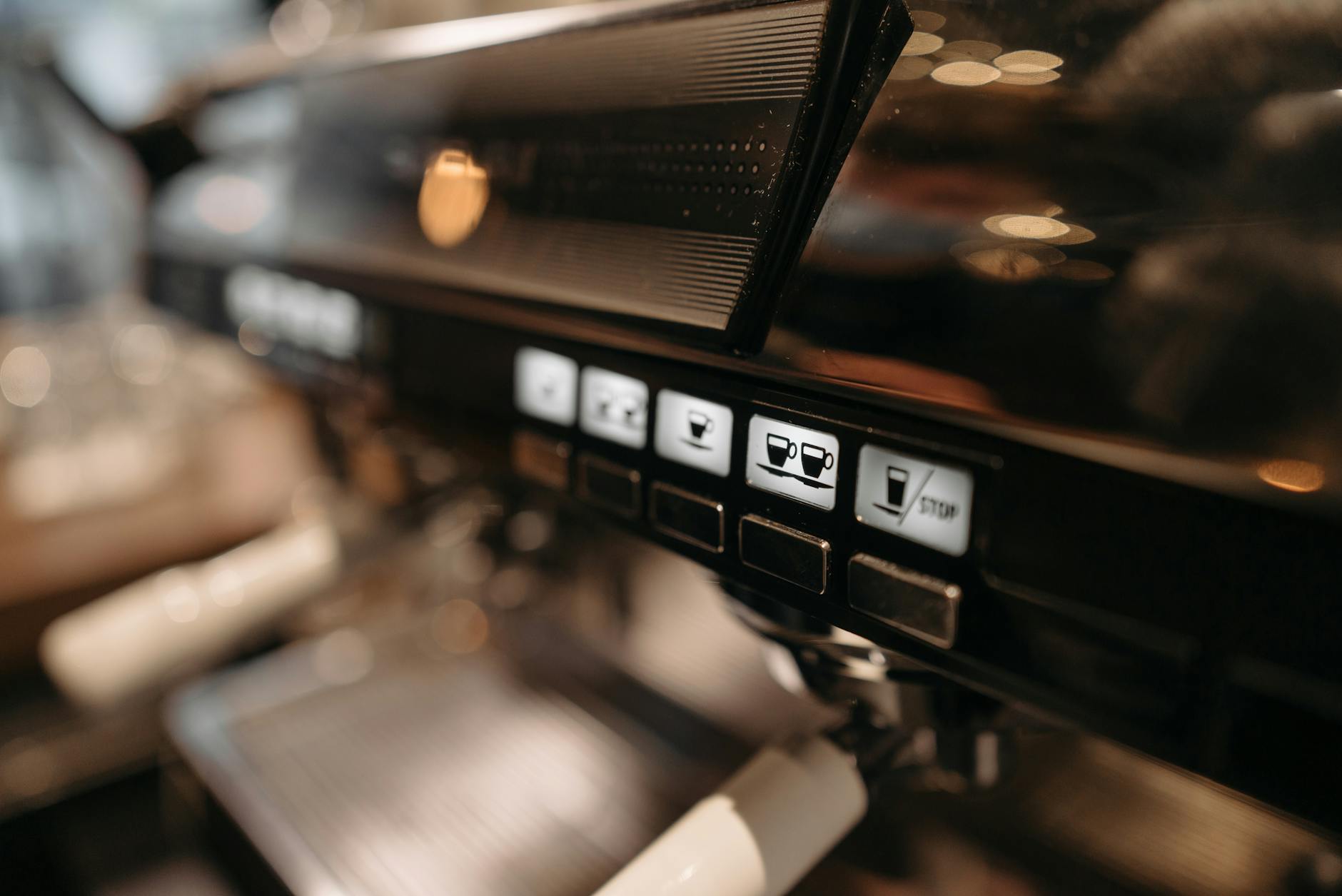
The secret to café-quality espresso at home: Understanding the PID
The pursuit of the perfect espresso shot at home is a journey many coffee lovers embark on. We buy fresh beans, invest in a quality grinder, and perfect our tamping technique. Yet, shot after shot can be inconsistent, swinging from bitter to sour with no clear reason. The culprit is often a factor we can’t see: temperature instability. While commercial café machines are built for rock-solid consistency, many home machines are not. This is where a small but powerful component, the PID controller, enters the picture. It represents the single biggest leap from hobbyist results to professional-level precision. This article will delve into what a PID is, why it’s critical for extraction, and how it empowers you to pull café-quality shots in your own kitchen.
What is a PID and why does it matter?
At its core, an espresso machine is designed to heat water to a specific temperature and force it through a puck of finely ground coffee. The device controlling that temperature is paramount. Most entry-level machines use a simple mechanical thermostat. Think of it like a basic room heater; it turns the heating element on full blast until it gets too hot, then shuts off completely until it gets too cold. This “bang-bang” approach creates a wide temperature swing, often as much as 10-15°C. This is a massive variable that makes consistent espresso extraction nearly impossible.
A PID, which stands for Proportional-Integral-Derivative controller, is a far more intelligent solution. It’s a digital micro-computer that constantly monitors the boiler temperature and makes tiny, precise adjustments to the heating element. It learns the machine’s behavior to cleverly avoid overshooting or undershooting the target temperature.
- Proportional: It adjusts the power based on how far the temperature is from the target. A big difference gets a big power boost.
- Integral: It accounts for past errors to eliminate temperature “droop” and ensure it hits the exact target over time.
- Derivative: It anticipates future temperature changes, slowing down the heating as it approaches the target to prevent overshooting.
This intelligent control keeps the brew water within an incredibly tight range, often +/- 1°C of your set temperature. This stability is the foundation of consistency, removing the guesswork and allowing you to focus on other variables like grind size and dose.
The critical link between temperature stability and espresso extraction
So, why does a few degrees of temperature fluctuation matter so much? Because coffee extraction is a delicate chemical reaction. The temperature of the water directly dictates which flavor compounds are dissolved from the coffee grounds and at what rate. When your machine’s temperature is unstable, each shot becomes a lottery.
If the water is too hot, it will over-extract the coffee. This burns the delicate compounds and pulls out excessive bitter and astringent flavors, resulting in a harsh and unpleasant shot. Conversely, if the water is too cool, it will under-extract the grounds. The water won’t have enough energy to dissolve the desirable sugars and oils, leading to a thin, sour, and weak-tasting espresso that lacks sweetness and body. A machine with a PID eliminates this problem. By locking in a stable brew temperature, you ensure that the water hitting your coffee puck is always at the optimal temperature for a balanced extraction, shot after shot.
How a PID unlocks advanced brewing techniques
Beyond providing consistency, a PID controller hands you the creative reins. It transforms your espresso machine from a simple appliance into a precision instrument. Different coffees, with their unique origins, processing methods, and roast levels, shine at different temperatures. A standard thermostat gives you no control over this, but a PID allows you to “dial in” the perfect temperature for any bean you are using.
This level of control is a game-changer. Do you have a bright, acidic, light-roasted Ethiopian coffee? You might want to increase the temperature to 94-96°C to fully extract its delicate floral and fruity notes. Are you working with a classic, dark-roasted Italian blend? Dropping the temperature to 88-91°C can tame its bitterness and bring out rich, chocolatey, and nutty flavors. A PID empowers you to experiment and unlock the full potential of your coffee beans, just as a professional barista would.
| Roast Level | Suggested Brew Temperature Range | Resulting Flavor Profile |
|---|---|---|
| Light Roast | 93°C – 96°C (200°F – 205°F) | Emphasizes brightness, acidity, and delicate floral or fruity notes. |
| Medium Roast | 90°C – 94°C (195°F – 201°F) | Creates a balanced cup with sweetness, body, and nuanced flavors. |
| Dark Roast | 88°C – 92°C (190°F – 198°F) | Reduces bitterness and highlights deep chocolate, caramel, and nutty notes. |
PID in practice on different machines
The impact of a PID is felt across all types of espresso machines, though its role can differ slightly. On a single boiler machine, a PID is transformative. It not only stabilizes the brew temperature but also provides an accurate digital reading, making the chaotic switch between brewing and steaming far more predictable and manageable. For heat exchanger machines, which are traditionally less stable, adding a PID to the brew group or boiler can drastically reduce the need for long cooling flushes and bring a new level of consistency. Finally, in dual boiler machines, the PID is the star of the show. With separate PIDs for the brew boiler and steam boiler, you gain ultimate control, allowing for precise brew temperature adjustments without impacting your steam power at all. This setup is the pinnacle of home espresso technology.
In conclusion, the PID controller is far more than a fancy digital display on an espresso machine. It is the brain that brings precision and stability to the heart of the brewing process: the water temperature. By replacing an archaic thermostat with an intelligent micro-computer, a PID eliminates the biggest variable that holds home baristas back from achieving consistently excellent results. It takes you from a world of guesswork and “temperature surfing” to one of deliberate control. This allows you to not only replicate that perfect shot time and again but also to explore the nuances of different beans. If your goal is to make true café-quality espresso at home, investing in a machine with a PID is the single most important step you can take.

 No products in the cart.