

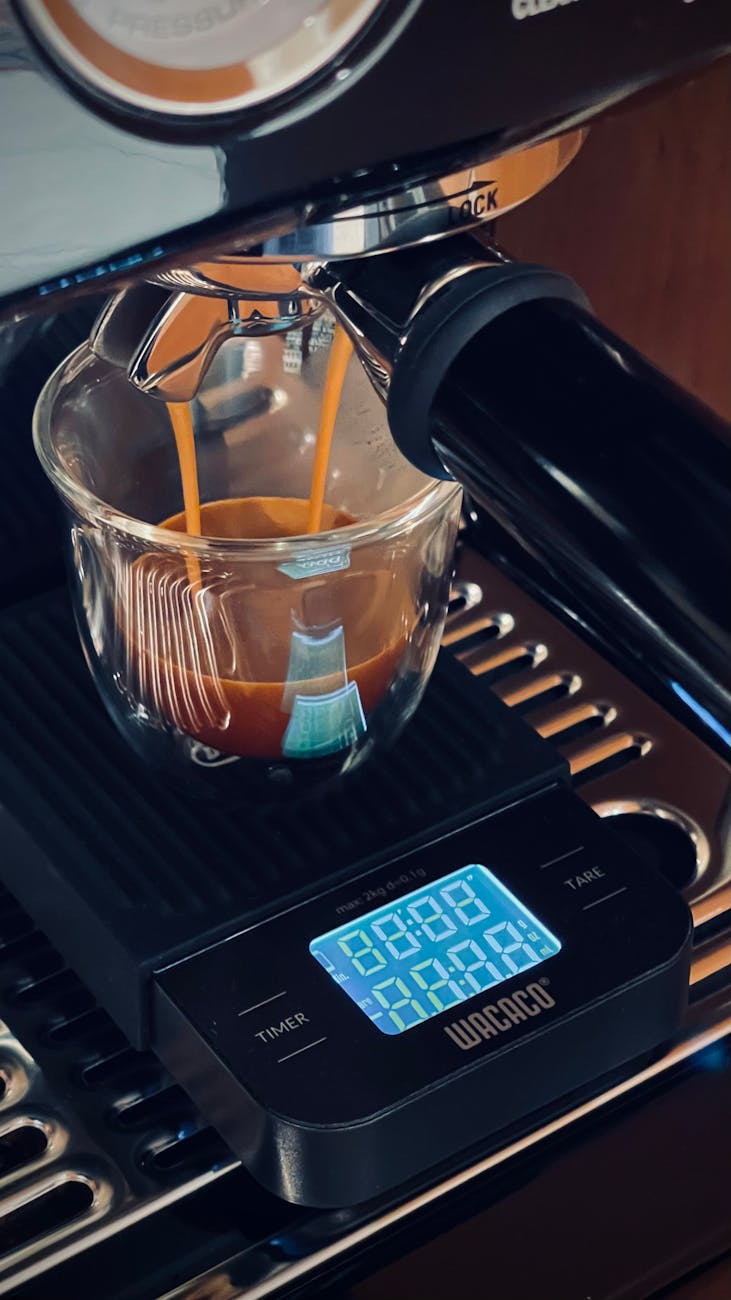
Master your espresso: How to use the Gaggia Classic ready light for perfect brew timing
The Gaggia Classic is an icon in the world of home espresso, celebrated for its robust build and its ability to produce cafe-quality shots. However, for many new owners, achieving consistency can be a frustrating journey. The machine’s simple interface, particularly its “ready” light, is often a source of confusion. Many believe that when the light turns off, the machine is at the perfect temperature to brew. This is a common misconception that leads to inconsistent and often bitter espresso. This article will demystify the Gaggia Classic’s temperature cycle, explain what the ready light truly indicates, and teach you a simple technique called temperature surfing to gain control over your brew temperature for consistently delicious results.
Understanding the Gaggia Classic’s thermostat and ready light
To master the ready light, you first need to understand what’s happening inside your Gaggia Classic. Unlike expensive, modern machines with PID controllers that maintain a precise temperature, the Gaggia Classic uses a simple bimetallic thermostat to regulate its single boiler. This thermostat operates within a temperature range, often called a “deadband.”
Here’s how it works:
- When the boiler’s temperature drops to the bottom of its range (e.g., 95°C / 203°F), the thermostat kicks in and turns the heating element on. This is when the orange ready light on the front of your machine illuminates.
- The heating element continues to heat the water, causing the temperature to rise.
- When the boiler reaches the top of its range (e.g., 105°C / 221°F), the thermostat turns the heating element off. This is when the ready light goes out.
The key takeaway is that the ready light doesn’t signal one specific “ready” temperature. Instead, it indicates which phase of the heating cycle the machine is in. The light being on means it’s heating up, and the light being off means it has just finished heating and is at its peak temperature.
The problem with brewing on the light
The most common mistake a new Gaggia Classic user makes is waiting for the ready light to turn off and then immediately starting their shot. Based on what we just learned, this means you are brewing your coffee at the highest point in the temperature cycle. For most coffee beans, this temperature is far too hot for proper extraction.
Brewing with water that is too hot scorches the coffee grounds, resulting in over-extraction. This pulls out undesirable bitter and astringent compounds, creating a harsh, acrid, and unpleasant shot with no nuance. You might notice a very dark, splotchy crema and a burnt taste that overpowers any of the coffee’s natural sweetness or flavor notes.
Conversely, if you wait too long after the light goes out, the boiler temperature will drift down towards the bottom of its range. Brewing at this point can lead to under-extraction, producing a shot that is sour, weak, and lacks body. This inconsistency is why your shots can taste wildly different, even when your grind and dose are the same.
Temperature surfing: The technique for consistency
The solution to this temperature chaos is a technique called temperature surfing. It’s a manual process that allows you to start your brew at the same, predictable point in the boiler’s temperature cycle every single time. By doing this, you eliminate temperature as a variable and gain massive control over your shot consistency. The goal is to start brewing as the boiler temperature is cooling, at a point you choose.
Here is the step-by-step method:
- Warm up the machine: Turn on your Gaggia Classic for at least 20 minutes with the portafilter locked into the group head to ensure everything is thoroughly heated.
- Prepare your puck: While the machine warms up, grind your beans, dose your portafilter, and tamp your puck as you normally would.
- Initiate the cycle: Lock the portafilter in. If the ready light is off, flick the brew or steam switch for a couple of seconds to dispense some hot water. This temperature drop will trigger the thermostat, and the ready light will turn on. Now you have a clear starting point.
- Wait for the signal: Watch the machine. When the boiler reaches its peak temperature, the ready light will turn off. This is your signal to start timing.
- Count and brew: As soon as the light turns off, start a timer. Wait for a predetermined number of seconds (e.g., 10 seconds), then start your brew.
By always starting your shot a set number of seconds after the light turns off, you ensure you are always brewing at the exact same temperature, leading to repeatable and consistent results.
Finding your perfect timing
The ideal wait time after the light goes off is not one-size-fits-all. It depends on your specific machine, the coffee you are using, and your personal taste. Darker roasts generally benefit from cooler brew temperatures to avoid bitterness, while lighter roasts often require hotter temperatures to properly extract their complex, acidic flavors.
The best way to find your “sweet spot” is to experiment. Using the same coffee and grind setting, pull a few shots at different time intervals and taste them side-by-side. Keep notes on which one you like best. This process, known as dialing in, is central to making great espresso.
Here is a general guide to get you started:
| Wait Time (After Light Off) | Relative Temperature | Ideal For | Expected Taste Profile |
|---|---|---|---|
| 1-5 seconds | Hottest | Light Roasts | Bright, fruity, higher acidity. Can be sour if not extracted well. |
| 10-15 seconds | Medium-Hot | Medium Roasts, All-rounders | Balanced sweetness, chocolate and caramel notes. Often the “sweet spot”. |
| 20-30 seconds | Cooler | Dark Roasts, Italian Blends | Low acidity, rich, nutty, bold flavors. Reduces risk of bitterness. |
Start with a 10-second wait. If your shot tastes bitter, increase the wait time to 20 seconds on your next attempt. If it tastes sour, decrease the wait time to 5 seconds. This simple adjustment gives you a level of control previously reserved for much more expensive machines.
Conclusion
The ready light on your Gaggia Classic is more than just a simple indicator; it’s a window into the machine’s heating cycle. Understanding that “light off” means the boiler is at its hottest point is the first step toward avoiding bitter, over-extracted espresso. By embracing the technique of temperature surfing—timing your shot a specific number of seconds after the light turns off—you can eliminate temperature inconsistency from your brewing process. This simple, free modification to your workflow will have a profound impact on your espresso quality, allowing you to pull consistently delicious and balanced shots day after day. It’s a fundamental skill that transforms the Gaggia Classic from a capable entry-level machine into a powerful tool for the discerning home barista.
 No products in the cart.