

How to fix weak steam power on the Gaggia Classic Pro
The Gaggia Classic Pro is a beloved entry-point into the world of home espresso, known for its robust build and ability to pull fantastic shots. However, a common frustration for new owners is encountering weak or inconsistent steam power, making it a challenge to create the velvety microfoam needed for lattes and cappuccinos. If your machine is hissing more than it’s steaming, leaving you with bubbly, lukewarm milk, you’re in the right place. This issue is often fixable with a little know-how and regular maintenance. In this guide, we will dive into the most common causes of poor steam performance and walk you through the essential steps to diagnose and resolve them, transforming your milk-steaming experience from frustrating to flawless.
Understanding the root causes of weak steam
Before jumping into solutions, it’s crucial to understand why your Gaggia Classic Pro might be struggling. As a single-boiler machine, it uses the same heating element to both brew espresso (around 93°C or 200°F) and produce steam (well over 100°C or 212°F). The machine can’t do both simultaneously. This design is efficient but also susceptible to a few key problems that directly impact steam power.
The number one culprit is limescale buildup. Hard water contains minerals like calcium and magnesium that, when heated, precipitate and form a crusty layer inside the boiler, pipes, and steam wand. This scale acts as an insulator, forcing the heating element to work harder and less efficiently. It can also create blockages in the narrow passages of the steam valve and wand tip, physically restricting the flow of steam. Even if the boiler reaches the correct temperature, a clog will dramatically reduce the pressure you get at the wand.
Another common factor is a clogged steam wand tip. Milk proteins can bake onto and inside the tiny holes of the wand tip after steaming. Over time, this buildup hardens and can partially or completely block the steam’s exit, resulting in a weak, sputtering stream. Finally, improper user technique can often be mistaken for a machine fault. Understanding the right workflow for a single-boiler machine is key to unlocking its full steam potential.
The essential first steps: Descaling and deep cleaning
Since mineral buildup and milk residue are the most frequent offenders, a thorough cleaning and descaling routine is the most effective way to restore your machine’s steam power. This isn’t just a fix; it’s preventative maintenance that should be part of your regular coffee ritual.
How to descale your Gaggia Classic Pro
Descaling removes the internal mineral deposits choking your machine. You should aim to do this every 2-3 months, or more often if you have particularly hard water.
- Prepare the solution: Use a dedicated espresso machine descaler or a solution of citric acid (about 1-2 tablespoons per liter of water). Avoid vinegar, as its strong odor can linger and its acetic acid can be harsh on some internal components.
- Run the cycle: Fill the water reservoir with the descaling solution. Turn the machine on and place a large bowl under the group head. Run about half of the solution through the group head by activating the brew switch, pausing periodically.
- Descale the steam circuit: With the remaining solution in the tank, place the bowl under the steam wand. Turn on the steam switch and wait for the machine to heat up. Once the ready light comes on, open the steam knob to run the descaling solution through the steam wand. Run it in 30-second bursts until the tank is empty.
- Rinse thoroughly: This is a critical step. Rinse the water tank well and fill it with fresh water. Run at least two full tanks of fresh water through both the group head and the steam wand to completely flush out any residual descaling solution.
Deep cleaning the steam wand
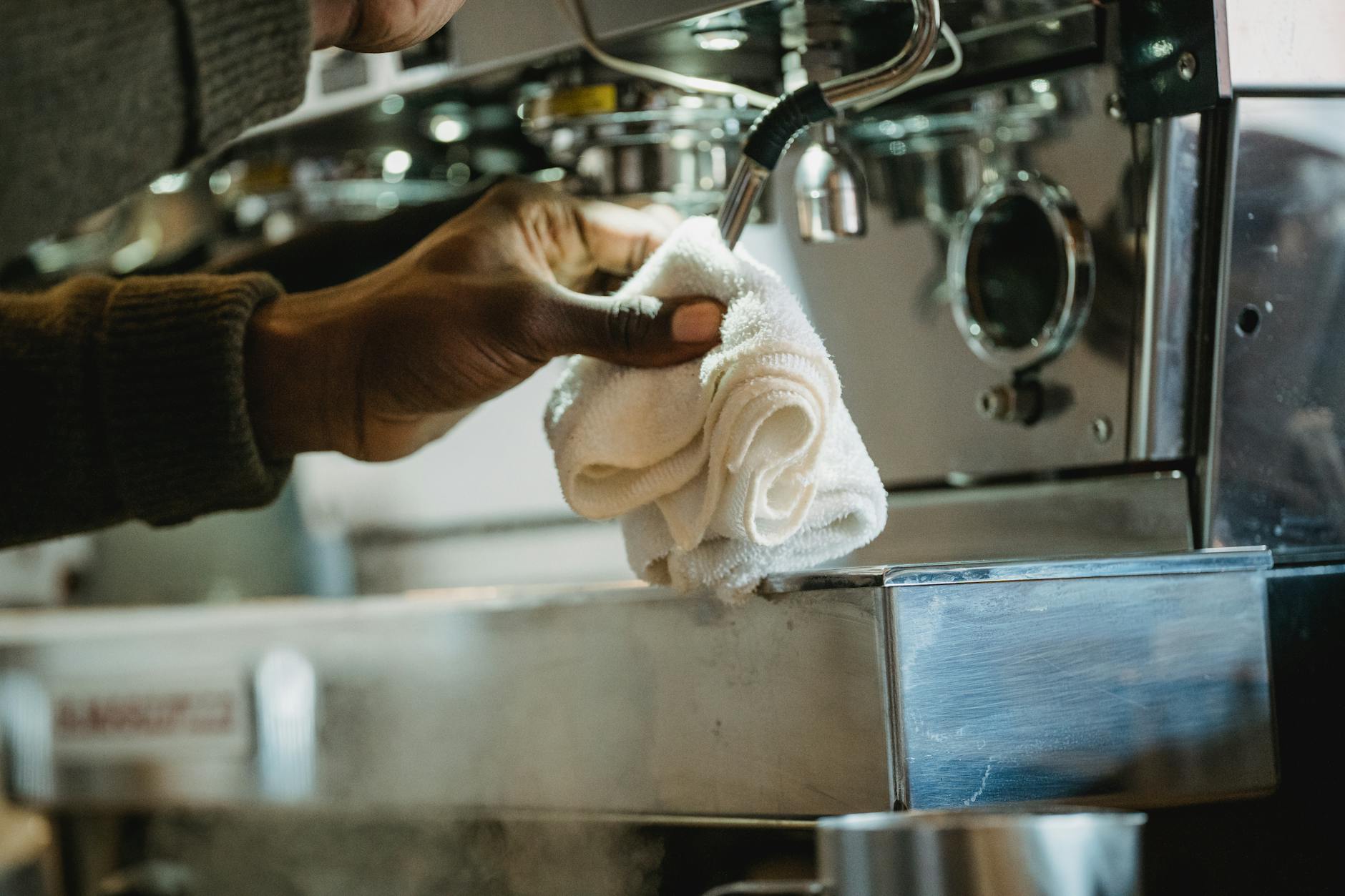
This should be done daily and weekly. After every use, wipe the wand with a damp cloth and purge it for a second to clear any milk from the inside. For a deeper clean:
- Unscrew the steam wand tip.
- Use a pin or a dedicated tool to clear any hardened milk from the holes.
- Soak the tip in hot water or a solution of water and a milk cleaner (like Puly Caff) for 20-30 minutes to dissolve any stubborn residue.
- Rinse the tip, reattach it, and you’re good to go.
Mastering your single-boiler steaming technique
Even a perfectly clean machine can produce weak steam if used improperly. The key is to work with the machine’s heating cycle, not against it. This process, often called “temperature surfing,” ensures you start steaming when the boiler is at its hottest and most powerful.
Simply waiting for the steam-ready light to turn on is often not enough. That light indicates the boiler has reached the *minimum* temperature for steam, but the heating element then cycles off. For maximum power, you want to start steaming just as it reaches peak temperature. Follow this optimized workflow for the best results.
| Step | Action | Why it works |
|---|---|---|
| 1. Prepare | Brew your espresso shot first and have your milk pitcher ready. | You want to be ready to steam the moment the machine is at peak power. |
| 2. Heat up | Flip the steam switch to activate the steam mode. | The machine will now heat the boiler from brew temperature to steam temperature. |
| 3. Purge | Wait for the ready light to come on. Immediately open the steam knob for 2-3 seconds to purge water. | This clears out condensed water from the wand, giving you dry, powerful steam. |
| 4. Steam | Close the steam knob for a moment, submerge the tip in your milk, and then open the knob fully to begin steaming. | This brief pause allows the heating element to kick back on, giving you a powerful burst of steam for the entire process. |
By starting your steaming process at the peak of the heating cycle, you utilize the boiler’s full energy before the thermostat has a chance to turn the element off. This small change in timing makes a huge difference in performance.
Advanced troubleshooting and upgrades
If you’ve thoroughly descaled your machine, cleaned the wand, and perfected your technique but still face weak steam, it might be time to look at the hardware. While less common, a faulty component could be the issue. The most likely culprit is the steam thermostat. This small part tells the heating element when to turn on and off. If it’s failing or calibrated incorrectly, it might be cutting power to the boiler too early, preventing it from getting hot enough to produce strong, sustained steam. Replacing a thermostat is a relatively inexpensive fix for someone comfortable with basic electronics.
For enthusiasts looking to take their machine to the next level, a PID (Proportional-Integral-Derivative) controller is the ultimate upgrade. A PID provides precise, digital control over the boiler temperature, keeping it consistently at the optimal level for steam. This eliminates the need for temperature surfing and delivers powerful, dry steam on demand. While it requires a more involved installation, a PID transforms the Gaggia Classic Pro’s steam performance, making it rival that of much more expensive machines.
Tackling weak steam on your Gaggia Classic Pro is a rewarding process that deepens your understanding of how an espresso machine works. In most cases, the problem isn’t a fatal flaw but a simple cry for maintenance. By committing to a regular descaling schedule and diligent cleaning of the steam wand, you can prevent the primary causes of poor performance. Layering these habits with an optimized steaming technique—working with the machine’s heating cycle instead of against it—will unlock its true potential. For those whose issues persist, remember that components like the thermostat can be replaced. Ultimately, with a little care and practice, your Gaggia Classic Pro is more than capable of producing the rich, velvety microfoam needed for beautiful and delicious milk drinks at home.


 No products in the cart.